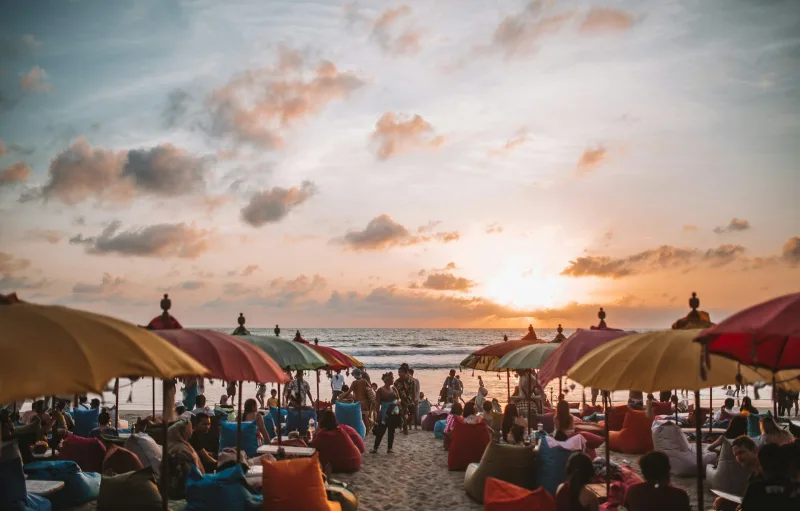
Every second person planning their first international trip asks the same question: Bali or Vietnam? Both are cheap flights away, both flood your Instagram feed, and both get rave reviews from Indians who have been. But they are genuinely different trips, and the answer depends entirely on what you actually want to do with your week. This is a real bali vs vietnam for indians comparison, in INR, so you can stop overthinking and book.
The One-Line Verdict Before You Read Further
Bali is a tropical island getaway. Vietnam is a country you travel through. If you want to switch off near the ocean, Bali wins. If you want to move around, eat well, see proper history, and spend less money doing it, Vietnam wins. Most people should do Vietnam first, then Bali on a separate trip.
How Much Does Each Trip Actually Cost From India?
Vietnam is noticeably cheaper. At the same comfort level, 3-star hotels, a mix of street food and sit-down meals, and a couple of guided day tours, a 7-night Vietnam trip runs about 30 to 35 percent less than Bali.
| Cost Category | Bali (7 nights) | Vietnam (7 nights) |
|---|---|---|
| Return flights from Mumbai/Delhi | Rs 28,000 to Rs 42,000 | Rs 20,000 to Rs 38,000 |
| Accommodation (mid-range, per night) | Rs 3,000 to Rs 8,000 | Rs 1,500 to Rs 4,500 |
| Food per day | Rs 1,500 to Rs 3,500 | Rs 800 to Rs 2,000 |
| Local transport per day | Rs 800 to Rs 1,500 | Rs 400 to Rs 900 |
| Entry fees and activities | Rs 1,000 to Rs 2,500 per day | Rs 600 to Rs 1,800 per day |
| Visa | Rs 3,000 to Rs 3,500 (VoA) | Rs 2,100 (e-visa, single entry) |
| Bali Tourist Levy (mandatory) | Rs 800 | Not applicable |
| Total estimate (7 nights) | Rs 75,000 to Rs 1,30,000 | Rs 50,000 to Rs 95,000 |
The Bali numbers look reasonable until you discover the beach clubs. A single afternoon at a Seminyak beach club can cost Rs 4,000 to Rs 8,000 per person just in minimum spends. That is not a scam, it is how Bali works. Budget for it or avoid it, but know it exists.
Vietnam's street food in cities like Hanoi and Ho Chi Minh City is genuinely excellent and costs Rs 80 to Rs 200 per meal. Eating well in Vietnam is cheap in a way that Bali simply is not.
Flights: Which Is Easier to Get To From India?
Both have limited direct non-stop flights from most Indian cities, but Bali now has more direct options than it used to.
IndiGo operates direct flights from Bengaluru to Bali (Denpasar). Air India also runs non-stop flights from Delhi. From other cities, you connect through Singapore (3-hour layover), Kuala Lumpur (2.5 hours), or Bangkok. Total travel time is 7 to 11 hours depending on your departure city and layover.
Vietnam is served from more Indian cities. Hanoi (HAN) and Ho Chi Minh City (SGN) both have direct or one-stop connections from Delhi, Mumbai, Kolkata, Bengaluru, Kochi, and Ahmedabad. IndiGo, VietJet, and Vietnam Airlines all operate on these routes. Total travel time runs 6 to 9 hours.
If you are flying from South India (Bengaluru, Kochi, Chennai), both destinations are equally convenient. From North India, Vietnam is slightly faster and often cheaper.
Visa: Which Is Less Hassle?
Neither requires any India-side paperwork at a consulate. Both are straightforward for Indian passport holders.
Bali (Indonesia VoA): You can apply for the e-VOA online before you fly at evisa.imigrasi.go.id, or pick it up at Ngurah Rai Airport immigration on arrival. It costs approximately Rs 3,000 to Rs 3,500 (IDR 500,000), gives you 30 days, and can be extended once for another 30 days. Your passport needs 6 months validity and 2 blank pages. There is also a mandatory Bali Tourist Levy of Rs 800 (IDR 150,000), paid separately.
Vietnam (e-visa): Apply online before travel at evisa.gov.vn. Single-entry e-visa costs USD 25 (roughly Rs 2,100), valid for 90 days, processed in 3 to 5 working days. Multiple-entry is USD 50 (roughly Rs 4,200). You need a passport photo, a passport scan, and a valid card for payment. No queuing at the airport, no extra levy.
Vietnam's e-visa process is slightly smoother and cheaper overall. Apply at least a week before travel to give the processing time buffer.
Best Time to Visit From India: When Should You Go?
This is where the two destinations diverge sharply, which is actually useful if you want to plan trips to both over different years.
Bali's dry season runs April to October. The sweet spot for Indians is May, June, and September. These months have clear skies and low humidity without the July-August peak crowds. Indian summer holidays (May-June) align well. Avoid December and January if you dislike rain.
Vietnam is a long country and different regions have different weather windows: - Hanoi and North Vietnam: October to April (dry, mild, ideal for Sapa and Ha Long Bay) - Central Vietnam (Hoi An, Da Nang, Hue): February to May - Ho Chi Minh City and the South: November to April
November to March is the safest window to cover Vietnam end-to-end. This also happens to be when Bali is in its wet season, so the two destinations actually suit different parts of the Indian travel calendar.
If you can only travel in Indian summer (May-June), go to Bali. If you are planning a December or January break, Vietnam makes much more sense.
What to Actually Do: Activities and Experiences
This is the biggest practical difference between the two destinations.
Bali is compact and activities cluster around a few zones: - Seminyak and Kuta for surf lessons (Rs 1,500 to Rs 2,500 for a beginner class), beach clubs, and sunsets - Ubud for rice terraces, temples, cooking classes, and the Tegalalang rice paddies - Nusa Penida for snorkelling with manta rays and the famous Kelingking cliff - Munduk in the north for waterfalls and coffee plantations with fewer crowds
For adventure-focused travellers, Bali offers surfing, volcano treks (Mount Batur sunrise hike costs around Rs 2,000 to Rs 3,500 with a guide), cliff jumping, and white-water rafting. The island is small enough to cover most of it in 5 to 6 days.
Vietnam requires more movement but rewards it: - Ha Long Bay overnight cruise (2 nights is the minimum worth doing, costs Rs 8,000 to Rs 18,000 per person including meals) - Sapa rice terrace trekking and tribal homestays in the north - Hoi An lantern town, tailoring, cooking classes, and cycling through rice fields - Phong Nha caves, the largest cave system on earth, only an hour from Da Nang - Ho Chi Minh City's war history, buzzing street food scene, and Mekong Delta day trips
Vietnam's combination of mountains, caves, colonial towns, and coastline means you can do 10 days and still feel like you have only scratched the surface. Bali is easier to feel satisfied with, in a good way if you want rest, in a frustrating way if you want variety after a few days.
For travellers who want adventure and stories to tell, Vietnam edges ahead. For travellers who want to genuinely decompress without packing and moving every two days, Bali wins.
Food: Which Country Eats Better?
Both have excellent food, but very different food.
Bali food is Indonesian and Balinese: nasi goreng (fried rice), mie goreng (fried noodles), satay, babi guling (roast suckling pig, Bali's most famous dish), and an enormous range of Western-style cafes and health food spots in Seminyak and Canggu. Eating local is cheap and genuinely delicious. Eating at beach clubs and trendy brunch spots is not cheap at all.
Vietnamese food has more regional variety and is considered by many to be among the best street food cuisines in the world. Pho in Hanoi, banh mi anywhere, bun bo Hue (spicy beef noodle soup from the central region), fresh spring rolls in Hoi An, and broken rice (com tam) in Saigon. Vietnamese vegetarian and chicken options are everywhere, which makes it easier for Indians who avoid pork.
Both destinations are navigable for most Indian dietary preferences. Vietnam has slightly more chicken and seafood-forward options relative to pork.
Group Trips vs Going Solo: What Works Better Where?
Both destinations are popular for independent travel, but they have different challenges.
Bali is easy to navigate solo or in a pair. Grab (the ride-hailing app) works well, taxis are plentiful, and the tourist infrastructure is mature. The bigger challenge is cost: beach clubs, private pool villas, and sunset dinners are priced for couples and groups, so solo travellers often pay proportionally more for the same experience.
Vietnam solo is also very doable but involves more logistical thinking: overnight trains, airport transfers, finding the right bus companies for Ha Long Bay tours, and knowing which operators are legitimate versus not. The gap between a good Ha Long Bay cruise and a bad one is enormous, and without local knowledge or a group context you are more likely to land on the wrong boat.
If you are joining a group trip, both destinations work very well. The OJ Bali group trip is built around Bali's activity clusters, including surf lessons, Nusa Penida snorkelling, and Ubud, for a group that moves together without individually haggling for private drivers every morning. Similarly, the OJ Vietnam and Cambodia trip handles the Ha Long Bay operators, overnight logistics, and city transfers so you focus on the experience rather than the admin.
If you are still figuring out whether group travel suits you, this guide on travelling when your friends cannot join is worth reading before you decide.
Which Is Better for a First International Trip?
For a genuinely first trip abroad, Bali is slightly friendlier. The island is compact, English is widely understood, Grab works reliably, and you do not need to navigate train stations, overnight buses, or complex multi-city logistics. You can land, check into your guesthouse, and figure out the next two days based on who you meet.
Vietnam rewards travellers who do a bit of homework first. The north-to-south journey involves flight or train connections, different weather patterns across regions, and a wider set of accommodation types. It is absolutely doable as a first trip, many people do it and love it, but you need at least a rough plan going in.
If cost is the main constraint, Vietnam is the smarter first trip. If ease of execution matters most, Bali.
For a practical checklist of what to sort out before any first international trip, the first international trip from India checklist covers the non-obvious stuff like forex, travel insurance, and packing for tropical climates.
Can You Do Both in One Trip?
Technically yes. Practically, it stretches most people's leave and budget.
The Bali-Vietnam combo requires a flight between the two destinations, typically via Kuala Lumpur or Singapore, adding Rs 8,000 to Rs 15,000 per person and 4 to 6 hours of travel. If you have 12 to 14 days, a split of 5 nights in Bali and 7 nights in Vietnam (or vice versa) is viable.
Most people who try to do both in one trip end up feeling they rushed Vietnam. The country rewards slow travel. If you have only 7 days total, pick one and do the other the following year.
If you are building a broader Southeast Asia trip and thinking about adding Japan for cherry blossom season, read the Japan cherry blossom trip from India guide to see how that fits into a multi-destination strategy.
The Final Verdict for Indian Travellers in 2026
If budget is the deciding factor and you have 7 days, Vietnam gives you more per rupee. Better food variety, more things to see, and lower daily ground costs. The Ha Long Bay cruise alone is an experience that has no real Bali equivalent.
If you have 7 days and want to rest properly, swim, surf, and eat at nice cafes without moving hotels every two days, Bali is the right call.
If you are building your first big international trip and want a trip that generates stories for the next five years, do Vietnam. If you want to understand why so many people keep returning to the same destination every year, do Bali.
Neither is a wrong answer. You will probably end up doing both eventually. Start with whichever one matches your current travel style, and book the other for the year after.
Frequently Asked Questions
Is Bali cheaper than Vietnam for Indians?
Do Indians need a visa for Bali and Vietnam?
Which is better for solo travellers from India: Bali or Vietnam?
What is the best time to visit Bali and Vietnam from India?
Can Indians get direct flights to Bali and Vietnam?
Which has better adventure activities for Indian travellers?
One in the Orange Jacket runs offbeat group adventures for travellers who have outgrown the usual circuit.