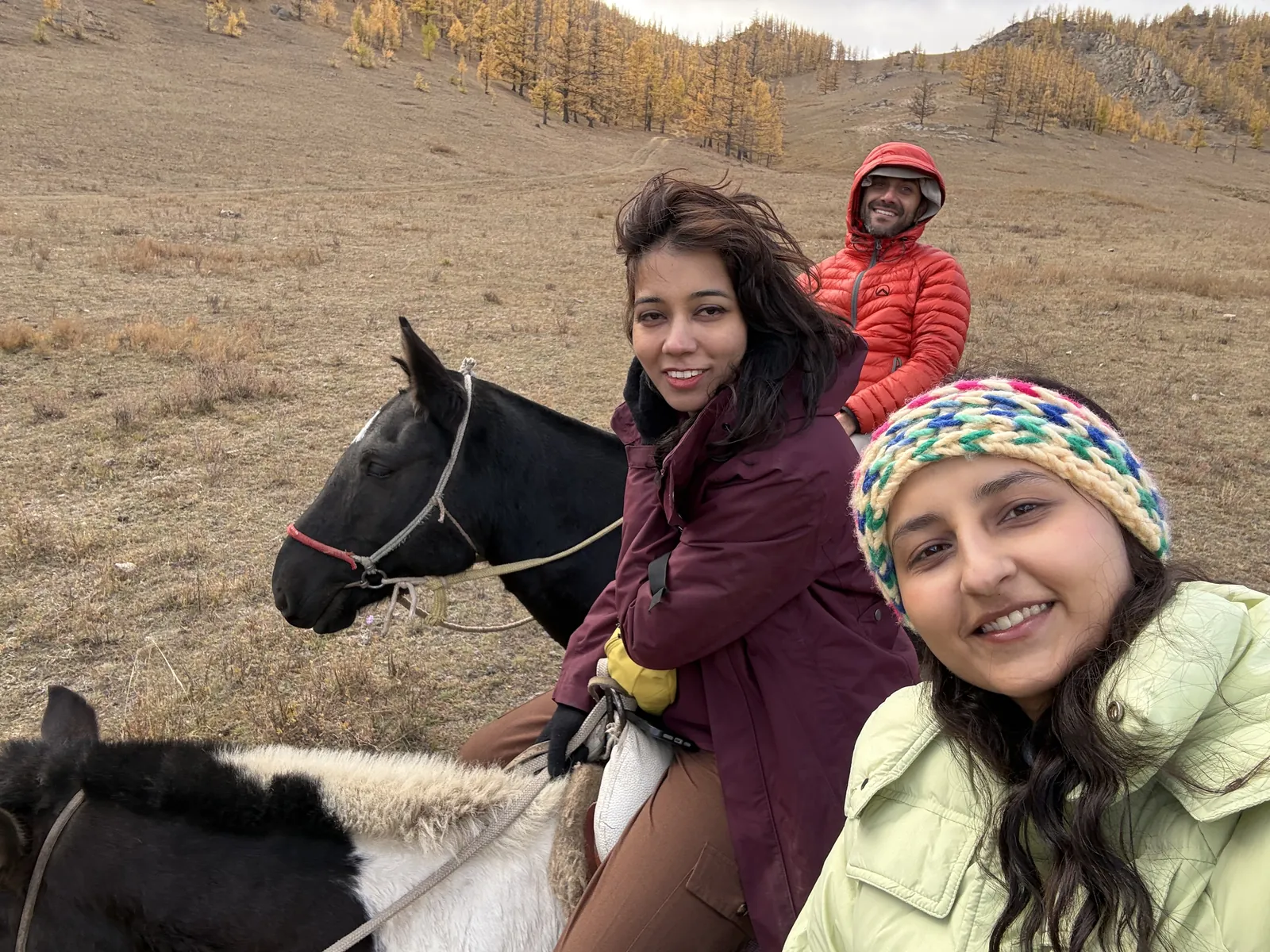
Mongolia is emptier than most people can picture. Three million people in a country four times the size of Germany, and about half of them live in one city. Outside Ulaanbaatar there is functionally no road network, which is the reason the trip is remarkable and the reason it is hard to do alone.
Who runs group trips to Mongolia from India
Thin field. Most Indian operators do not sell Mongolia, and the ones who list it often do so as a bespoke enquiry rather than a fixed departure with dates you can actually book.
One in the Orange Jacket runs a 9-day Mongolia group trip, graded Moderate, in groups of 12 to 20. Explera has run Mongolia itineraries. Beyond a small number of Indian companies, the market is served by Mongolian ground agencies and foreign operators.
Independent travel is possible but awkward. Without roads, getting between the Gobi sites means hiring a 4x4 and a driver for the duration, which costs roughly the same for one person as for four. Mongolia is one of the destinations where group travel is cheaper than going alone, not more expensive.
What the trip actually involves
Nine days, mostly in and around the Gobi. The dunes at Khongoryn Els run to around 250 metres and take a genuine effort to climb, and the descent is the best twenty seconds of the trip.
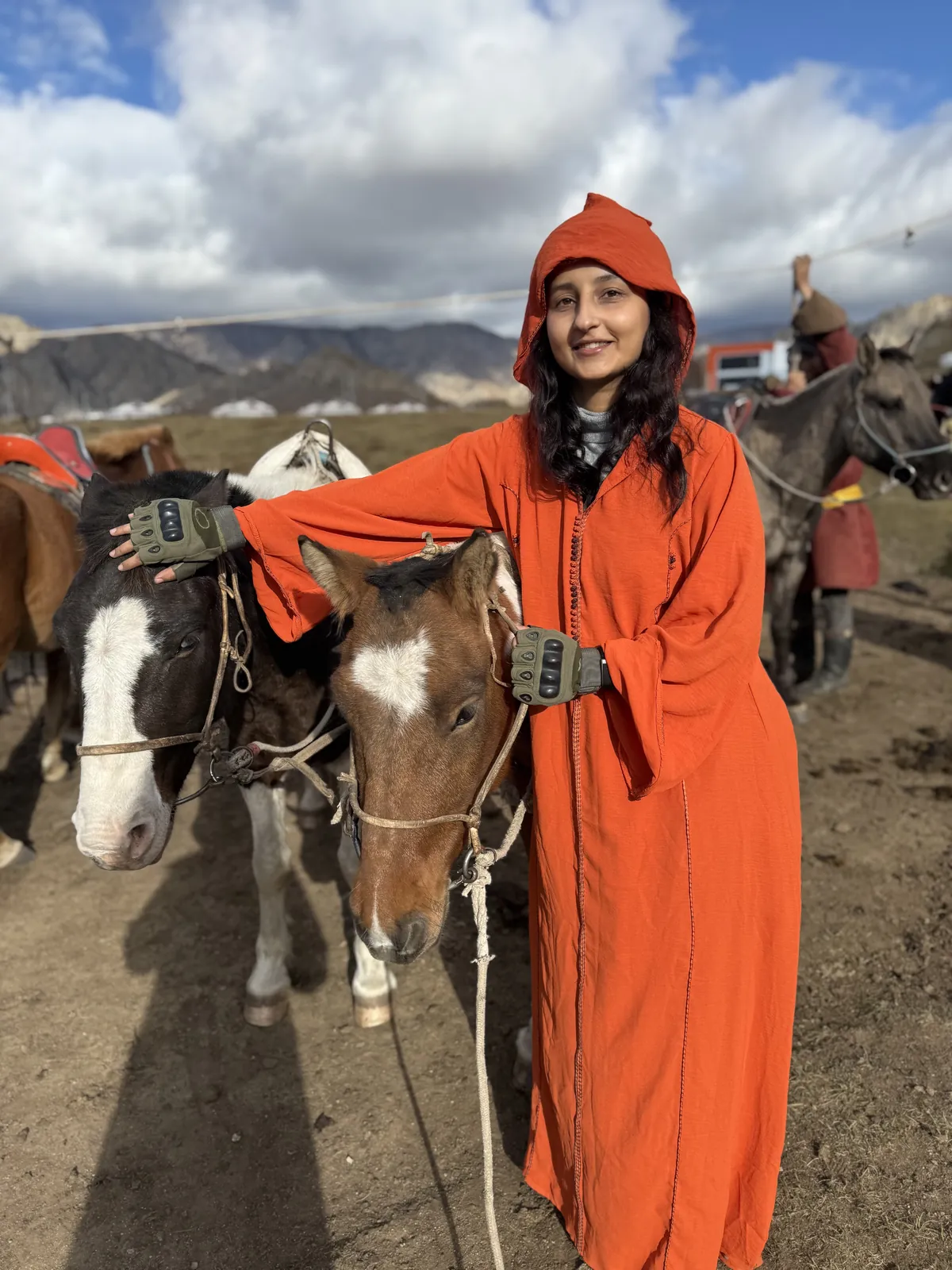
The dinosaur fossil sites are real rather than a museum experience, the horse riding is on Mongolian horses which are smaller and considerably more opinionated than you expect, and the golden eagle encounter is with birds used for hunting rather than for photographs.
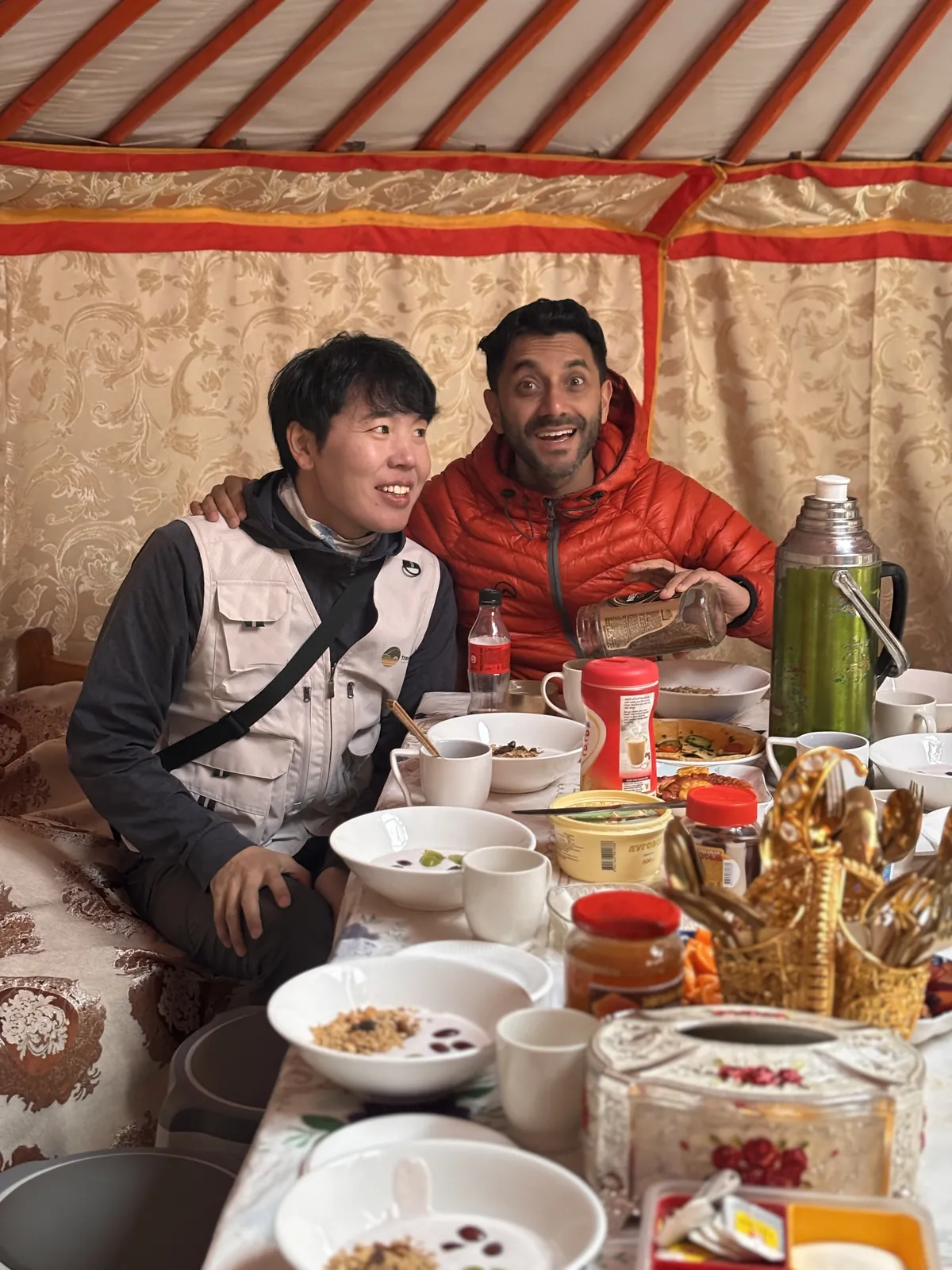
You sleep in gers with nomadic families for part of it. That is not a themed experience. It is somebody's home, with a stove in the middle and the temperature dropping hard after sunset.
Graded Moderate. The difficulty is discomfort and long 4x4 days rather than fitness.
- Length. 9 days
- Difficulty. Moderate
- Highlights. Gobi Desert 4x4, 250m sand dunes, Real dinosaur fossils, Horse riding, Golden eagle encounter and Nomadic ger stay
How the days actually run
Ulaanbaatar first, briefly, and it is worth understanding that roughly half the country's population lives there. The contrast with everything after is the point.
Then south into the Gobi by 4x4, and the driving is the trip. There are no roads in the sense you mean, just tracks that the drivers know, and the navigation is done by landform. Days are long and the landscape changes slowly enough that you notice each shift.
Khongoryn Els is the dune day. The climb up is soft sand at a steep angle and takes far longer than it looks. Yolyn Am is a gorge that holds ice into summer. The flaming cliffs at Bayanzag are where the first dinosaur eggs were found, and fossils are still visible in the rock.
Ger nights run through the trip. A stove gets lit in the evening, goes out around two in the morning, and the temperature drop wakes most people at least once. Bring a warmer sleeping layer than the season suggests.
Visas, permits and getting there
Indian passport holders need a visa for Mongolia. It is a straightforward application by the standards of this list, and operators running fixed departures handle the documentation.
Flights from India route through a hub, usually Beijing, Seoul or Moscow depending on the season, so build in a longer travel day at each end than the map suggests.
When to go
June to September. Outside that the Gobi gets brutally cold and much of the accommodation closes.
July has the Naadam festival, which is wrestling, archery and horse racing, and is the single best week to be in the country. It also means everything books out early.
Mongolia or Kazakhstan?
Both are big empty Central and East Asian countries with a nomadic culture and a lot of driving. Kazakhstan is the easier, cheaper, shorter-flight version with more varied landscape in less space. Mongolia is emptier, harder, more uncomfortable and more remarkable. Kazakhstan is a very good trip. Mongolia is a story you will still be telling in ten years. Pick on how much discomfort you want to trade for that.
| Mongolia | Kazakhstan | |
|---|---|---|
| Emptiness | Extreme | High |
| Comfort | Basic, ger camps | Reasonable, hotels and guesthouses |
| Flight from India | Via a hub, long | Direct-ish, short |
| Cost on the ground | Higher, vehicle-driven | Low |
| Season | June to September | June to September, plus winter skiing |
Who this trip is not for
Anyone who needs a shower every day. Ger camps vary and some nights are basic.
Anyone who dislikes long drives. Mongolia is mostly the drive. If the space between places bores you, this trip is 60 percent boredom.
Vegetarians will find it hard work outside Ulaanbaatar. Tell your operator early and it can be managed, but it takes managing.
Frequently asked
Which Indian companies run group trips to Mongolia?
Not many. One in the Orange Jacket runs a 9-day Mongolia group trip in groups of 12 to 20, and Explera has run Mongolia itineraries. Several Indian companies list Mongolia as a custom enquiry rather than a fixed departure. Most of the market is served by Mongolian ground agencies and foreign operators.
Is it cheaper to visit Mongolia in a group?
Usually yes, which is unusual. Outside Ulaanbaatar there is effectively no road network, so getting between Gobi sites requires hiring a 4x4 and driver for the whole trip. That cost is nearly the same whether one person or four is in the vehicle, so splitting it across a group brings the per-person cost down substantially.
When should you visit Mongolia?
June to September. Outside that window the Gobi becomes extremely cold and much of the ger accommodation closes. July includes the Naadam festival of wrestling, archery and horse racing, which is the best week of the year to be there and also the hardest to book.