Morocco is the most sensory trip on this list. The medinas in Marrakech and Fes are genuinely disorienting, the Sahara is quiet in a way that is hard to describe, and Chefchaouen is painted blue for reasons nobody entirely agrees on. It is also a country where a good guide changes the trip completely, which is the real argument for going with a group.
Who runs group trips to Morocco from India
Reasonably well served. Morocco sells steadily from India, so most mid-size operators run it, and several traditional companies include it in North Africa circuits.
One in the Orange Jacket runs a 9-day Morocco group trip, graded Easy, in groups of 12 to 20, covering Marrakech, the Atlas, the Sahara, Fes and Chefchaouen.
Independently, Morocco is very doable and the trains between the main cities are good. The parts that are hard alone are the Sahara leg, which needs a vehicle and a desert camp booking, and the medinas, where a first-time visitor without a guide spends a lot of the day lost and being sold things.
What the trip actually involves
Nine days across the classic loop. Marrakech first, where the Jemaa el-Fnaa is chaos in the evening and the souks behind it are a maze that defeats your sense of direction within minutes.
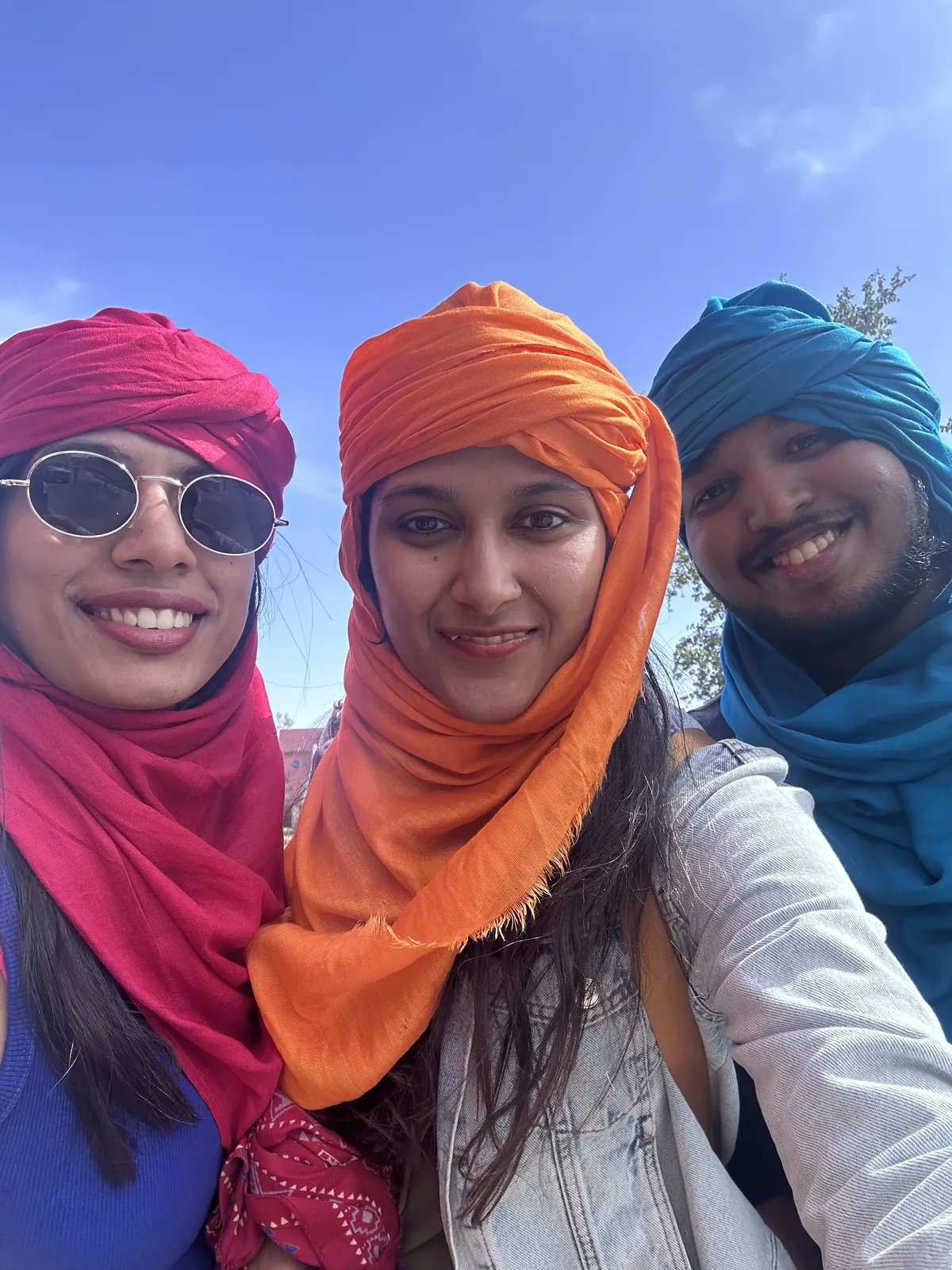
The Atlas Mountains on the way south, then a desert camp in the Sahara, which is the night people remember. Camels in, dunes at sunset, and a silence at night that city people find genuinely unsettling.
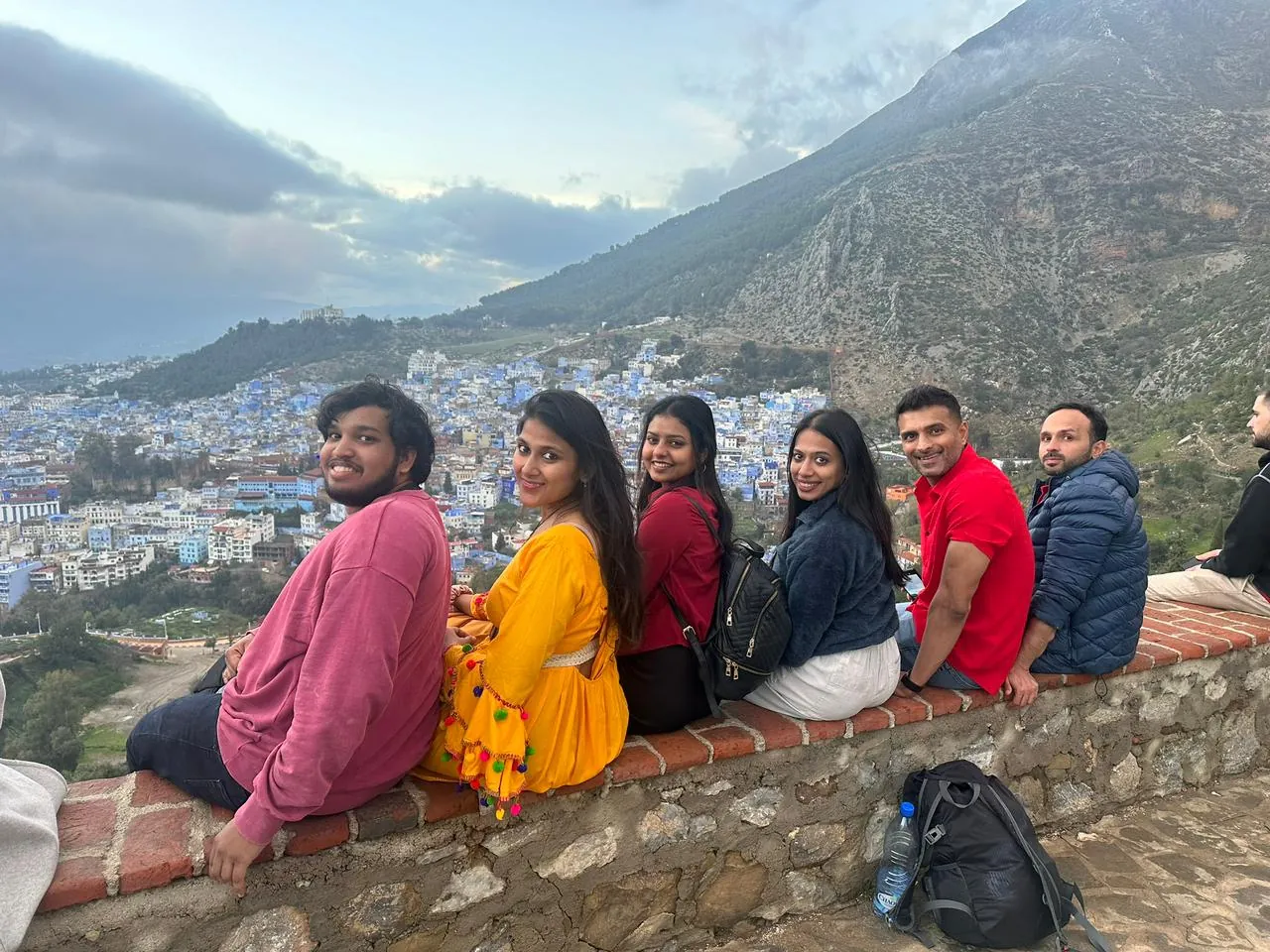
Fes has the older and more overwhelming medina of the two, and the tanneries there are worth seeing and smell exactly as advertised. Chefchaouen is the blue town, small, photogenic and considerably calmer than everywhere else on the route.
Graded Easy. Long drives between regions, short walks, hot in summer.
- Length. 9 days
- Difficulty. Easy
- Highlights. Marrakech medina, Sahara desert camp, Chefchaouen blue city, Atlas Mountains, Fes tannery and Riads
How the days actually run
Marrakech is the opening and it is deliberately overwhelming. Jemaa el-Fnaa fills after dark with food stalls, musicians and a fair amount of theatre. The souks behind it are a genuine maze and getting lost is part of the first day rather than a failure.
South over the Atlas via Tizi n'Tichka, which is a mountain road with switchbacks and views, then down into the pre-Sahara. Ait Benhaddou is the fortified village used in a long list of films and is worth the stop.
The desert night is the centre of the trip. Camels in over the dunes at Merzouga or Erg Chigaga, dinner at camp, drumming, and then a silence and a sky that city people find genuinely startling. Cold after midnight, always colder than people pack for.
North to Fes, whose medina is older and more disorienting than Marrakech, then Chefchaouen in the Rif mountains where the buildings are painted blue and the pace drops right down.
Visas, permits and getting there
Indian passport holders need a visa for Morocco. It is a manageable process and operators running the trip regularly handle the documentation.
Flights route through the Gulf or Europe, so build in a long travel day each way.
When to go
March to May and September to November. Spring and autumn are the sweet spots for both the desert and the cities.
Summer is very hot, particularly in Marrakech and the Sahara, where daytime temperatures make the middle of the day unusable. Winter is fine in the cities and cold at night in the desert, colder than most people pack for.
Morocco or Egypt?
Both North African, both with deserts and old cities, and Indians frequently choose between them. Egypt is about monuments: the pyramids, the temples, the Nile, several thousand years of it. Morocco is about texture: markets, food, colour, the desert night, the sensation of being somewhere. Egypt has the bigger sights. Morocco is the better week if you want to feel a place rather than tick off wonders.
| Morocco | Egypt | |
|---|---|---|
| The draw | Medinas, Sahara, colour | Pyramids, temples, the Nile |
| Pace | Road trip, several bases | Site to site, some flying |
| Crowds at highlights | Moderate | Heavy |
| Best for | Atmosphere and food | History and monuments |
Who this trip is not for
If being approached by sellers constantly wears you down, the medinas will be hard work. It is not aggressive, but it is relentless, and some people find it exhausting rather than charming.
If you want a beach holiday, Morocco has coastline but this is not that trip.
Frequently asked
Do Indians need a visa for Morocco?
Yes, Indian passport holders require a visa for Morocco. The process is manageable compared with many European destinations, and operators running regular departures provide the documentation pack. Confirm current requirements before booking flights, as they can change.
Is Morocco better in a group or independently?
The cities and the train network are straightforward to do alone. The two parts that are genuinely easier in a group are the Sahara leg, which needs a vehicle and a desert camp booking, and the medinas of Marrakech and Fes, where a first-time visitor without a guide loses a lot of the day to being lost and approached by sellers.
When is the best time to visit Morocco?
March to May and September to November. Both the desert and the cities are comfortable in spring and autumn. Summer is extremely hot in Marrakech and the Sahara, with the middle of the day effectively unusable. Winter works in the cities but desert nights get much colder than most travellers pack for.