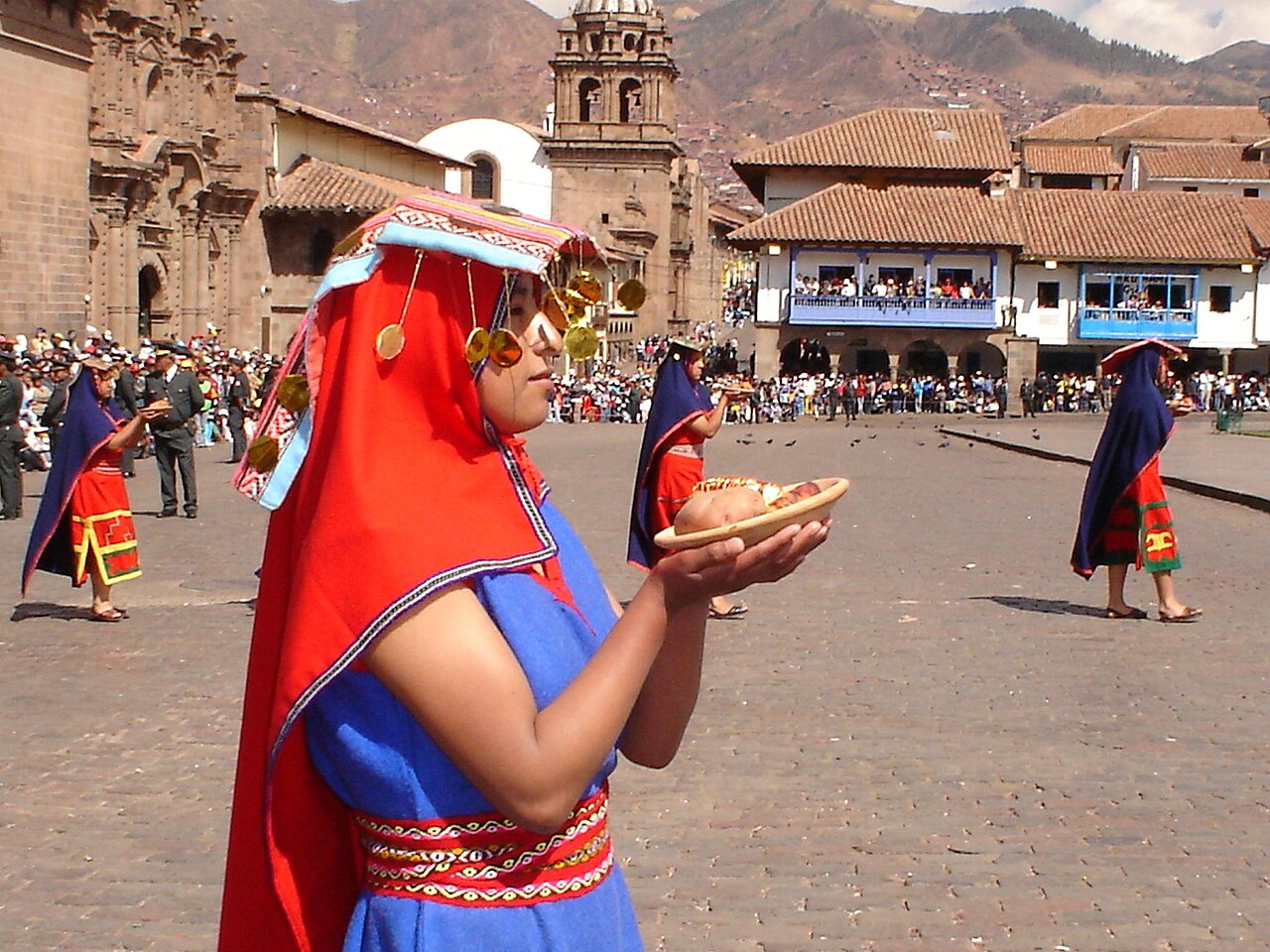
Every June, the old Inca capital of Cusco fills with colour, music, and thousands of costumed performers to honour the sun. Inti Raymi, the Festival of the Sun, was the most important celebration of the Inca empire, banned and driven underground by the Spanish for centuries, and then magnificently revived. Today it is one of the largest festivals in South America, a spectacular act of Andean pride that turns the streets and ancient fortresses of Cusco into a stage for a civilisation that refused to be erased.
Honouring the sun at the turning of the year
For the Inca, Inti, the sun, was the supreme deity, the divine ancestor of the emperor himself, and the source of all life in the high, cold Andes. Inti Raymi marked the winter solstice in the southern hemisphere, the shortest day, when the sun was at its weakest and furthest, and the festival was a great plea and celebration for its return, for the sun to grow strong again and bring the harvests back. It was the spiritual centre of the Inca year.
When the Spanish conquered Peru, they banned the festival as pagan, and for nearly four hundred years it survived only in fragments and memory. Then, in the twentieth century, it was revived as a grand historical reenactment, a deliberate reclaiming of Inca heritage and identity, and it has grown into the vast spectacle of today, performed in the Quechua language against the very stones the Inca built.
The Spanish banned the Festival of the Sun for four centuries. That it now fills Cusco's streets again is itself the festival's deepest meaning.
On Inti Raymi
The spectacle across the city
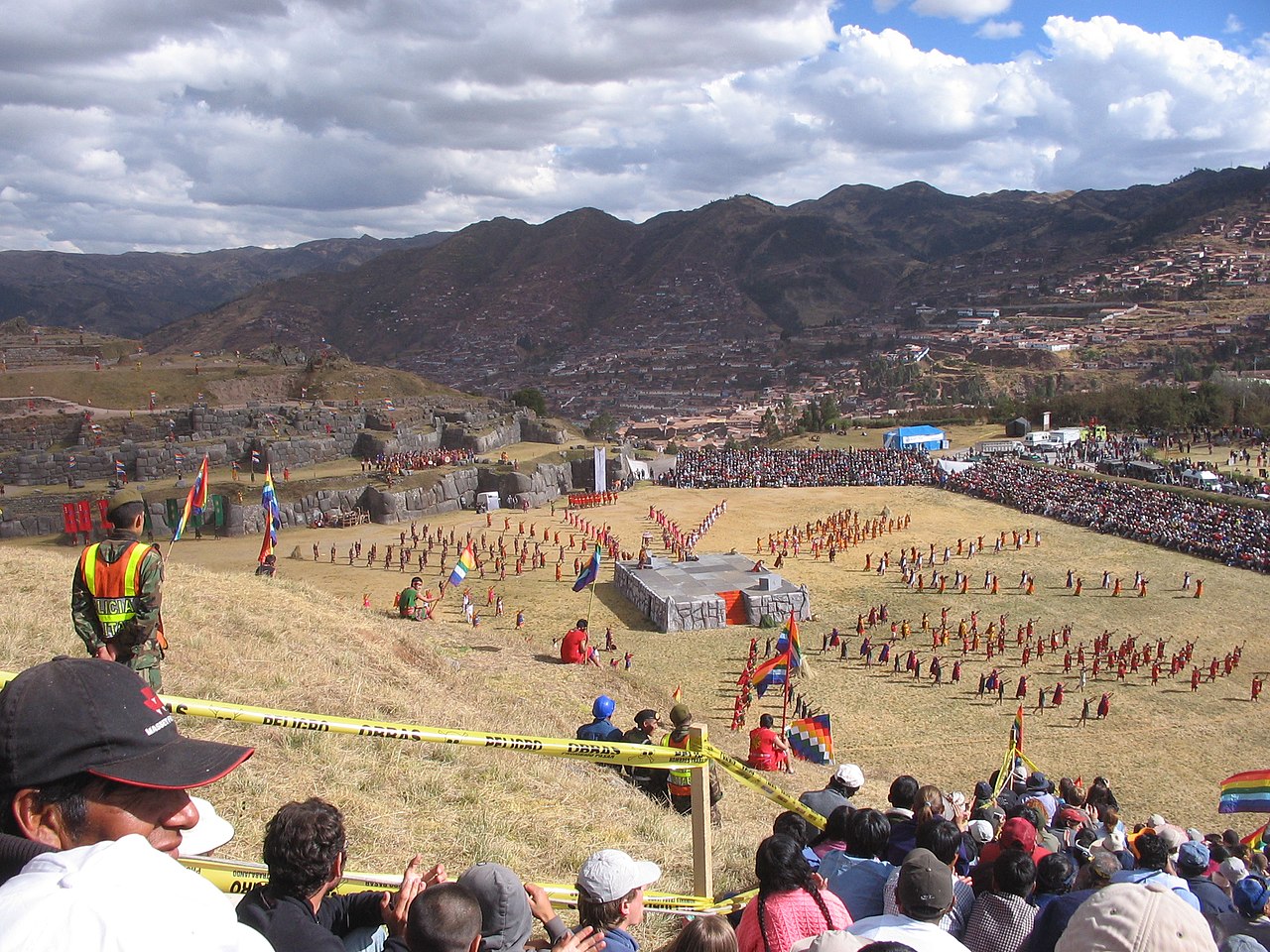
Held around the 24th of June, Inti Raymi unfolds across several stages in and above Cusco. It often begins at the Qorikancha, the Inca sun temple, moves through the Plaza de Armas in the heart of the city, and culminates in a massive reenactment at Sacsayhuaman, the colossal Inca fortress of giant stones on the hill above town. Hundreds of performers in brilliant costume enact the ancient rituals, the Sapa Inca, the emperor, is carried aloft on a golden litter, and the ceremonies, music, and processions play out in a riot of red, gold, and feathers.
The scale is enormous and the setting unbeatable: a recreation of an imperial Andean ceremony performed against the actual monuments of the empire that invented it, thousands of metres up in the thin, brilliant mountain light. For the people of Cusco it is a matter of deep pride, and for a visitor it is an unforgettable window into the living legacy of the Inca.
How to experience it well
- It is held around 24 June in Cusco, coinciding with the southern winter solstice. The city is busy and festive for days around it.
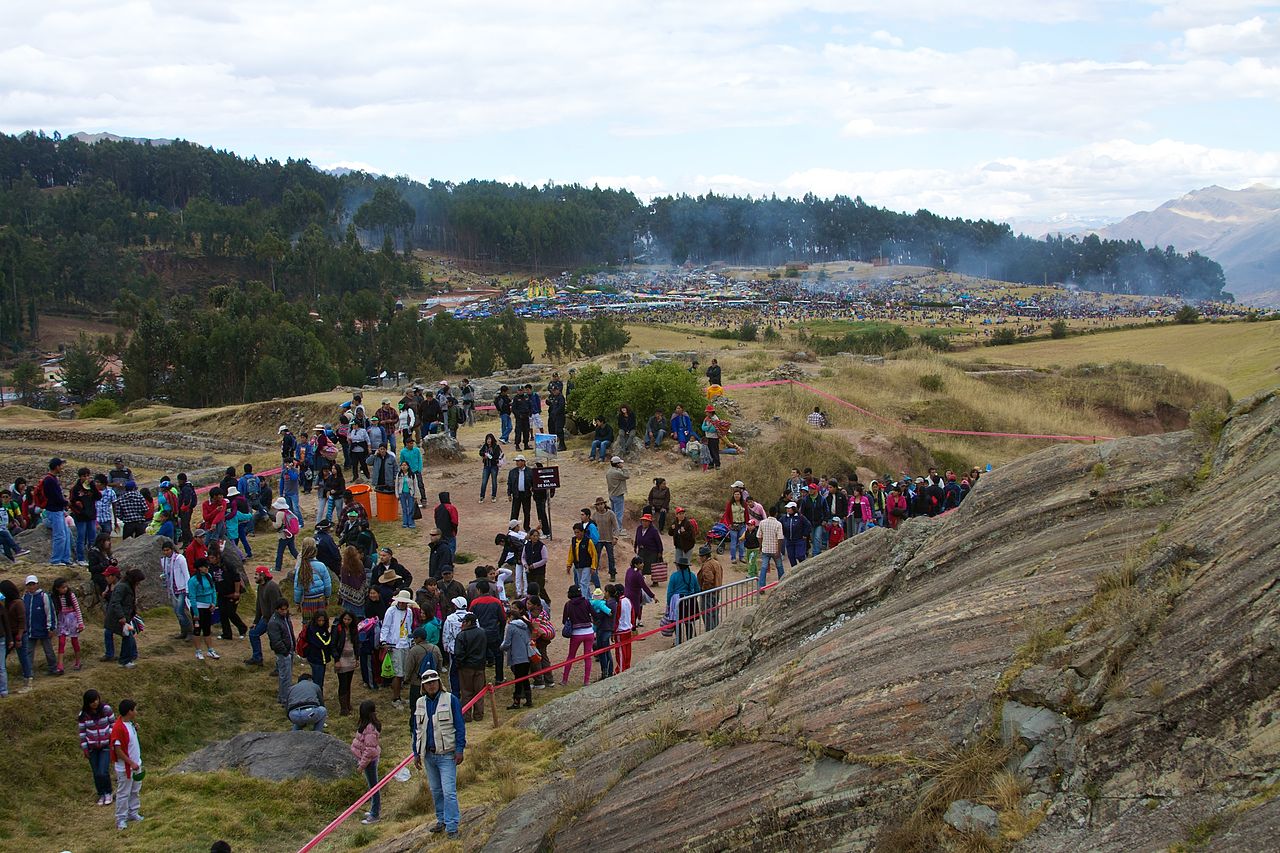
- Book grandstand seats for Sacsayhuaman. The main reenactment at the fortress is ticketed for seating; the free hillsides are very crowded.
- Acclimatise to the altitude first. Cusco sits very high. Arrive a few days early, take it slow, and drink coca tea to adjust.
- Follow the stages through the day. The ceremony moves from the sun temple to the main square to the fortress; plan how you will see each.
- Treat it as living heritage, a proud reclaiming of Inca identity, not a costume show. Engage with what it means to the people of Cusco.
A civilisation that endured
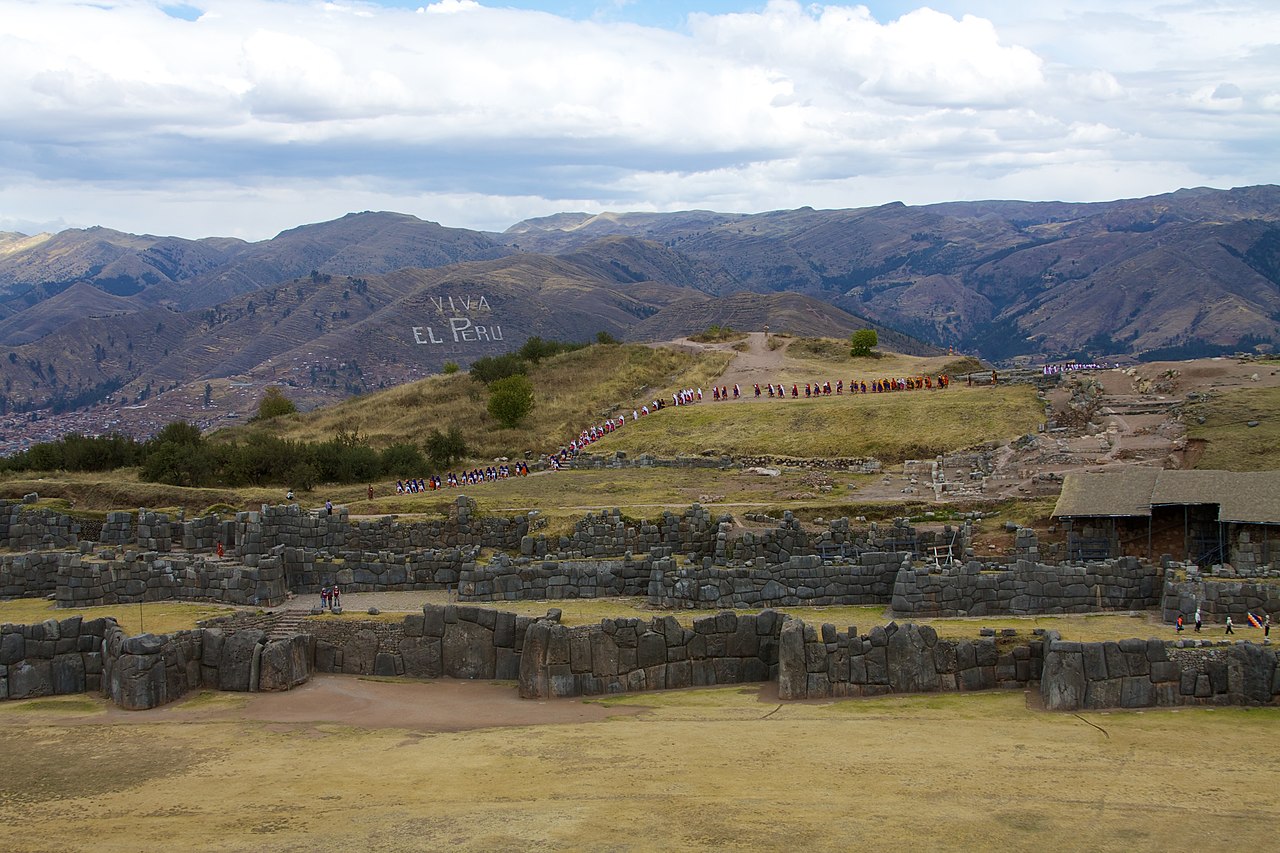
Inti Raymi is more than a spectacle; it is a statement. After four centuries of suppression, the descendants of the Inca fill their ancient capital each year to honour the sun in their own language, on their own sacred ground, in defiance of everything that tried to erase them. To witness it is to feel the deep endurance of Andean culture, a reminder that the Inca world was never truly conquered, only driven underground for a while, and that it lives on, sun and all, in the heart of Cusco.
Inti Raymi is the Andes saying, in Quechua, on the stones the Inca laid: we are still here, and the sun still rises for us.
On the OJ Brazil and Peru trip the Peru leg moves through this living Inca heartland, Cusco, the Sacred Valley, and Machu Picchu, and where the timing aligns, the grandeur of Inti Raymi. Because the lost city in the clouds is the headline, but to stand in Cusco as the Festival of the Sun fills the streets is to understand that the Inca are not a ruin to be visited but a culture still very much alive, still honouring the sun above their ancient capital.
Frequently asked
When and where is Inti Raymi celebrated?
Inti Raymi, the Inca Festival of the Sun, is celebrated around the 24th of June in Cusco, Peru, coinciding with the winter solstice in the southern hemisphere. The festivities unfold across several sites, beginning near the Qorikancha sun temple, moving through the Plaza de Armas, and culminating in a grand reenactment at the Sacsayhuaman fortress above the city.
What is Inti Raymi celebrating?
It honours Inti, the sun god, the supreme deity of the Inca and the source of life in the Andes. The festival marked the winter solstice, when the sun was weakest, as a plea and celebration for its return and for good harvests. Banned by the Spanish for centuries, it was revived in the twentieth century as a proud reenactment of Inca heritage.
How do you see Inti Raymi as a tourist?
Be in Cusco around 24 June, and book grandstand seats in advance for the main reenactment at Sacsayhuaman, as the free viewing areas are extremely crowded. Acclimatise to Cusco's high altitude for a few days first. Follow the ceremony through its stages across the city, and approach it as living Andean heritage rather than a mere show.