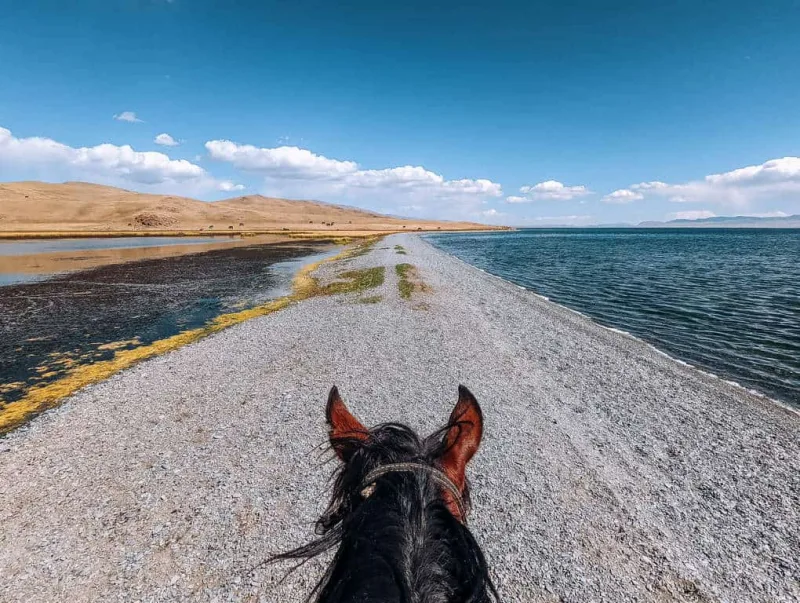
A Kyrgyzstan trip from India is one of the most underrated moves you can make right now. Most people filing their Central Asia bucket list are scrolling past Kyrgyzstan in favour of Uzbekistan or Tajikistan. That is their loss. Kyrgyzstan has more dramatic mountain terrain than anywhere else in Central Asia, yurt camps at 3,000 metres, glacial lakes so turquoise they look photoshopped, and an adventure travel infrastructure that is actually set up for independent travellers. Flights from Delhi start under Rs. 25,000 one way, the visa is a straightforward online form, and the country is not yet mobbed.
Here is everything you need to plan the trip, with real INR numbers.
Do Indians Need a Visa for Kyrgyzstan?
Yes, Indian passport holders need a visa. There is no visa-on-arrival for Indian citizens arriving on an Indian passport alone. The good news is that Kyrgyzstan runs a clean e-visa system through its official portal at evisa.e-gov.kg.
In January 2025, Kyrgyzstan replaced its old multi-category visa system with a single unified "Sapar" e-visa. The process is: fill in the online form, upload a passport scan and a recent photo, pay the fee online. Your visa arrives by email, usually within 2 to 3 working days. The standard fee is around $30 (roughly Rs. 2,500), though third-party agencies charge more. Apply directly on the government portal and save the cost.
One exception: if you hold a valid US, UK, or Schengen visa, you can enter Kyrgyzstan visa-free for up to 7 days, but only through Manas International Airport in Bishkek. Useful for a short stopover, not for a real trip.
Border permits: most tourist spots, including Bishkek, Issyk-Kul, Karakol, and Son Kul, need only the standard e-visa. Remote border areas like Kel-Suu Lake or Lenin Peak require an additional border permit that takes at least three weeks to process. For a standard 10-day trip, you will not need one.
Apply at least two weeks before travel. Confirm validity at the official portal; do not rely on third-party sites for current fee figures.
How to Get to Kyrgyzstan From India
There are no direct flights from India to Bishkek. Every route involves at least one connection. The main options:
Via Almaty (Kazakhstan): Air Astana flies Delhi to Almaty, then Almaty to Bishkek (Manas International Airport). Total travel time around 6 to 8 hours. Reasonably priced and reliable.
Via Istanbul: Turkish Airlines connects several Indian cities to Bishkek via Istanbul. Flight time is longer (12 to 16 hours total), but the airline is consistent and often competitively priced when booked early.
Air Manas: Kyrgyzstan's national carrier runs direct Delhi to Bishkek service on select days. Check current availability on booking platforms since schedules change seasonally.
Return fares from Delhi typically range from Rs. 25,000 to Rs. 50,000 depending on the route and how far ahead you book. Mumbai and Bengaluru departures tend to be Rs. 3,000 to Rs. 8,000 more. Mid-May bookings for a July or August trip usually land in the Rs. 32,000 to Rs. 42,000 range.
The Bishkek airport (Manas International) is about 25 km north of the city. A taxi to central Bishkek costs roughly Rs. 700 to Rs. 900. Agree on the fare before you get in.
How Much Does a Kyrgyzstan Trip Cost From India?
Here is a realistic INR cost table for a 10-day trip:
| Expense | Budget (INR) | Mid-Range (INR) |
|---|---|---|
| Return flights (ex-Delhi) | 28,000 - 35,000 | 38,000 - 50,000 |
| Visa e-visa fee | 2,500 | 2,500 |
| Accommodation (10 nights) | 5,000 - 8,000 | 12,000 - 20,000 |
| Yurt camp nights (3 nights) | 4,500 - 6,000 | 7,000 - 9,000 |
| Food (10 days) | 7,000 - 10,000 | 12,000 - 16,000 |
| Transport within Kyrgyzstan | 4,000 - 6,000 | 8,000 - 12,000 |
| Activities and treks | 4,000 - 8,000 | 10,000 - 16,000 |
| Travel insurance | 1,500 - 2,500 | 2,500 - 3,500 |
| Total (approx.) | 56,500 - 78,000 | 92,000 - 1,29,000 |
Notes: The Kyrgyz som trades at roughly Rs. 0.96 to 1 som, so the numbers track closely. Yurt camp stays almost always include dinner and breakfast, which pulls down food costs considerably. Hiring a 4WD for remote areas (Son Kul, Ala-Archa) costs around Rs. 3,500 to Rs. 5,000 per day split across a group, which is the smarter move over marshrutkas for mountain routes.
On a group trip, per-person costs drop meaningfully once you are splitting transport, guides, and sometimes accommodation.
When to Visit Kyrgyzstan From India
Kyrgyzstan is a summer destination for the kind of trip most Indians want to do here, meaning mountains, treks, and yurt camps. The window is June to mid-September.
July and August are peak season. High passes are open, Son Kul Lake is ice-free and running yurt camps, Ala-Kul trek is at its best. Daytime temperatures at lower elevations hit 25 to 30 degrees, but it drops sharply at altitude. Pack a proper fleece and a mid-layer regardless of the month.
June opens up the mountain routes but Son Kul can still be cold, and the Ala-Kul pass may have residual snow. Good for a less crowded trip if you are comfortable with a bit of unpredictability.
September brings fewer tourists, clear skies, and autumn colour in the valleys. Some yurt camps close by mid-September. Great option if you can travel off-peak.
October to May: most high-altitude routes are closed. Bishkek itself is accessible year-round but there is little reason to visit in winter unless you are into ski touring.
For Indians travelling on a 10 to 12 day window, a July or August departure works best.
A 10-Day Kyrgyzstan Itinerary From India
This is a realistic loop for a 10-day trip, covering the best of what Kyrgyzstan offers without killing yourself with travel days.
Day 1: Fly in, arrive Bishkek Land at Manas, transfer to central Bishkek. Get a local SIM (Beeline or MegaCom, sold at the airport). The city is worth exploring for half a day: Ala-Too Square, the Osh Bazaar where the produce and spice sections are genuinely impressive, and dinner at a proper Kyrgyz restaurant. Try beshbarmak (slow-cooked meat over noodles) or lagman (hand-pulled noodle soup).
Day 2: Bishkek city + Ala-Archa National Park Drive 40 km south to Ala-Archa, Bishkek's closest mountain park. The main trail climbs through spruce forest to a glacier. Even without summiting, the views of the Tian Shan peaks from the lower trail are exceptional. Back in Bishkek by evening.
Day 3: Drive to Issyk-Kul Lake (west shore) Issyk-Kul is the world's second-largest alpine lake and stays unfrozen year-round despite sitting at 1,600 metres. Drive to the west or south shore, check in near Cholpon-Ata or the quieter lakeside villages. The lake changes colour across the day from turquoise to deep blue to silver. Worth an afternoon swim if you arrive by midday.
Day 4: Issyk-Kul south shore, drive to Karakol The south shore drive has better scenery than the north. Stop at Grigorievka and Semyonovka gorges (short hikes into the mountains are possible here), then push on to Karakol, the adventure capital of Kyrgyzstan.
Day 5: Karakol - Dungan Mosque + Karakol Animal Market The Sunday animal market in Karakol is one of the more visceral markets in Central Asia: horses, sheep, and cows traded by actual nomadic herders. Even on weekdays, the Dungan Mosque (built without nails, in Chinese architectural style) and the old Russian wooden Orthodox church in the town square are genuinely worth seeing. Pick up a guide for the Ala-Kul trek starting the next day.
Day 6-7: Ala-Kul Trek The Ala-Kul trek is the single best two-day experience in Kyrgyzstan. Day 6: hike from Karakol valley through Keldike gorge, camp at Ala-Kul Lake at 3,530 metres. The water is so turquoise it looks like someone filtered it. Day 7: summit the Ala-Kul pass (3,860 metres) and descend into Altyn-Arashan hot springs. The hot spring is a legitimate reward after the climb. Spend the night here.
No technical mountaineering experience needed. A reasonable level of fitness and proper layered clothing is enough.
Day 8: Altyn-Arashan to Son Kul Lake (drive) This is a long driving day over rough roads. Hire a 4WD from Karakol and head west toward the Naryn region. The road to Son Kul cuts through high steppe that feels like the end of the world in the best possible sense. Arrive at Son Kul (3,016 metres) in the afternoon and settle into a yurt camp.
Day 9: Son Kul Lake - Horse riding, sunset Son Kul is the crown. The lake is the size of a small sea, ringed by rolling green hills, with yurt camps scattered along the shore. Rent a horse from your camp host (around Rs. 1,200 to Rs. 1,500 for a half-day ride) and ride the peninsula. The sunset here, with the lake turning gold and the nomadic families going about their evening routines, is the kind of scene that stays with you. Dinner is usually included in the yurt camp rate, and it is excellent.
Day 10: Drive back to Bishkek, depart Son Kul to Bishkek is roughly 5 to 6 hours by road via Kochkor. Depending on your flight time, you can stop at the Burana Tower (a well-preserved 11th-century minaret with hilltop views and a fascinating collection of stone carvings) on the way back. Evening departure or next-day morning flight.
Getting Around Kyrgyzstan on the Ground
Shared taxis (marshrutkas): the standard mode for short intercity routes. Bishkek to Issyk-Kul runs Rs. 350 to Rs. 500. Comfortable for the first two hours, less so after four.
Private 4WD hire: the practical option for mountain routes and Son Kul access. A driver and 4WD for a full day costs Rs. 3,500 to Rs. 5,500 depending on distance. Split across four people, it is cheaper than you would expect.
Community Based Tourism (CBT): Kyrgyzstan has one of the best grassroots tourism networks in Central Asia. CBT offices in Bishkek, Karakol, and Kochkor can arrange guides, horses, yurt stays, and transport at fair rates. This is how local families make income from tourism, and the quality is generally high.
Car rental: possible but roads outside the main towns are rough and navigation requires confidence. Recommended only if you have off-road driving experience.
What to Eat in Kyrgyzstan
Kyrgyz food is hearty, meat-forward, and built for people who spend long days in the mountains. The cuisine is Central Asian with strong nomadic influence.
Beshbarmak: the national dish. Slow-cooked mutton or horse meat over flat pasta, served with broth on the side. Order it in a proper restaurant, not a tourist cafe.
Lagman: hand-pulled noodles in spiced meat broth with vegetables. Found everywhere, excellent when made fresh.
Manti: large steamed dumplings with minced meat and onion. Eat them with sour cream, not ketchup.
Samsa: baked pastry stuffed with lamb and onion. The street version, sold from bakeries, costs Rs. 40 to Rs. 60 each and is better than it has any right to be.
Kymyz: fermented mare's milk. The traditional drink of the nomads. Try it once at a yurt camp. The taste is sharp and slightly fizzy; you either get it or you do not.
Eating local food throughout the trip costs Rs. 600 to Rs. 900 per day for proper meals. Yurt camp dinners and breakfasts are typically included in the overnight rate.
Is Kyrgyzstan Safe for Indian Tourists?
Yes, and without significant caveats. Kyrgyzstan is consistently ranked one of the safer destinations in Central Asia. Bishkek is a normal city; street crime exists but is not directed at tourists in any systematic way. The mountain areas are remote but not dangerous.
A few practical points: carry some Kyrgyz som in cash as ATMs are sparse outside Bishkek and Karakol. Credit cards work at some hotels and restaurants in the capital but nowhere in the mountains. Altitude sickness is a real concern at Son Kul (3,016 m) and the Ala-Kul pass (3,860 m). Ascend gradually, drink water, and do not push through symptoms. The CBT network means there are guesthouse contacts along most major routes.
The nearest Indian diplomatic presence is the Embassy of India in Almaty (Kazakhstan). Keep your embassy contact and travel insurance details accessible.
Kyrgyzstan vs. Tajikistan and Uzbekistan: Which Should You Visit?
If you are choosing between Central Asian countries, here is the honest breakdown:
| Factor | Kyrgyzstan | Tajikistan | Uzbekistan |
|---|---|---|---|
| Mountain trekking | Best in Central Asia | Excellent (Pamir) | Minimal |
| Nomadic culture | Very strong | Moderate | Mostly gone |
| Visa for Indians | E-visa (~Rs. 2,500) | E-visa + GBAO permit | E-visa |
| Ease of travel | High (good CBT network) | Moderate to challenging | High |
| City sightseeing | Limited | Limited | Exceptional (Samarkand) |
| Budget (on the ground) | Low | Low to moderate | Low to moderate |
| Best for | Adventure, trekking, culture | Expedition-style travel | History and architecture |
For first-timers to Central Asia who want outdoor adventure, Kyrgyzstan is the easiest entry point. Tajikistan is more intense but rewards those who go. The Pamir Highway from India combines both countries and is the ultimate Central Asia trip.
Packing for Kyrgyzstan
This matters more than for most destinations. Even in July, Son Kul drops to 5 to 8 degrees at night and the Ala-Kul pass can be cold and windy mid-day.
- Waterproof hiking boots (non-negotiable for Ala-Kul and any mountain trail)
- Warm mid-layer (fleece or down jacket)
- Wind and rain shell
- Sun protection: sunscreen SPF 50+, sunglasses, hat (UV is brutal at altitude)
- Trekking poles (optional but very useful on the Ala-Kul descent)
- Reusable water bottle (water from mountain streams is clean; you will refill constantly)
- Power bank (yurt camps may not have charging points)
Leave the cotton at home. Synthetic or merino wool only for base layers.
How to Book a Kyrgyzstan Trip From India
Self-planned: flights on Skyscanner or Google Flights, e-visa on evisa.e-gov.kg, accommodation through Booking.com and direct CBT contact. Takes time to coordinate but gives maximum flexibility.
Group trip: the faster way to get the trekking, yurt camps, and transport sorted without the logistics overhead. OJ runs offbeat group trips to Central Asia including Kyrgyzstan, often combined with the Pamir Highway through Tajikistan.
Check the Pamir, Tajikistan and Kyrgyzstan group trip for upcoming dates.
Frequently Asked Questions
Do Indian passport holders need a visa for Kyrgyzstan?
How much does a Kyrgyzstan trip cost from India?
What is the best time to visit Kyrgyzstan from India?
Do you need permits for trekking in Kyrgyzstan?
Are there direct flights from India to Bishkek?
Is Kyrgyzstan safe for Indian tourists?
One in the Orange Jacket runs offbeat group adventures for travellers who have outgrown the usual circuit.