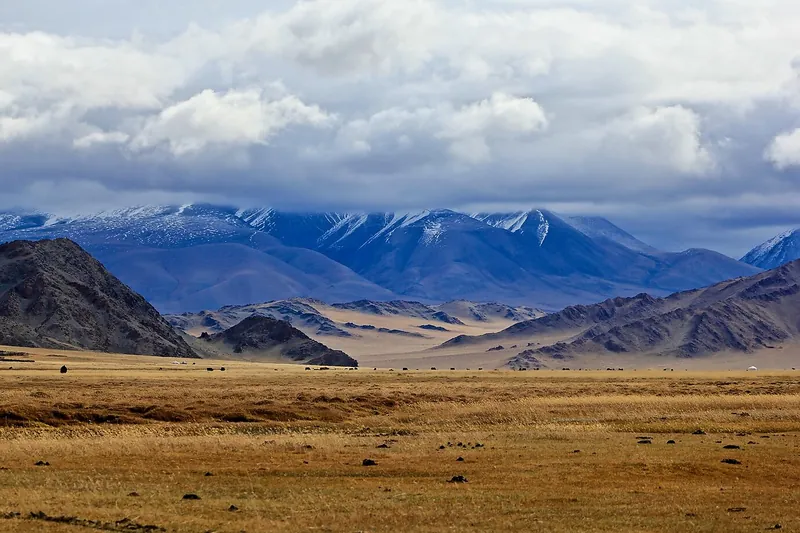
To understand Mongolian food you have to understand the steppe, and to understand the steppe you have to accept a hard fact: almost nothing grows there. The Mongolian plateau is too high, too cold, too dry for agriculture across most of its expanse. So the food is built entirely from what a nomad can herd: meat and milk. There are no vegetables in traditional Mongolian cuisine because there were, for most of history, no vegetables. This is survival cuisine, and it is fascinating precisely because of its constraints.
The five snouts
Mongolian herders speak of the five kinds of livestock, sometimes called the five snouts: horses, cattle, camels, sheep, and goats. Everything in the diet comes from these five animals. The meat feeds you in winter. The milk feeds you in summer. The animals are wealth, food, transport, and clothing all at once, and the food culture is the direct expression of a life lived alongside them on open grassland.
Mutton and goat are the everyday meats, beef and horse less common, camel rare. The meat is generally boiled rather than fried or heavily spiced, because for centuries spices were not available and fuel for long cooking was precious. The flavour comes from the meat itself and from salt. To a palate raised on Indian spicing, the simplicity is startling at first, and then, in the cold, it makes complete sense.
There are no vegetables in traditional Mongolian food because for most of history, on the steppe, there were none. The cuisine is what survival tastes like.
On the logic of the plateau
Khorkhog and the hot stones
The most theatrical Mongolian dish is khorkhog, a celebratory meal cooked by placing mutton, sometimes with a few potatoes and carrots in the modern version, into a sealed metal container along with stones heated red-hot in a fire. The container is sealed and the hot stones cook the meat from inside over a couple of hours. When it opens, you are handed a hot stone to pass between your hands, which Mongolians believe is good for your health, and then the tender meat.
There is also boodog, an even more dramatic version traditionally made with a whole marmot or goat cooked with hot stones placed inside the carcass itself. And the everyday dumplings: buuz, steamed mutton dumplings eaten by the dozen especially at the Lunar New Year, and khuushuur, the fried version, a flat meat pastry that is the snack of the Naadam festival. These dumplings are the most accessible Mongolian food and genuinely good.
The white foods of summer
In summer, when the animals are producing milk, the diet shifts to what Mongolians call white foods, tsagaan idee, an entire dairy economy. Milk is turned into a startling variety of products: aaruul, dried curds left to harden in the sun on the ger roof, chewed as a hard snack that lasts through winter. Urum, a clotted cream skimmed off boiled milk. Various cheeses, yogurts, and fermented products.
And the famous one: airag, fermented mare's milk, slightly alcoholic, sour, fizzy, the national drink. Offered to guests as a matter of honour, airag is an acquired taste that most travellers find challenging on the first sip and many come to appreciate. Refusing it outright is impolite, so the move is to accept the bowl, take a sip, and be honest about being a beginner. The hospitality behind the offer is genuine and deep.
- Buuz, steamed mutton dumplings, the most accessible and best-loved Mongolian food.
- Khuushuur, the fried meat pastry, the taste of the Naadam festival.
- Khorkhog, the hot-stone mutton stew, the celebratory dish worth seeking out.
- Aaruul, the sun-dried curds, the original long-lasting snack, an acquired chew.
- Suutei tsai, milk tea with salt, the everyday drink, warming and strange.
- Airag, fermented mare's milk, the national drink, approached with an open mind.

The vegetarian honesty
It would be dishonest to pretend Mongolia is easy for vegetarians, because it is the hardest country in this collection. Traditional cuisine is meat and dairy with essentially no vegetables, and in the deep countryside, vegetarian options can be limited to bread, dairy, and whatever has been trucked in. Ulaanbaatar, the capital, has changed this somewhat, with international restaurants and even dedicated vegetarian places. But on the steppe itself, a strict vegetarian needs to plan: carry snacks, communicate dietary needs clearly in advance through your operator, and lean on the dairy and bread. It is doable but it requires preparation, and that honesty is part of understanding what the steppe is.
They hand you a hot stone from the khorkhog to pass between your palms. It is good for you, they say. Then the meat that cooked beside it, simple and tender and earned.
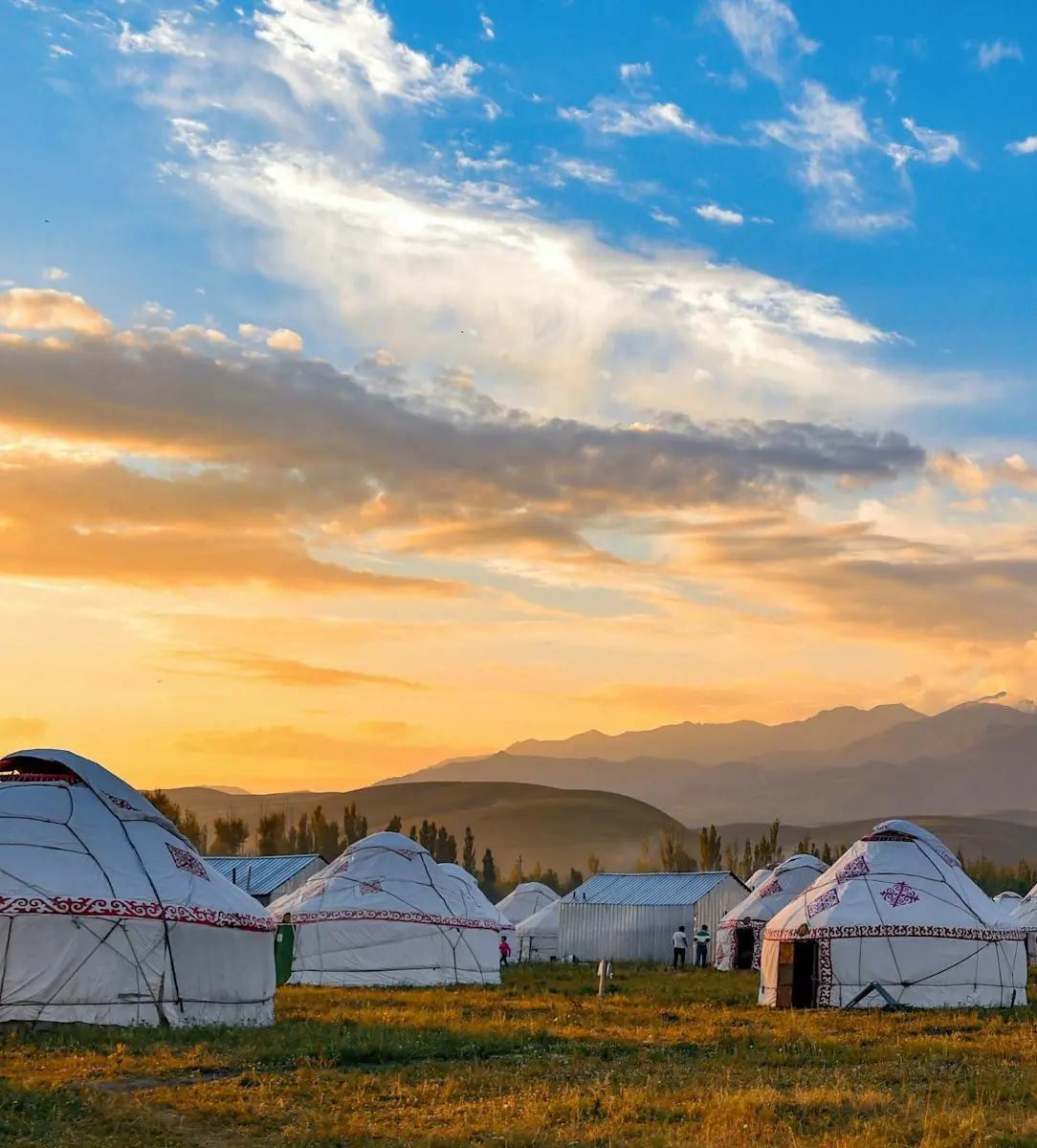
On the OJ Mongolia trip, timed around the Naadam festival in July when the white-food season is in full flow, the food is part of the immersion, not a hurdle to clear. The buuz at a ger camp, the khorkhog cooked over an afternoon, the bowl of airag offered by a herding family whose hospitality is the realest thing about the whole country. We brief vegetarians properly in advance so the steppe does not catch them out. Because the food here is not separate from the landscape. The food is the landscape, turned into a meal.
Frequently asked
Is Mongolia difficult for vegetarians?
Yes, the most difficult in this region. Traditional cuisine is meat and dairy with essentially no vegetables, since farming is impossible across most of the steppe. Ulaanbaatar has international and vegetarian restaurants, but the countryside is limited to bread, dairy, and trucked-in produce. Vegetarians should plan ahead, communicate needs through their operator, and carry snacks.
What is airag?
Airag is fermented mare's milk, slightly alcoholic and sour, the national drink of Mongolia. It is offered to guests as a point of honour, and refusing outright is impolite. Most travellers find it challenging at first. The polite approach is to accept the bowl, take a sip, and be honest about being a beginner.
What is the most accessible Mongolian dish for first-timers?
Buuz, steamed mutton dumplings, are the most accessible and best-loved Mongolian food, eaten by the dozen. Khuushuur, the fried meat pastry, is the festival snack. Both are genuinely good and a gentle introduction to a cuisine built on meat, dairy, and the constraints of the steppe.