For three days every April, the whole of Thailand picks up a water gun. Songkran, the traditional Thai New Year, has become the biggest water fight on the planet, a nationwide, joyful, completely soaking battle where nobody is exempt and everyone is a target. But underneath the super-soakers is a gentle, ancient ritual about washing away the old year, and understanding both halves is how you celebrate it right.
The gentle ritual it grew from
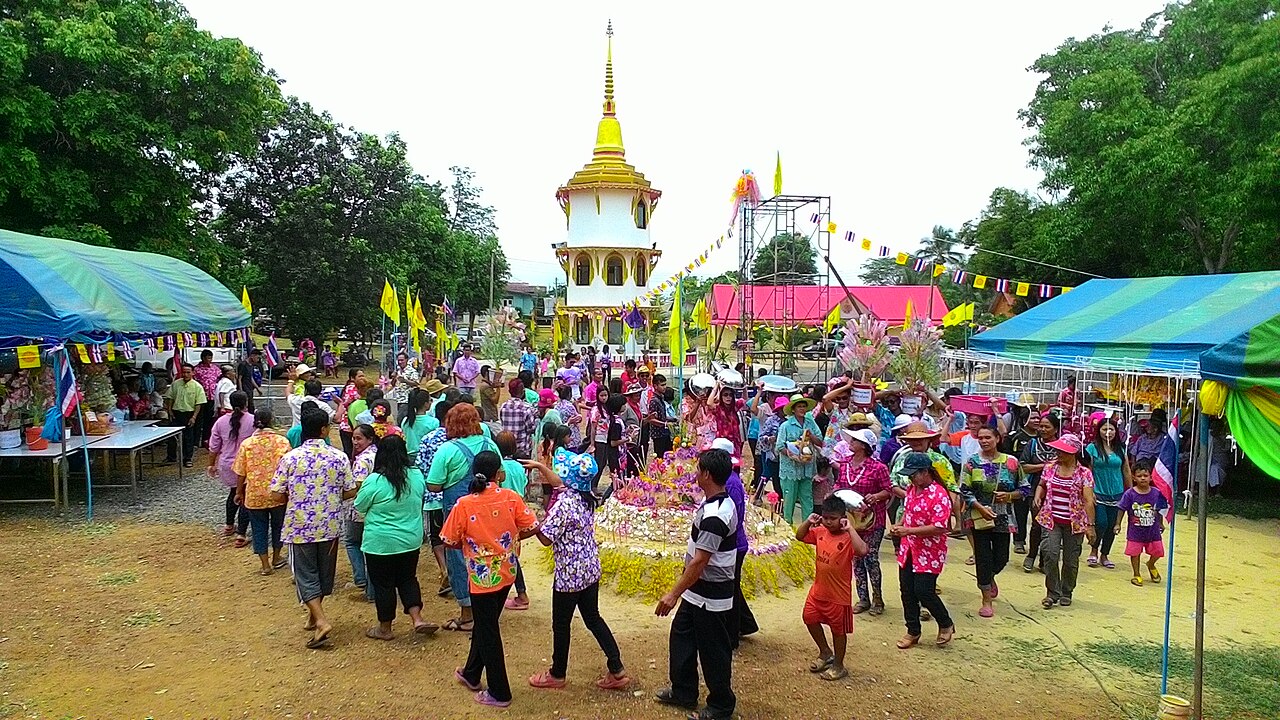
Before it was a water war, Songkran was, and in many homes and temples still is, a quiet act of renewal. Water is poured respectfully over Buddha images to bathe them, and younger people pour scented water gently over the hands of elders and monks as a sign of respect, receiving a blessing in return. The water symbolises washing away the misfortune and sins of the past year, cleansing yourself for the new one. Families return home, clean their houses, and visit temples. This is the soul of the festival, and it still beats under the chaos.
Over time, the sprinkling of water became splashing, the splashing became buckets, and the buckets became the modern free-for-all. But the meaning never disappeared. The best Songkran travellers experience both: the riotous street battle and a respectful morning at a temple, where the original gesture of blessing and renewal is still performed with care.
Songkran is two festivals at once: a sacred washing-away of the old year, and the biggest water fight on earth. The trick is to honour the first while diving into the second.
On the heart of Songkran
What the water battle is actually like
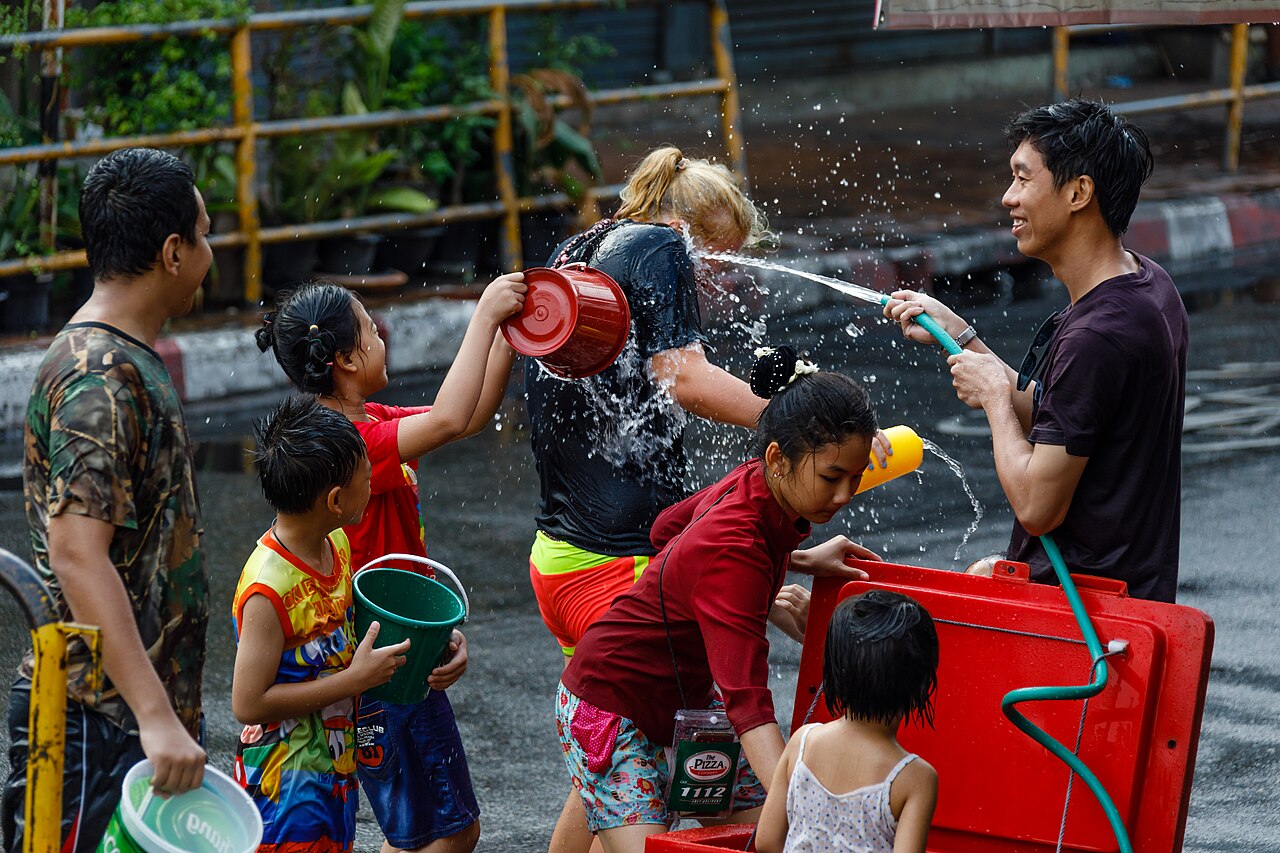
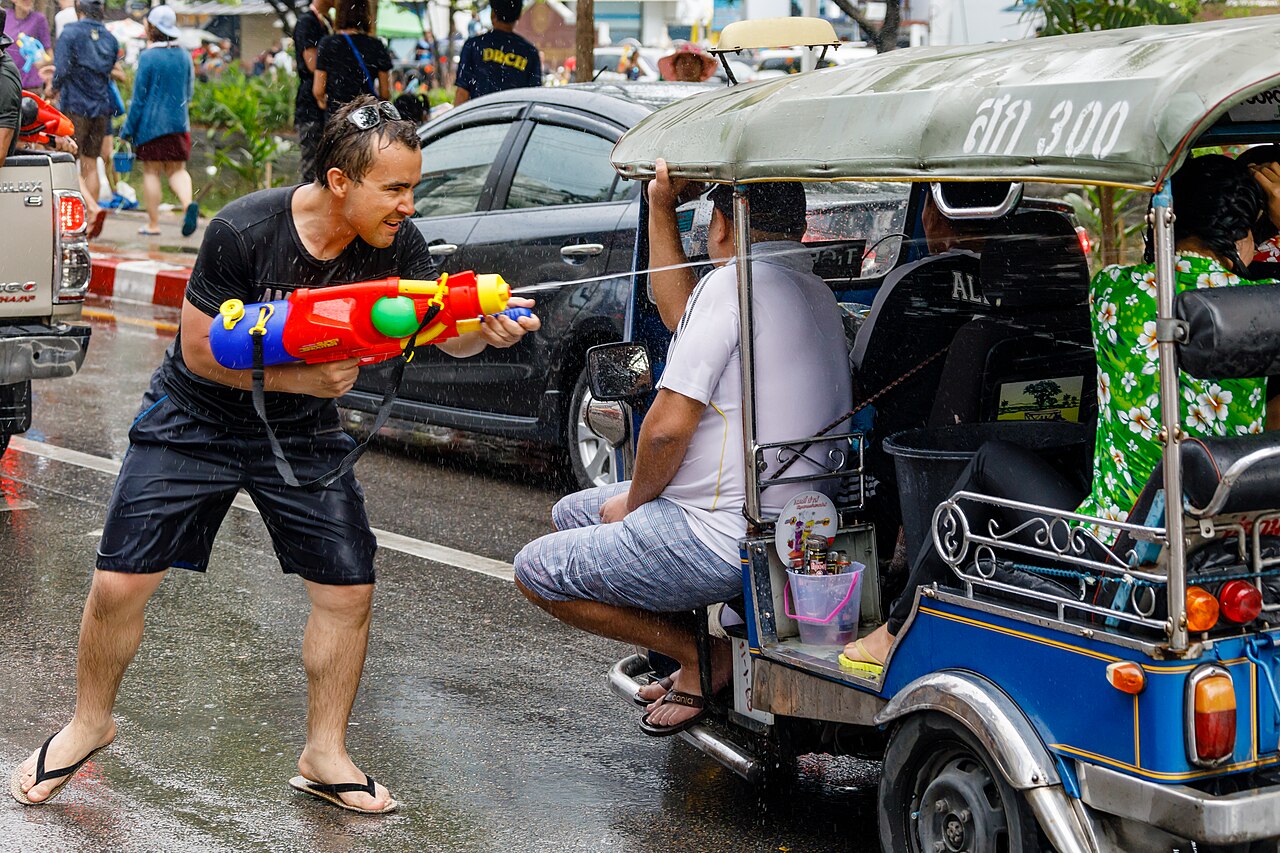
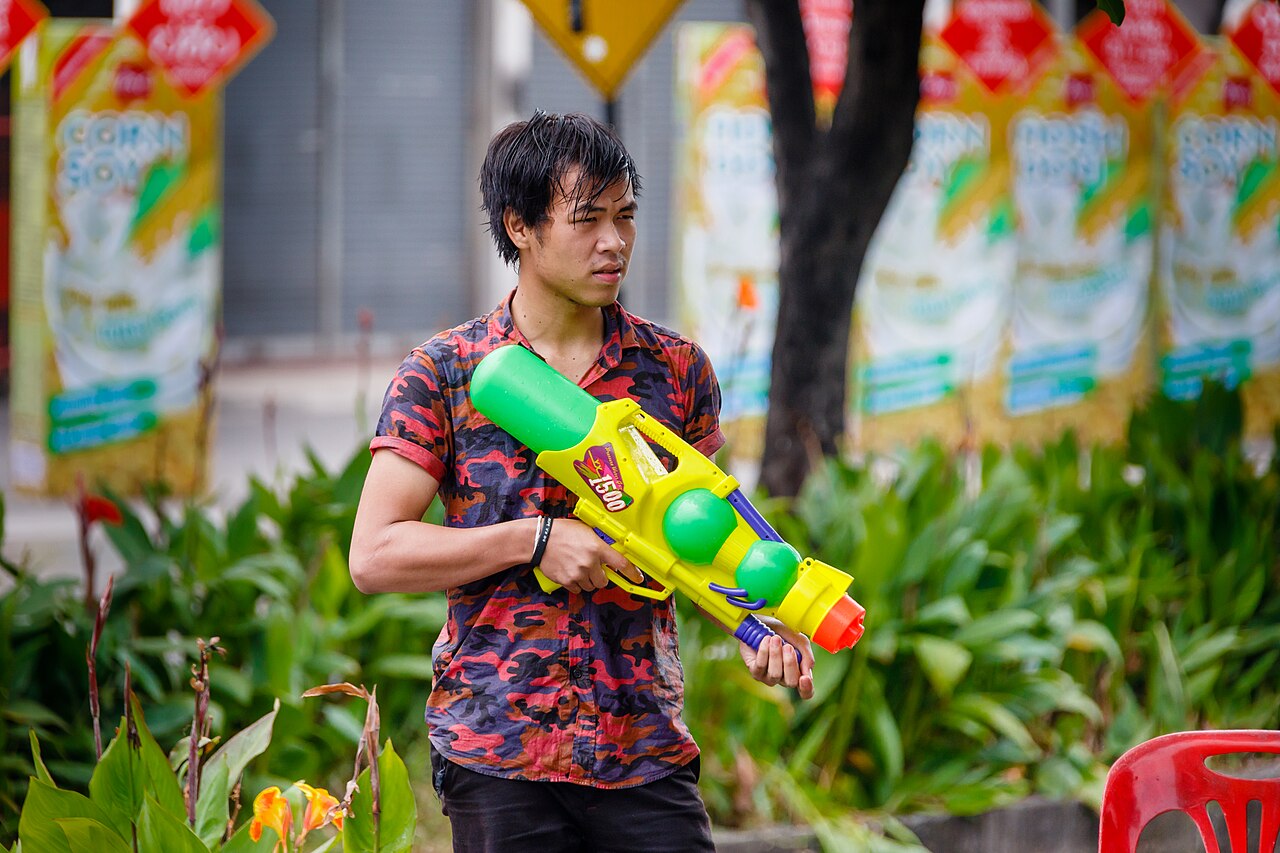
April is the hottest month in Thailand, which is exactly why a water fight is the perfect way to ring in the year. For three days, streets across the country, but most famously in Chiang Mai, where the old city moat becomes an endless ammunition supply, fill with people of all ages armed with water guns, hoses, and buckets of ice water, dousing everyone within reach. Pickup trucks cruise with barrels of water in the back. Strangers smear gentle white clay paste on each other's cheeks, a traditional blessing turned playful. Nobody stays dry, and nobody is meant to.
It is relentless, communal, and genuinely joyful, a rare festival with no spectators, only participants. You cannot opt out, so the only move is to surrender, buy a water gun, and join in. The energy is overwhelmingly good-natured, and being soaked by laughing strangers from dawn to dusk is, improbably, one of the most uplifting travel experiences there is.
How to do it respectfully and well
- Waterproof everything. Your phone, your money, your documents. A sealed pouch is essential. Assume total submersion.
- Do not throw water at monks, elders, or babies. Aim the playful soaking at willing participants, not the vulnerable or the dignified.
- Be gentle with the water source. Ice water to the face can shock; some find it unkind. Read the moment.
- Visit a temple too. See the respectful side, the bathing of Buddha images and the blessing of elders, not just the street battle.
- Dress modestly even when wet. Thailand is conservative beneath the fun. Soaked does not mean anything goes.
A word of care: Songkran is huge fun but also Thailand's most dangerous time on the roads, with a spike in accidents, so be cautious about travel and never combine the celebrations with driving. And while the mood is joyful, women travellers in the rowdiest crowds should stay with their group and be alert, as in any large, exuberant gathering. Handled with a little sense, it is pure delight.
A festival that makes you part of the country
What makes Songkran special is that it dissolves the line between visitor and local. For three days everyone is equally soaked, equally laughing, equally a target, and that shared, dripping joy is a fast track into Thai warmth. It is the opposite of a festival you watch from behind a barrier. It is one you cannot help but be pulled into, and you come out of it feeling, however briefly, like you belong to the celebration rather than just observing it.
There are no spectators at Songkran. The moment you step outside, you are in the water fight, and so is the entire country alongside you.
On the OJ Thailand trip the energy and warmth of the country are the whole point, the festivals, the temples, the street life, the welcome that makes Thailand the easiest place in Asia to fall for. Because the water fight is the spectacle, but a country that celebrates the new year by joyfully soaking every stranger in reach tells you everything about why people keep going back to Thailand.
Frequently asked
When is Songkran celebrated?
Songkran, the traditional Thai New Year, is held every year from April 13 to 15, during the hottest part of the Thai year, which is part of why a water festival fits so well. Celebrations often stretch a little longer in places like Chiang Mai, which is the most famous epicentre of the water battles thanks to its old city moat.
What does the water in Songkran symbolize?
Water symbolises cleansing and renewal, washing away the misfortune and sins of the old year to start the new one fresh. The tradition grew from gently pouring scented water over Buddha images and over the hands of elders and monks as a blessing. The modern water fight is the joyful, exuberant evolution of that sacred gesture.
How do you celebrate Songkran respectfully?
Join the water fight wholeheartedly, but do not soak monks, elders, or babies, and avoid shocking people with ice water. Waterproof your phone and documents, dress modestly even when wet, and visit a temple to see the respectful side. Be very cautious on the roads, as Songkran is Thailand's most accident-prone period.