Best Time to Visit
Best Time to Visit Everest Base Camp Trek (Nepal) From India
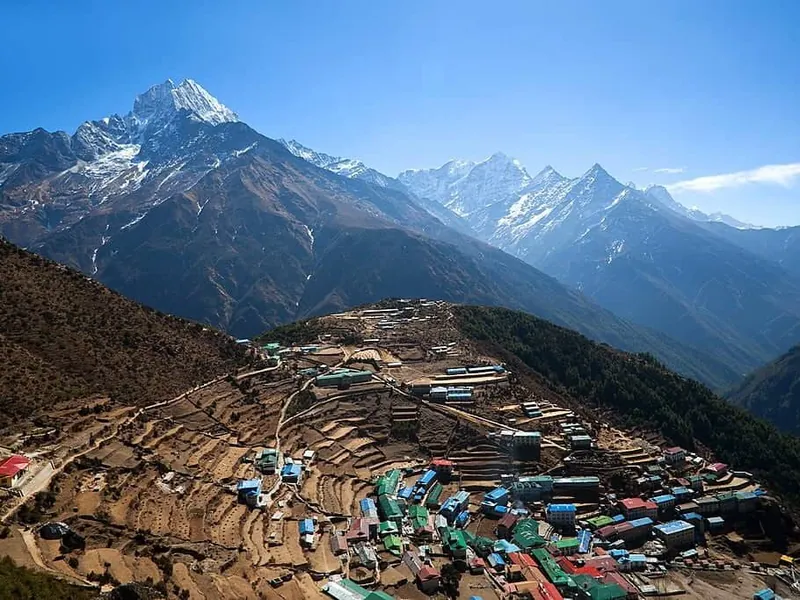
Everest Base Camp Trek has two windows: autumn (October to November) for the clearest views of Everest you will ever get, and spring (March to April) for the climbing-season energy and the rhododendron blooms below 3,500 metres. The two seasons feel different: autumn is colder and clearer, spring is warmer and busier. Outside these windows the trek is monsoon-flooded or snow-buried at the upper camps.
Go in
October, November, March, April
Skip
June, July, August
Month by month: weather, events, crowds
| Month | Weather | Events | Rating |
|---|---|---|---|
| January | Brutal cold minus 15 to 5C at base camp, lower altitude OK | Off season for trek peak | 2/5 |
| February | Still cold minus 12 to 7C, low elevation accessible | Late winter, fewer trekkers | 2/5 |
| March | Warming minus 5 to 13C, spring season opens | Spring trekking peak, climbing season prep | 5/5 |
| April | Mild minus 2 to 16C, rhododendron blooms, climbing season peak | Climbing season at Everest base camp | 5/5 |
| May | Warm 0 to 18C, pre-monsoon building | Climbing season peak, last spring window | 4/5 |
| June | Monsoon arriving 5 to 18C, frequent cloud | Off season, flight cancellations to Lukla | 1/5 |
| July | Heavy monsoon, dangerous landslides | Off season, treks closed | 1/5 |
| August | Continuing monsoon, late-month clearing | Off season | 1/5 |
| September | Tail monsoon 5 to 16C, transitioning | Trekking season opens mid-month | 3/5 |
| October | Ideal minus 2 to 14C, clearest skies of the year | Trekking season peak, best mountain views | 5/5 |
| November | Cooling minus 6 to 12C, clear mountains | Late autumn trekking, peak photographers | 5/5 |
| December | Cold minus 12 to 7C, snow at upper camps | Trekking season ending, very few trekkers | 2/5 |
India-specific timing notes
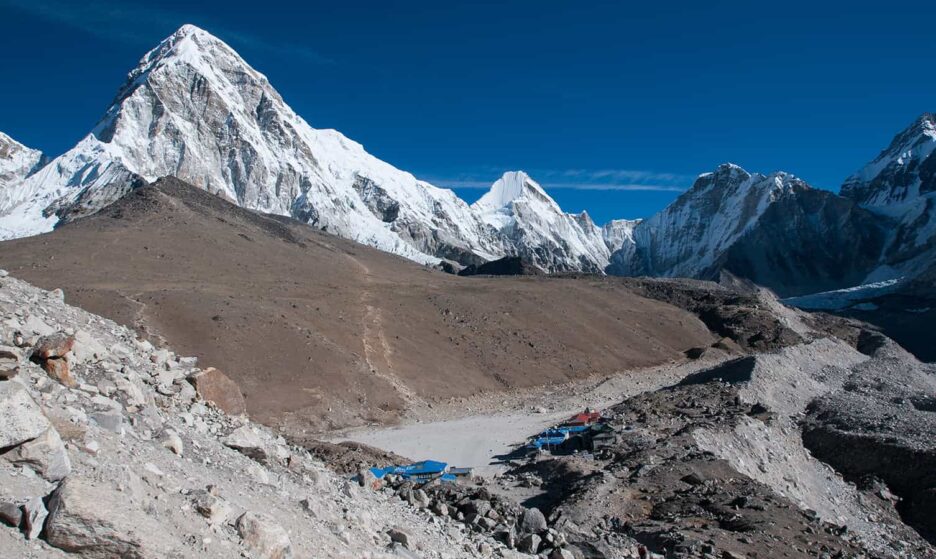
Direct flights from BLR, BOM, DEL, CCU to Kathmandu on IndiGo, Air India, Nepal Airlines. Flight time 2 to 4 hours, fares INR 10K to 22K return. Indians need no visa for Nepal; carry a valid passport or voter ID. Most Indians spend INR 1.1L to 1.5L for a 14-day EBC trek including flights, Lukla flights, and Kathmandu transit. The OJ EBC trek is the hardest trek in the catalog: 12 nights, max altitude 5,545 metres at Kala Patthar, 130 km total walking, requires real prior trek experience. This is not a beginner trek.
Frequently asked
Is the Everest Base Camp trek doable for first-time trekkers?
Generally not recommended. EBC is rated moderate-to-difficult. Max altitude is 5,545 metres at Kala Patthar viewpoint. The 14-day duration plus extreme altitude demands prior trekking experience. Recommended preparation: at least one moderate Himalayan trek (Annapurna Base Camp ideal) before attempting EBC. First-time Himalayan trekkers should start with ABC.
How fit do I need to be for EBC?
Strong cardio fitness. You should be able to run 7 to 8 km in under 50 minutes, or walk briskly for 2 hours without exhaustion. Strength fitness (climbing stairs with 10 kg backpack for 30 min) helps. Three to four months of pre-trek prep is the minimum for someone with moderate baseline fitness. OJ provides a structured pre-trek prep plan.
What is the altitude sickness risk on EBC?
Real and significant. Max altitude 5,545m crosses the high-altitude sickness threshold. Most trekkers feel altitude effects above 4,000m. EBC acclimatization profile is built into the 14-day duration. We have helicopter-evacuated 3 trekkers in 5 years of running EBC. All recovered fully. Mandatory travel insurance with full evacuation coverage.
What about the Lukla flight risk?
Real. Tenzing-Hillary Airport in Lukla is rated one of the most challenging airports in the world. Flights are weather-dependent and cancellations are common. OJ builds 2 buffer days into the EBC trip for Lukla flight disruptions. We have rebooked Lukla flights mid-trip multiple times without losing trek days. Travel insurance covers any extended-stay accommodation.
What does the OJ Everest Base Camp trek include?
OJ's Everest Base Camp trek runs 12 nights, from USD 1,600 to 1,700 per person. See the trip page for dates, the day-by-day route and what is included.