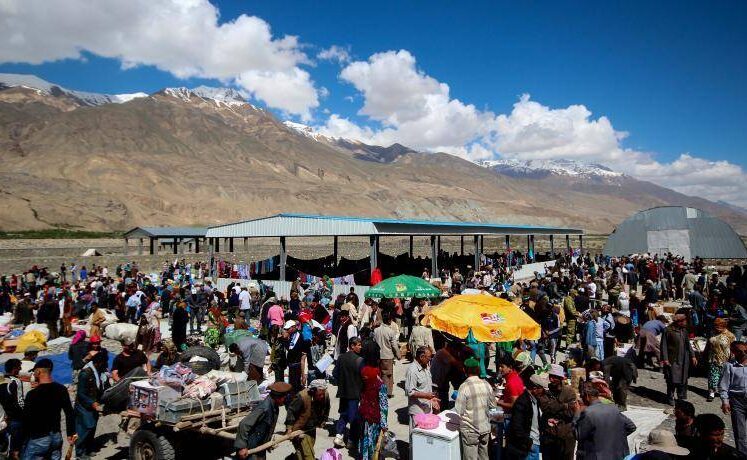
The old Silk Road did not just move silk and spice. It moved recipes, and the food of Central Asia is what settled along those caravan routes over a thousand years, a meeting of Persian, Turkic, Mongol, and Chinese kitchens in the valleys and high passes between them. To eat in Tajikistan and the Pamir is to taste a crossroads, where a plate of rice carries the memory of everyone who ever passed through.
Plov is the centre of everything
If Central Asia has one dish, it is plov, also called osh, the rice pilaf that anchors every celebration and most ordinary days. Rice is cooked slowly in a heavy cauldron called a kazan with mutton, shredded carrot, onion, and whole garlic and spices, until the grains are glossy and rich with fat and flavour. It is cooked in vast quantities for weddings and gatherings, often by men who specialise in it, and a region's pride rides on whose plov is best.
Plov is not a side. It is the event, served from a mountain on a communal platter, eaten together, the dish that means a celebration is happening. To be handed a plate of someone's plov is to be welcomed into their hospitality, the same gesture across the whole region.
In Central Asia you do not ask what is for dinner. If something important is happening, the answer is plov, cooked in a cauldron the size of a wheel.
On the rice that runs the region
The bread is sacred, and you treat it that way
Non, the round flatbread baked on the wall of a clay tandoor oven, is the soul of the Central Asian table, and it comes wrapped in rules. You never place it upside down. You do not put it on the ground. You tear it by hand rather than cutting it, and you do not waste it. The bread carries a quiet sacredness that runs back centuries, a respect for the staff of life in a land where life was often hard.
Beautifully stamped with patterns in the centre, the bread appears at every meal and is the first thing offered to a guest. Understanding how to handle it, with both hands, with respect, never carelessly, is the single most important table manner you can carry into a Central Asian home.
Noodles, dumplings, and the food of the high Pamir
Beyond plov, the region runs on hearty mountain food built to fuel bodies at altitude. Laghman, hand-pulled noodles in a spiced meat-and-vegetable broth, carries the Uyghur thread of the Silk Road. Manti, large steamed dumplings of meat and onion, are the Central Asian cousin of every dumpling from Turkey to Tibet. Shashlik, skewers of marinated mutton grilled over coals, is the smoke that fills every bazaar and roadside.
In the high Pamir itself, the food turns specific and humble. Kurutob, considered Tajikistan's national dish, layers torn flatbread with qurut, dried salty yogurt balls reconstituted into a tangy sauce, topped with onions, herbs, and oil, eaten communally by hand from one bowl. It is mountain food, frugal and warming, the taste of people who live where little grows and hospitality means everything.
How to eat the caravan routes
- Tea is constant. Green tea, choy, poured endlessly in the chaikhana tea house, the social centre of every town. Accept it always.
- Handle the bread with respect. Both hands, never upside down, never on the floor. This matters more than any other rule.
- Eat plov where a wedding is happening. The celebration plov, cooked in bulk, is almost always the best.
- Try qurut, the dried yogurt balls, sharp and salty, the snack and seasoning of the mountains.
- Expect to share. Food comes on communal platters. You eat from your side, with your right hand, together.
The vegetarian reality
This is honest territory: Central Asia is meat-centred, and a region of herders is not built around vegetables. Mutton is in the plov, the dumplings, the skewers, and the broths. But a vegetarian is far from stranded. The bread is everywhere and excellent, the tea is endless, and dishes like kurutob, vegetable-and-bread layered plates, salads, and dairy give you a real base, especially as you ask and the hosts adapt, which they will, because hospitality outranks habit. You eat simply, you lean on the non and the dairy, and you accept that the meat is the point of the cuisine even as you eat around it.
The Silk Road moved more than goods. It moved the cauldron, the tandoor, and the dumpling, and they all still sit on one table in the mountains.
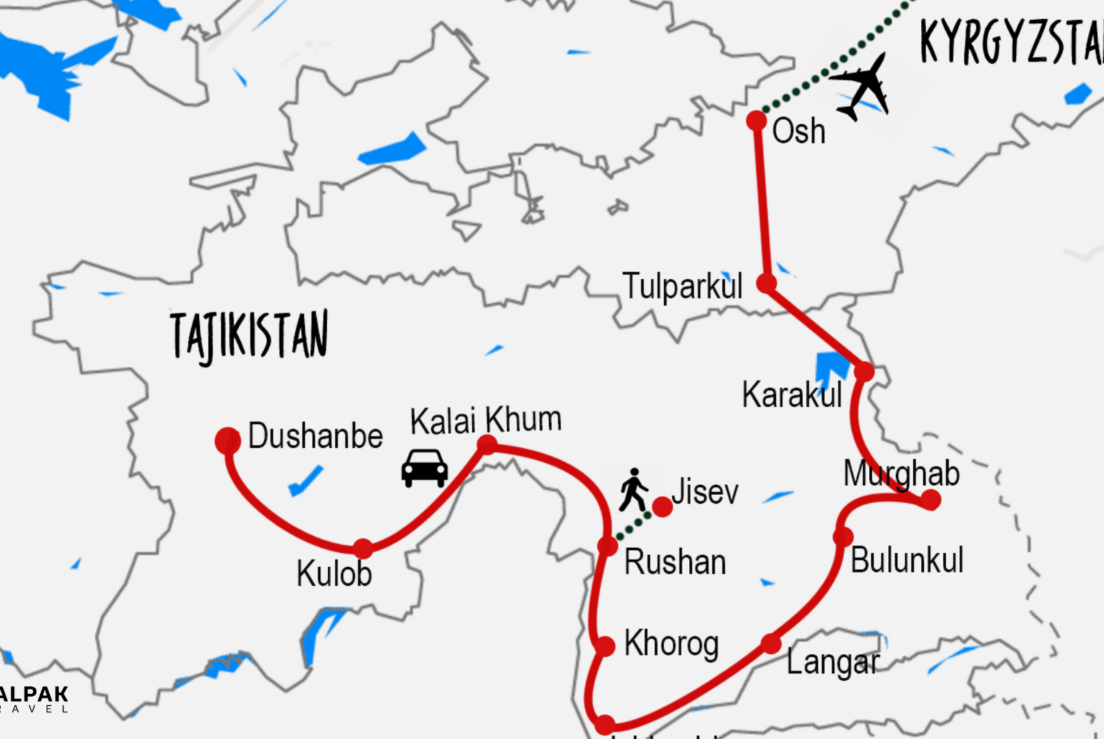
On the OJ Pamir Highway trip the food is the warmth at the centre of a hard, beautiful landscape, the plov in a mountain village, the bread torn and shared in a tea house, the kurutob eaten by hand from a single bowl. You came for the highest road in the world and the empty passes. The table you are pulled up to in a Pamiri home is the part that reminds you the route was always, first, about people.
Frequently asked
Is Central Asian food good for vegetarians?
It is meat-centred, since this is herder country, so vegetarians take care. But the bread is everywhere and superb, the tea endless, and dishes like kurutob, salads, and dairy give a real base. Hosts will adapt, because hospitality outranks habit. You eat simply, lean on the non and the dairy, and accept that meat is central to the cuisine.
What is plov?
Plov, or osh, is the rice pilaf at the heart of Central Asian cooking: rice cooked slowly in a heavy kazan cauldron with mutton, carrot, onion, garlic, and spices until rich and glossy. It is the centrepiece of weddings and celebrations, cooked in huge quantities and served communally. Being offered plov is a gesture of welcome.
Why is bread treated so carefully in Central Asia?
Non, the round tandoor-baked flatbread, carries a centuries-old sacredness. You never place it upside down or on the ground, you tear it by hand rather than cutting it, and you never waste it. It is offered first to guests and appears at every meal. Handling it respectfully with both hands is the region's most important table manner.