
The national dish of Egypt is a bowl of carbohydrates on carbohydrates, and it is one of the most satisfying cheap meals on earth. Koshari is rice, brown lentils, chickpeas, and macaroni, all in one bowl, topped with a spiced tomato sauce, a splash of garlicky vinegar, and a fistful of crispy fried onions. It sounds insane and it is perfect, and it tells you everything about Egyptian food: it is the cuisine of a hard-working country feeding itself well on very little.
Egypt eats from the Nile
Egyptian cuisine is Nile cuisine, built over millennia on what the great river's flood plain could grow: grains, legumes, vegetables, and the fish from the water itself. This is one of the oldest continuous food cultures in the world, and its staples, bread, beans, lentils, would be recognizable to the people who built the pyramids. The Egyptian word for bread, aish, also means life, which tells you how central it is.
The everyday food is overwhelmingly plant-based, not out of philosophy but out of economics: meat was historically expensive, and a cuisine of beans and grains fed a vast population cheaply and well. This makes Egypt, somewhat unexpectedly, one of the more vegetarian-friendly destinations in the region for the everyday traveller.
Koshari is carbs on carbs on carbs, topped with crispy onions and a vinegar that ties it together. It should not work. It is the best two-dollar meal in the world.
On the genius of the bowl
Ful and taameya: the breakfast of Egypt
If koshari is lunch, then ful medames is breakfast, and it has been for thousands of years. Ful is fava beans, slow-cooked overnight until creamy, then mashed with olive oil, lemon, garlic, and cumin, scooped up with flatbread. It is the breakfast of the entire country, sold from carts and shops every morning, filling and cheap and ancient.
Alongside it comes taameya, the Egyptian falafel, and here is a fact that surprises people: falafel was probably invented in Egypt, and the Egyptian version is made with fava beans rather than the chickpeas used in the Levantine version, giving it a greener inside and a distinct flavour. Ful and taameya with bread, fresh vegetables, and tahini is the classic Egyptian breakfast, entirely vegetarian, and a genuine pleasure.

The dishes worth knowing
Molokhia is a soup-stew made from the leaves of the jute mallow plant, cooked to a green, slightly viscous consistency that divides first-timers, beloved by Egyptians, served over rice with garlic and coriander. Mahshi is vegetables, often vine leaves, zucchini, or peppers, stuffed with spiced rice, a labour of love found at family tables and good restaurants. Fattah, a celebratory dish of rice, bread, and meat in a garlic-vinegar sauce, appears at feasts.
And the bread itself deserves attention. Aish baladi is the Egyptian flatbread, a whole-wheat pita puffed in fierce ovens, the edible plate and spoon of the cuisine, used to scoop up everything. Watching it being made and sold fresh from neighbourhood bakeries, subsidized so the whole population can afford it, is to watch the oldest food relationship in the country still functioning.
- Koshari, the national dish, carbs and crispy onions, the best cheap meal in Egypt.
- Ful medames, the ancient fava-bean breakfast, scooped with bread.
- Taameya, the Egyptian fava-bean falafel, greener and distinct from the chickpea version.
- Molokhia, the green jute-leaf stew, an acquired taste worth acquiring.
- Mahshi, rice-stuffed vegetables, the home-cooking pride of Egypt.
- Aish baladi, the puffed whole-wheat bread that is the foundation of every meal.
Tea, hibiscus, and the cafe culture
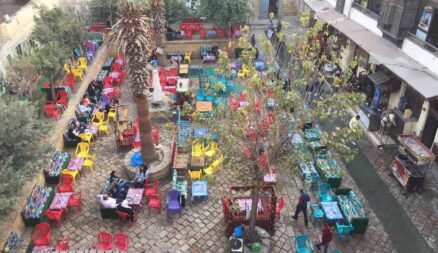
Egyptian social life runs through the ahwa, the traditional coffeehouse, where men gather to drink tea, play backgammon, smoke shisha, and talk for hours. The tea, shai, is black, strong, and very sweet, often with fresh mint. And the national cold drink is karkade, a deep-red hibiscus tea served hot in winter and iced in summer, tart and refreshing, the colour of the sunset over the Nile. Sitting in an ahwa with a glass of mint tea, watching Cairo move, is one of the great free pleasures of the country.
An easy country for vegetarians
Egypt is genuinely friendly to vegetarians, more than its reputation suggests, because the everyday cuisine is built on beans and grains and vegetables. Koshari is vegetarian. Ful and taameya are vegetarian. Mahshi, many of the mezze, the salads, the bread and tahini, all vegetarian. A vegetarian can eat the national dishes of Egypt without modification and eat very well. The main caution is confirming that dishes like koshari are served without meat additions and that soups are vegetable-based, but the foundation of Egyptian eating is plant food, and that is a gift to the travelling vegetarian.
The Egyptian word for bread also means life. Five thousand years of feeding a great civilization on grains and beans, and it still works, still cheap, still good.
On the OJ Egypt and Jordan trip, which runs over New Year when the weather is finally kind, the food is part of the texture: the koshari joint near the museum, the ful breakfast before the early start to the pyramids, the mint tea in a Cairo ahwa as the city roars past. The monuments are five thousand years old, and so is the breakfast. Eating Egypt is eating history that never stopped being lunch.
Frequently asked
Is Egypt good for vegetarians?
Yes, more than its reputation suggests. Everyday Egyptian cuisine is built on beans, grains, and vegetables. Koshari, the national dish, is vegetarian. Ful medames and taameya, the classic breakfast, are vegetarian. Mahshi, mezze, salads, bread, and tahini are all plant-based. Vegetarians can eat Egypt's national dishes without modification and eat very well.
What is koshari?
Koshari is Egypt's national dish, a bowl of rice, brown lentils, chickpeas, and macaroni topped with spiced tomato sauce, garlicky vinegar, and crispy fried onions. It is carbohydrate-rich, entirely vegetarian, and one of the most satisfying cheap meals in the world. It is the soul of working-class Egyptian eating.
Was falafel invented in Egypt?
Most food historians believe so. The Egyptian version, called taameya, is made with fava beans rather than the chickpeas used in the Levantine version, giving it a greener inside and distinct flavour. Ful and taameya with bread and tahini is the classic ancient Egyptian breakfast, still eaten across the country every morning.