
If the cherry blossoms are Japan's most beautiful festival, Gion Matsuri is its grandest. Held across the whole of July in Kyoto, the ancient imperial capital, it is one of the most famous festivals in Japan, more than a thousand years old, centred on enormous wooden floats hauled through the streets and a series of magical lantern-lit evenings. And it began, remarkably, as a desperate religious ritual to stop a deadly plague.
Born from an epidemic
The festival's origins reach back to the year 869, when a terrible epidemic swept the capital. To appease the gods believed responsible and end the plague, the people staged a purification ritual, processing through the city to drive out the disease and the vengeful spirits behind it. The ritual worked, or so it was believed, and was repeated, becoming an annual event tied to the Yasaka Shrine in the Gion district. Over eleven centuries it grew into the spectacular festival of today, but its root remains that ancient act of warding off pestilence and praying for the health of the city.
There is a poignancy in knowing that one of the world's great celebrations was born from fear and plague, a community's attempt to protect itself through ritual and faith. That a festival born of an epidemic has endured, joyfully, for over a thousand years is its own quiet testament to resilience.
Gion Matsuri began as a prayer to end a plague. Eleven centuries later, the prayer has become one of the most magnificent festivals on earth.
On the origins of Gion Matsuri

The floats are the spectacle
The centrepiece of Gion Matsuri is the Yamaboko Junko, the grand procession of floats, held on two main days in July. These yamaboko are extraordinary: some are towering wooden structures rising many metres into the air, topped with long poles, weighing tonnes, hauled through the streets by teams of men on great wooden wheels. They are built entirely by hand using traditional joinery, without a single nail, and decorated with priceless tapestries and ornaments, earning the nickname moving museums. Watching one of these giants turn a street corner, levered slowly around on split bamboo, is a feat of tradition and teamwork that draws gasps.
The floats and the procession are so culturally significant that they are recognised by UNESCO. Each is built and crewed by a specific neighbourhood, carrying centuries of local pride, and the craftsmanship, the music played from within them, and the sheer scale make the procession one of the most impressive sights in the Japanese festival calendar.
The evenings are the magic
For many visitors, the most enchanting part is not the procession itself but the yoiyama, the festive evenings in the days leading up to it. On these nights, the streets of central Kyoto are closed to traffic, the great floats stand illuminated by countless lanterns, and the old merchant houses, the traditional machiya, open their doors, some displaying treasured family heirlooms. Crowds stroll in summer yukata, the light cotton kimono, browsing food stalls, music drifting through the warm night air. It is old Kyoto at its most atmospheric, lantern-lit and alive.
- Come for the yoiyama evenings as well as the procession. The lantern-lit nights are, for many, the most magical part.
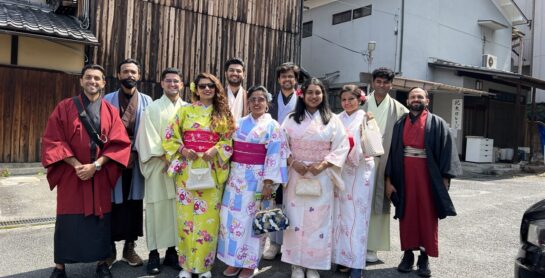
- Wear a yukata. Renting a summer kimono to stroll the evening streets is part of the experience and very much encouraged.
- Arrive early for the float procession. The grand Yamaboko Junko draws huge crowds; a good spot needs patience and timing.
- Prepare for heat. July in Kyoto is hot and very humid. Hydrate, carry a fan, and pace yourself through the crowds.
- Explore the float neighbourhoods. Each yamaboko belongs to a district with its own traditions, music, and open old houses to discover.

A living thousand-year tradition
What makes Gion Matsuri so special is the sheer depth of unbroken tradition behind it. To stand in a Kyoto street on a warm July evening, among crowds in yukata, beneath a lantern-lit wooden float built without nails by the same neighbourhood for centuries, is to feel the long continuity of Japanese culture in a way few experiences offer. It is the old capital doing what it has done every July for over a millennium, and being present for it connects you to something far larger and older than a single summer trip.
In a country of bullet trains and neon, Gion Matsuri is old Kyoto refusing to forget itself, one lantern-lit July evening at a time, for over a thousand years.
On the OJ Japan trip Kyoto's living traditions are a centrepiece, the temples, the old streets, and where the timing aligns, the grandeur of a festival like Gion Matsuri. Because Japan's modern wonders are dazzling, but to catch the ancient capital mid-celebration, the floats, the lanterns, the yukata, the thousand-year continuity of it, is to understand the deep cultural roots beneath the country's gleaming surface.
Frequently asked
When is Gion Matsuri held?
Gion Matsuri takes place throughout the entire month of July in Kyoto, with the festival building across the weeks. The highlights are the two grand float processions, the Yamaboko Junko, held in mid and late July, and the atmospheric yoiyama evenings in the days before them, when lantern-lit floats line the closed streets.
What are the floats in Gion Matsuri?
They are called yamaboko, enormous handcrafted wooden floats, some towering many metres high and weighing tonnes, built using traditional joinery without a single nail and decorated with priceless tapestries. Each belongs to a specific Kyoto neighbourhood and is hauled through the streets by teams of men. They are UNESCO-recognised and nicknamed moving museums.
What is the best part of Gion Matsuri for visitors?
Many visitors find the yoiyama evenings before the main procession the most magical: central Kyoto's streets close to traffic, the great floats stand lit by lanterns, old merchant houses open their doors, and crowds stroll in summer yukata among food stalls. The grand float procession itself is the spectacular climax. Both together are unforgettable.