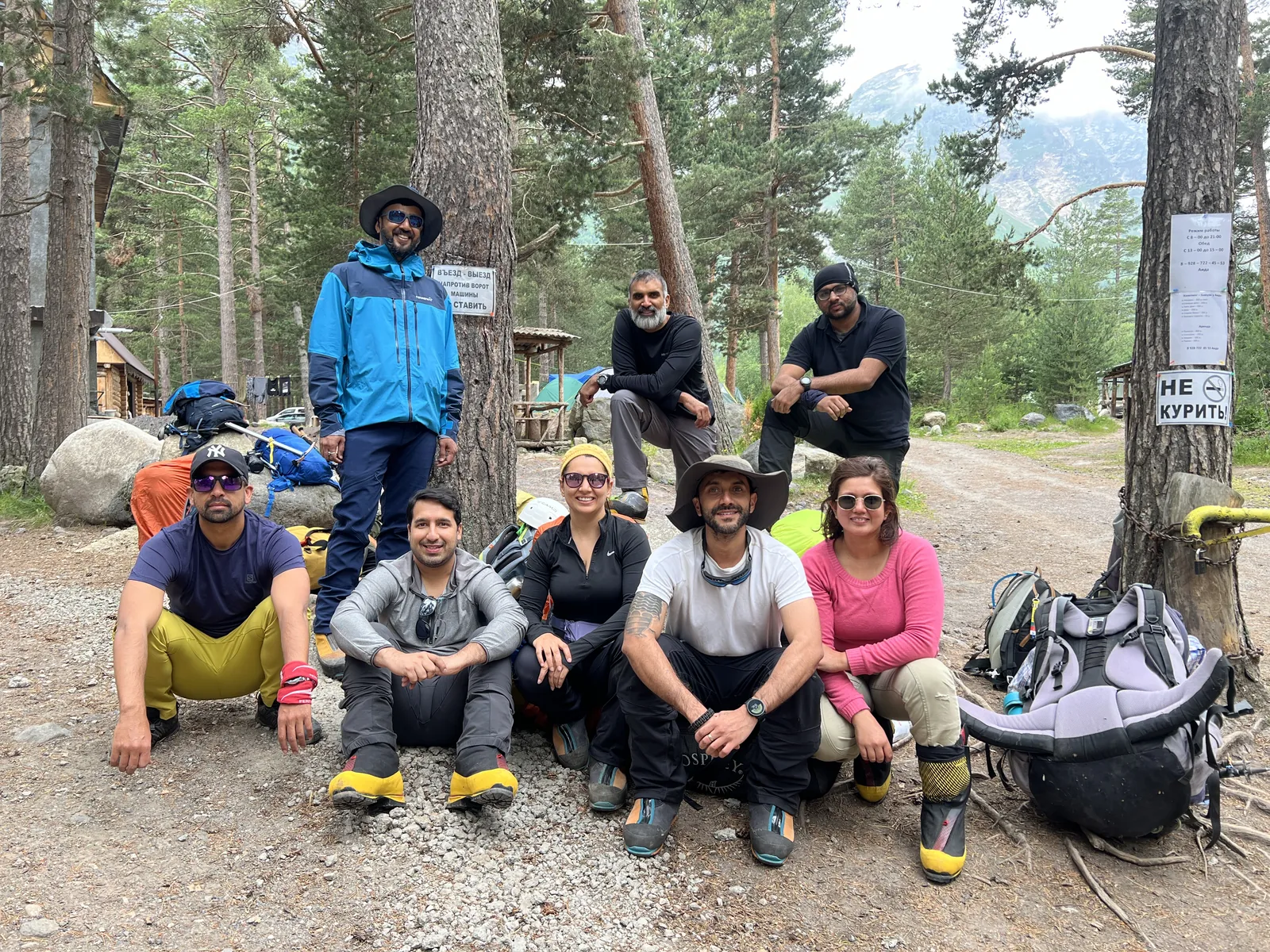
Mt Elbrus is the highest mountain in Europe at 5,642 metres and the most achievable of the Seven Summits. That last part gets it badly misrepresented. Accessible relative to Denali or Everest is still a glaciated peak above 5,600 metres with real weather, and people die on it most years, usually because they treated it as a hard trek.
Who runs group trips to Mt Elbrus from India
Specialist field. This is a mountaineering expedition rather than a group trip, and it should be booked from the mountaineering side of the market.
One in the Orange Jacket runs an 11-day Elbrus expedition, graded Expert, in small groups.
Pahadi Adventures and Shikhar Travels have run Elbrus expeditions from India, and Shikhar in particular has a track record with Indian teams. Beyond that, several Russian operators run it directly and many international mountaineering companies include it.
Judge on mountaineering criteria only. Guide to climber ratio on summit day, the acclimatisation programme, the turnaround time policy, and what the weather contingency looks like. Price should be nowhere near your first three questions.
What the trip actually involves
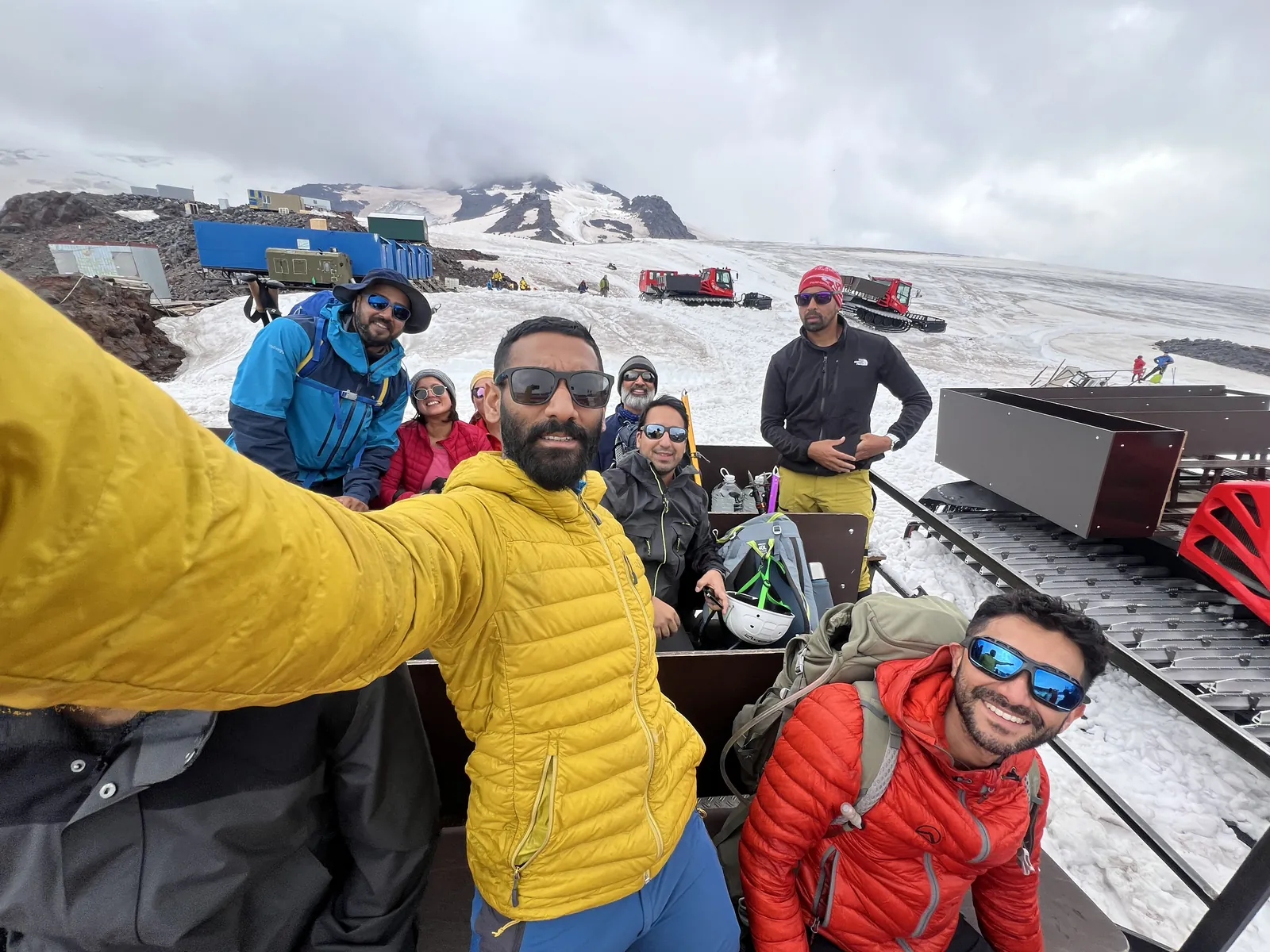
Eleven days including acclimatisation on Mt Cheget and progressive climbs on Elbrus itself before the summit push. Most itineraries use the huts around the Northern or Southern shelter at roughly 3,750 metres.
Summit day is long, starts in the dark and is the point at which the trip stops being fun and becomes work. Crampons, ice axe and rope skills are required, and any decent operator trains you on them during the acclimatisation days.
Graded Expert. This is the one trip on this list where you should not book if you are unsure whether you are ready.
- Length. 11 days
- Difficulty. Expert
- Highlights. 5,642m summit push, Mt. Cheget acclimatisation, Northern shelter (3,750m), Summit certificate and High altitude camping
How the days actually run
The first days are acclimatisation in the Baksan valley, including Mt Cheget, which is a walk rather than a climb and exists to get you used to height.
Then progressive days on Elbrus itself, moving up to the huts around 3,750 metres and doing rotations higher before dropping back to sleep. This is the part that decides whether your summit attempt works, and cutting it short is the most common reason attempts fail.
Skills days cover crampons, ice axe arrest and rope work. If an itinerary does not include these, and you have not done them elsewhere, that is a problem rather than a saving.
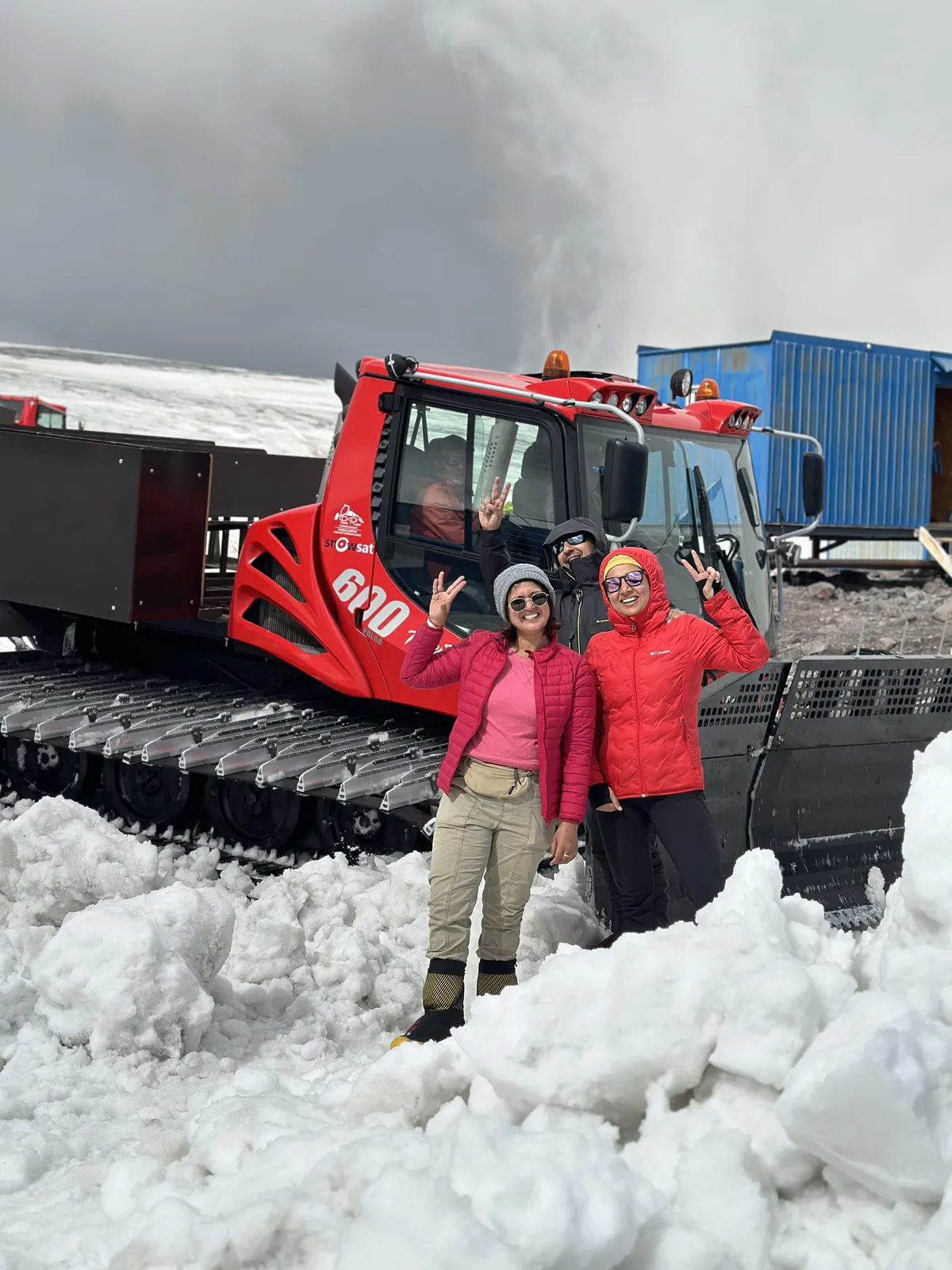
Summit day starts somewhere around one or two in the morning. Snowcat to the start point on some itineraries, then a long slow climb across the saddle between the two summits and up the final slope. It is not technical. It is cold, long, and above 5,000 metres where everything takes three times the effort. Turnaround times are set beforehand and good teams honour them.
Visas, permits and getting there
Indian passport holders need a Russian visa, which is one of the more straightforward processes available. Some Elbrus packages include visa support as standard.
Fly to Mineralnye Vody, usually via Moscow, then transfer to the Baksan valley.
When to go
June to early September is the climbing season, with July and August the most stable.
Weather is the deciding factor on any Elbrus attempt. Summit success rates vary a lot year to year and a good operator builds spare days into the itinerary for exactly this reason. If an itinerary has no contingency day, that is a warning.
Mt Elbrus or Kilimanjaro?
The two peaks people attempt as a first big summit. Kilimanjaro is higher at 5,895 metres but is a walk, with no snow skills required and a much longer, more gradual approach. Elbrus is lower but glaciated, requiring crampons, ice axe and rope, with far worse weather. Kilimanjaro is the easier first summit. Elbrus is the better preparation for real mountaineering.
| Mt Elbrus | Kilimanjaro | |
|---|---|---|
| Height | 5,642m | 5,895m |
| Technical skills | Crampons, ice axe, rope | None, it is a walk |
| Weather risk | High, changes fast | Lower |
| Best as | A step into mountaineering | A first high summit |
Who this trip is not for
Anyone who has not been above 5,000 metres before. Do Everest Base Camp or a comparable high trek first.
Anyone who has never used crampons and an ice axe, unless the itinerary genuinely includes proper training days.
Anyone who would find it hard to turn around near the summit. That decision is the whole sport.
Frequently asked
How difficult is Mt Elbrus?
It is the most accessible of the Seven Summits but still a glaciated peak at 5,642 metres requiring crampons, ice axe and rope skills, with serious weather. It is regularly misrepresented as a hard trek, and fatalities occur most years, usually among people who underestimated it. Prior experience above 5,000 metres is strongly advisable.
Which Indian companies run Elbrus expeditions?
It is a specialist field rather than a group travel one. One in the Orange Jacket runs an 11-day Elbrus expedition. Pahadi Adventures and Shikhar Travels have both run Elbrus expeditions from India, with Shikhar having a track record with Indian teams. Several Russian and international mountaineering operators also run it directly.
When is the Elbrus climbing season?
June to early September, with July and August offering the most stable conditions. Weather determines summit success more than anything else, and rates vary considerably year to year. A well-designed itinerary includes spare contingency days for a second summit attempt. An itinerary with no contingency day is a warning sign.