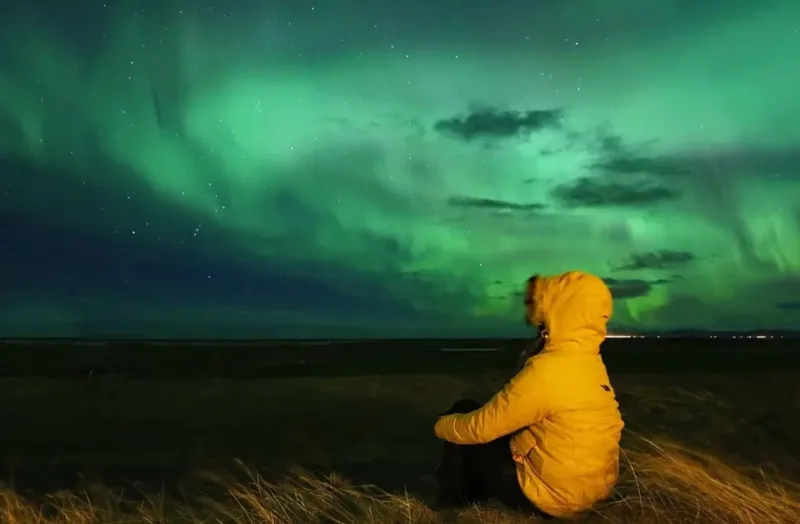
The Iceland northern lights trip from India is having its best moment in eleven years, and that is not marketing fluff. The sun hit solar maximum in 2025, which means the aurora borealis is putting on shows that are bigger, brighter, and more frequent than anything observers have seen since 2014. If you have been sitting on the idea of watching the sky turn green at midnight, 2026 is the window to actually do it.
Iceland is not a cheap destination. But it is a manageable one when you know the numbers, understand the visa, and stop planning it the way mass-market operators want you to. This guide is written for Indian travellers doing it properly, not from a coach bus with 40 strangers who booked a "Northern Lights Package" six months ago.
Why 2026 Is the Best Year in a Decade for Northern Lights
Solar cycles run roughly eleven years from minimum to maximum. Solar Cycle 25 hit its peak in 2025, and 2026 is riding the tail end of that maximum with solar activity still significantly elevated above normal. In practical terms, this means more solar storms, higher Kp index readings most nights, and auroras that appear even when conditions are not perfect.
To see the northern lights, you need three things: darkness, clear skies, and solar activity. 2026 delivers the solar activity part unusually reliably. The darkness and sky are up to Iceland's famously unpredictable weather, which is why every expert recommendation is to give yourself at least five to seven nights rather than two.
Post-2026, solar activity will decline toward the next minimum around 2031. If you miss this window, the next comparable cycle is a long wait.
Best Months to Go: September to March
Iceland's aurora season runs from late August through mid-April, when nights are dark enough to see anything. Within that window, the sweet spots are:
- September and October: The equinox effect boosts aurora activity around the September 22-23 window. Nights are dark enough, weather is more stable than deep winter, and roads are easier to drive. September is one of the most underrated months for this reason.
- November and February: Long, dark nights. February in particular has a reputation for more stable high-pressure weather patterns than January or December, which translates to more clear nights. If you can only go once, February is the most reliable bet.
- January: Maximum darkness, consistently high Kp readings, but also the most brutal weather. Snowstorms can close roads. Go in January if you are comfortable driving in winter conditions or joining a guided group.
- March: Another equinox month with a similar boost to September. Days start getting noticeably longer in March, which reduces your viewing window slightly but improves road conditions.
Avoid June to August entirely for northern lights. Iceland in midsummer has near-continuous daylight (the midnight sun), which means zero aurora visibility regardless of solar activity.
How to Get to Iceland From India: Flights and Routes
There are no direct flights from India to Iceland. You will always connect somewhere in Europe. The main routes from Delhi (DEL) or Mumbai (BOM) are:
- Via London (LHR): British Airways or Air India to Heathrow, then Icelandair or another carrier to Keflavik (KEF). Total travel time around 14-16 hours including layover.
- Via Amsterdam (AMS): KLM from Delhi or Mumbai, then onward to KEF. Reliable, frequently on sale.
- Via Frankfurt (FRA): Lufthansa connects well from both Indian metros.
- Via Copenhagen (CPH): SAS or Air India to Copenhagen, then short hop to Reykjavik.
Return flights from India to Iceland typically cost between Rs. 65,000 and Rs. 1,00,000 per person in economy, depending on the season and how far ahead you book. The cheaper fares (around Rs. 65,000-75,000) show up for winter travel booked 6-8 weeks in advance or during airline sales. Peak summer fares can push toward Rs. 1,00,000 or beyond. Budget Rs. 75,000 as your planning number for a late-autumn or winter trip.
Iceland Cost Breakdown for Indians (7-Day Trip in INR)
Here is an honest breakdown for a 7-day Iceland trip for one person departing from India, targeting the northern lights season (November to February):
| Expense | Budget Option | Mid-Range | Notes |
|---|---|---|---|
| Return flights | Rs. 65,000 | Rs. 85,000 | Delhi or Mumbai, connecting via Europe |
| Schengen visa | Rs. 9,000 | Rs. 9,000 | EUR 90 fee + VFS service charge |
| Accommodation (7 nights) | Rs. 42,000 | Rs. 84,000 | Hostel dorm vs. guesthouse double |
| Car rental (7 days) | Rs. 42,000 | Rs. 84,000 | Small 4x4 in winter, essential |
| Fuel (Ring Road) | Rs. 14,000 | Rs. 18,000 | Petrol is expensive in Iceland |
| Food (7 days) | Rs. 21,000 | Rs. 42,000 | Self-catering + some restaurants |
| Activities | Rs. 8,000 | Rs. 21,000 | Entry fees, optional aurora tours |
| Travel insurance | Rs. 3,500 | Rs. 5,000 | Do not skip this |
| Total | Rs. 2,04,500 | Rs. 3,48,000 | Per person, solo or shared car |
If you are travelling as a group of three or four and splitting the car rental and fuel, the cost per person drops meaningfully on the transport side. A group of four splitting everything except flights can knock Rs. 20,000-30,000 off the mid-range total.
Note: these are January-February figures. A September or October trip cuts accommodation costs by roughly 20-30% because summer surcharges ease off in shoulder season.
The Schengen Visa Process for Indian Passport Holders
Iceland is not an EU member but it is part of the Schengen Area. Indian passport holders need a Schengen short-stay visa (Type C) to enter Iceland. The process goes through the Embassy of Iceland in New Delhi, with VFS Global handling the application centre.
Key numbers: - Visa fee: EUR 90 per adult (approximately Rs. 8,100 at current rates; confirm at time of application) - VFS service charge: Rs. 2,900 - Processing time: 15 to 30 days typically, up to 60 days in busy periods - Earliest you can apply: 6 months before travel - Latest you should apply: At least 15 calendar days before departure (apply 6-8 weeks out for safety) - Approval rate for Indians: Approximately 91-94% historically
Documents typically required: Valid passport (6+ months validity), travel insurance covering EUR 30,000 minimum, hotel bookings and flight itineraries, bank statements showing sufficient funds, leave approval or business proof, and photographs meeting Schengen specifications.
Apply well ahead of peak aurora months (November, December, February) because visa centres get busy and processing slips. Confirm all current requirements at the official VFS Global Iceland page before submitting - fees and documentation lists can change.
One practical note: if you already hold a valid Schengen visa from another country (Germany, France, Netherlands, etc.), you can enter Iceland on that without a separate application, as long as it is still valid.
What the Ring Road Is and Why You Need a Car
Iceland's Route 1, the Ring Road, loops around the entire island for about 1,332 km. Most visitors do the south coast (Reykjavik to the Vatnajokull glacier area) as a week-long circuit. In winter, you do not need the full ring - the south coast gives you waterfalls, black sand beaches, glacier lagoons, and, most importantly, the dark skies needed for aurora hunting away from Reykjavik's light pollution.
You need to rent a car. There is no functional public transport for chasing northern lights. The Stratabus system covers some routes, but it runs on fixed schedules and aurora hunting means you go when the forecast says go, at 11pm, in whatever direction has clearest skies. That requires your own vehicle.
For winter driving, rent a small 4x4 or AWD vehicle, not a regular city car. Roads in Iceland in winter can be slippery and some routes require high clearance. Rental companies in Iceland are strict about this for good reason.
Top Spots to See the Northern Lights in Iceland
Reykjavik is Iceland's capital and main base, but the light pollution makes it a poor aurora location. Here is where to actually go:
Thingvellir National Park: 40 minutes from Reykjavik, dark skies, UNESCO World Heritage Site. One of the most convenient escapes from city light.
Kirkjufell Mountain (Snaefellsnes Peninsula): The most photographed mountain in Iceland, particularly stunning as a foreground for aurora shots. About 2.5 hours from Reykjavik.
Jokulsarlon Glacier Lagoon: On the south coast, about 375 km from Reykjavik. The lagoon reflects the northern lights when they appear, creating the kind of photograph you will genuinely not believe you took.
Vik and the South Coast: The black sand beach at Reynisfjara, the sea stacks, and the general darkness of the south coast make it one of the best corridors for aurora watching en route.
Remote farms and guesthouses: If you are staying in a farmstay in the south or east, the owners often wake guests when the forecast is good. This is a legitimate thing that happens.
Northern Lights Are Not Guaranteed: Managing Expectations
This needs to be said directly. The aurora borealis does not appear on demand. You need solar activity (currently high), clear skies (Iceland's weather is famously unpredictable), and proper darkness. In a seven-night trip, you can realistically expect to have two or three nights with good seeing conditions. In a great week, you might get five. In a bad week of cloud, you might get zero.
This is why anyone who promises you will see the northern lights is either lying or selling you an expensive excuse. What you can do:
- Check the aurora forecast at vedur.is (Iceland Met Office) daily. It shows cloud cover and aurora probability together.
- Stay flexible. If one area is cloudy, drive toward clearer skies. This is why a car is essential.
- Give yourself at least six nights minimum. Do not book a 3-night trip and expect to see auroras.
- Go during solar maximum years. Like, say, 2026.
Iceland vs Norway for Northern Lights: The Short Answer
Both countries offer excellent aurora viewing, but they have different personalities as trips. Iceland combines northern lights with dramatic volcanic landscapes, glacier hikes, hot springs, and road-trip culture. Norway, particularly the Lofoten Islands and Tromso, has the fjords, the midnight-sun-in-reverse atmosphere, and arguably better organised aurora tour infrastructure.
Cost-wise, Iceland is roughly comparable to northern Norway once you factor in transport within each country. Flights from India to Norway can be cheaper in some seasons because the Oslo hub is more competitive.
If you want a road-trip adventure with geothermal springs built in, Iceland. If you want fjords and a more dedicated aurora-hunting operation, Norway. We have a fuller breakdown in the Norway vs Iceland for Indians post if you want to dig into the specifics before deciding.
What to Pack for an Iceland Winter Trip
Iceland in winter means temperatures between -5 and 5 degrees Celsius on the south coast (colder inland and in the north). The wind is the real factor - a clear -3C day with 60 km/h gusts will drop the felt temperature significantly below zero.
Non-negotiables: - Thermal base layers (merino wool, not cotton) - Mid-layer fleece or down jacket - Waterproof outer shell jacket and trousers - Waterproof hiking boots with ankle support - Wool or synthetic socks (multiple pairs) - Gloves, hat, and neck gaiter - Hand warmers for aurora nights (you will stand outside for extended periods)
Most Indian visitors underestimate the layering requirement. The issue is not just cold - it is wet cold, and wool or synthetics dry faster than cotton when they get damp.
Can You Do Iceland on a Budget as an Indian Traveller?
Iceland is genuinely expensive, especially on accommodation and food. A few ways to make it more manageable:
- Book accommodation in small guesthouses or farmstays outside Reykjavik. Prices drop considerably once you leave the capital.
- Self-cater as much as possible. Iceland has Bonus supermarkets (the discount chain) where you can buy bread, cheese, eggs, and ready meals at reasonable prices. Restaurant meals in Reykjavik can run Rs. 3,000-6,000 per person easily.
- Travel with a group and split car and accommodation costs. The per-person savings from splitting a car rental and a guesthouse double room are significant.
- Go in September or October rather than December. Shoulder season prices apply for flights and accommodation, and aurora viewing is still excellent.
- Book flights early and set fare alerts. Delhi to Keflavik on Momondo, Skyscanner, or Google Flights with a three-month lead time will surface sales that can save Rs. 15,000-20,000.
Iceland is not a trip where you squeeze in cheap. But it is a trip where smart planning makes a Rs. 2 lakh budget entirely realistic for an Indian traveller, as opposed to the Rs. 4 lakh "package" price that most operators quote.
Frequently Asked Questions
Is Iceland safe for Indian travellers?
What is the KP index and how do I use it to plan northern lights viewing?
How much cash should I carry to Iceland?
Do I need travel insurance for Iceland?
What is the best way to get around Iceland without a car?
When is it too late to book Iceland for the northern lights?
One in the Orange Jacket runs offbeat group adventures for travellers who have outgrown the usual circuit.
If you want to do Iceland properly, on a road trip with a small group of like-minded travellers who are not there for the coach-bus experience, take a look at the OJ Iceland Road Trip. We drive the south coast, chase the aurora on real forecasts, and do it without the padding that inflates every mass-market Iceland package.
For a sense of how Iceland fits into the broader picture of international adventures from India, the Japan cherry blossom trip guide and the Japan trip cost breakdown show how we approach high-cost destinations differently. And if you are still working out when to travel at all, the month-by-month international travel guide maps the whole year.