
The Hornbill Festival in Nagaland is one of the most spectacular cultural events in India and one of the least understood by the Indians who attend it. For most visitors it is a photo opportunity, warriors in feathered headdresses, fierce dances, a backdrop for Instagram. But Nagaland is a place with a complex, proud, and sometimes painful history, where the people on that stage belong to distinct tribes with their own languages and customs, and approaching it with real cultural awareness rather than as a costume show is what separates a respectful guest from a tourist.
Nagaland is not one culture, it is many
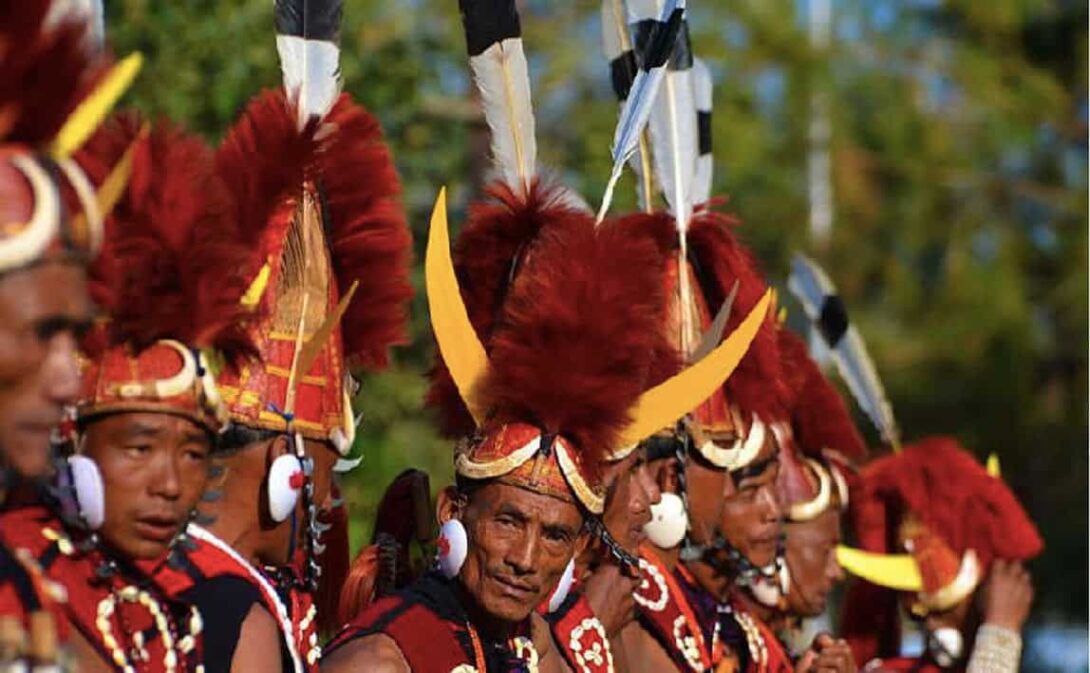
The first thing to understand is that there is no single Naga culture. Nagaland is home to numerous major tribes, Angami, Ao, Konyak, Sumi, Lotha, and more, each with its own distinct language, dress, customs, and traditions, often mutually unintelligible. The Hornbill Festival, held every December at Kisama near Kohima, was created precisely to bring these tribes together in one place and to preserve and showcase traditions that modernization threatens. When you watch the performances, you are watching different nations, in effect, each presenting its own heritage, not a single homogeneous show.
This matters for how you engage. Asking a performer which tribe they belong to, with genuine interest, is far better than treating them all as generic Naga warriors. The pride in specific tribal identity is deep, and curiosity about it is warmly received, while lumping everyone together quietly diminishes them.
On that stage are not generic warriors but distinct tribes, each a culture of its own, each presenting a heritage that modernity nearly erased.
On the misunderstanding
The morung is a sacred institution, not a hut
At the festival ground, each tribe has a morung, a traditional dormitory-like structure, and these are reconstructed at Kisama as showcases. The morung was historically the institution at the heart of Naga village life, a communal house where young men were educated, trained, and prepared for adulthood, where the community's knowledge was passed down. They are decorated with carvings, sometimes with replicas of the trophies of the past, and they are treated with respect.
When you enter or photograph a morung, do so respectfully. The tribe members hosting it are often happy to explain their culture, and engaging with them, accepting the rice beer or food offered, asking about the carvings and customs, is the way to experience the festival deeply rather than just photographing it. The morung is where the real cultural exchange happens, if you are willing to slow down and step inside.
The headhunter history is real, and handled with care
Several Naga tribes, the Konyak most famously, practiced headhunting until well into the twentieth century, taking the heads of enemies in warfare as a source of spiritual power and status. This is a genuine and recent part of the history, the last of the tattooed Konyak headhunter generation are elderly men still alive today, and it is part of what draws fascinated visitors. But it must be approached with sensitivity, not ghoulish excitement. These are people's grandfathers and a complex heritage that Christianity and modernity transformed within living memory. Curiosity is fine, respect is essential, and treating the headhunter past as a freak-show attraction rather than a serious piece of cultural history is a real failure of grace.
Photography needs permission and warmth
The visual richness of Hornbill, the headdresses, the tattoos, the dances, makes it a photographer's dream, and that creates a problem: performers and elders are constantly photographed, often without a word exchanged, as if they were exhibits. The respectful approach is to ask before taking close portraits, especially of elders and the tattooed Konyak men, to engage with a smile and a moment of human contact first, and to never thrust a camera into someone's face. Many are genuinely happy to be photographed when approached with warmth, and that small courtesy transforms the interaction from extraction to exchange. Some may appreciate a small gesture in return, and you should follow your guide's lead on this.
- Recognize the distinct tribes, ask which one a performer belongs to with genuine interest.
- Step inside the morungs, engage with the hosts, accept offered food and rice beer.
- Approach the headhunter history with respect and seriousness, never as a freak show.
- Ask before close-up photography, especially of elders and tattooed Konyak men.
- Dress modestly and behave respectfully, this is a cultural showcase, not a party.
- Get the Inner Line Permit sorted in advance, required for non-Nagaland Indians.
A Christian state with a warrior past
One more layer that surprises visitors: Nagaland is overwhelmingly Christian, among the most Christian states in India, the result of American Baptist missionary work from the nineteenth century onward. This sits alongside the fierce pre-Christian warrior heritage in a way that is complex and lived, churches everywhere, Sunday genuinely observed, and yet the Hornbill Festival celebrating the animist, headhunting past that Christianity replaced. Understanding this tension, that the festival is partly an act of cultural recovery by a now-Christian people reaching back to a heritage their grandparents abandoned, gives the whole event a poignancy that the casual visitor, snapping photos of warriors, completely misses.
The festival is partly a Christian people reaching back to the animist warrior heritage their own grandparents left behind. That tension is the soul of Hornbill.
On the OJ Hornbill trip, which runs in the first days of December for the festival peak, the briefing goes well beyond logistics into the cultural context, the distinct tribes, the meaning of the morung, the sensitivity around the headhunter past, the way to photograph with warmth rather than extraction. Because Hornbill is not a costume parade, it is a living act of cultural preservation by proud and complex people, and the traveller who understands that comes away with something far deeper than a camera roll of feathered warriors. They come away having actually met Nagaland.
Frequently asked
Do I need a permit for the Hornbill Festival?
Yes, non-Nagaland Indians need an Inner Line Permit to enter Nagaland, which can be arranged online in advance or through your operator. It is a straightforward but mandatory requirement. Foreign nationals have a separate registration process. Sort this before travel as it is checked on arrival.
Is it okay to photograph the Naga performers?
With courtesy, yes. Ask before close-up portraits, especially of elders and the tattooed Konyak headhunter-generation men, and engage with a smile and human contact first rather than thrusting a camera into faces. Many are genuinely happy to be photographed when approached with warmth. Follow your guide's lead on any gestures of thanks.
What is a morung at the Hornbill Festival?
A morung is a traditional Naga communal house, historically where young men were educated and prepared for adulthood, the heart of village life. Each tribe builds one at the Kisama festival ground as a cultural showcase. Stepping inside, engaging with the hosts, and accepting offered food and rice beer is where the deepest cultural exchange at Hornbill happens.