
Once a year, under the brightest full moon of autumn, the whole of Korea goes home. Chuseok, often called Korean Thanksgiving, is one of the country's most important and cherished holidays, a time of family reunion, gratitude for the harvest, and remembrance of ancestors. For a few days the cities empty, the highways fill, and Korea returns to its hometowns to share food, honour the past, and give thanks under the harvest moon.
Gratitude for the harvest
Chuseok falls in autumn, on the full moon of the eighth lunar month, at the time of the harvest, and at its heart it is a festival of gratitude and abundance, thanking the ancestors and the year for the food that has been gathered in. It is one of Korea's two biggest holidays, and the family is its absolute centre. Koreans travel, often for many hours through legendary holiday traffic, to gather at the family home, frequently the home of the eldest relative, for several days together.
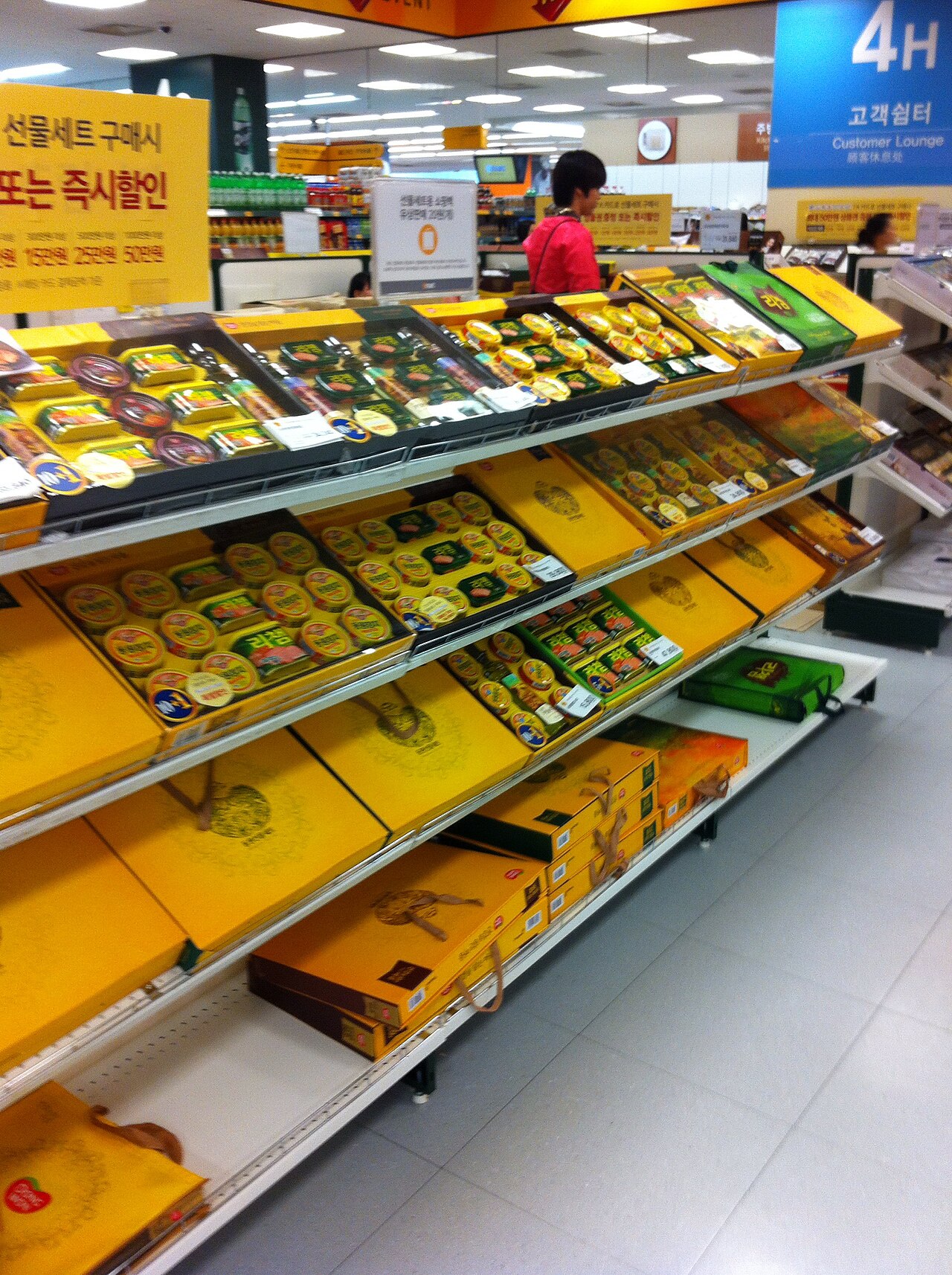
This great annual homecoming is so central that it reshapes the entire country for a few days: businesses close, the famously busy cities fall quiet, and the roads and trains overflow with people heading to their hometowns. For a visitor, it is a vivid lesson in how deeply Korean society is rooted in family and respect for one's elders and ancestors.
On Chuseok the busiest country in Asia goes still, because every road is full of people doing the one thing that matters most: going home.
On the homecoming
The rites, the food, and the moon
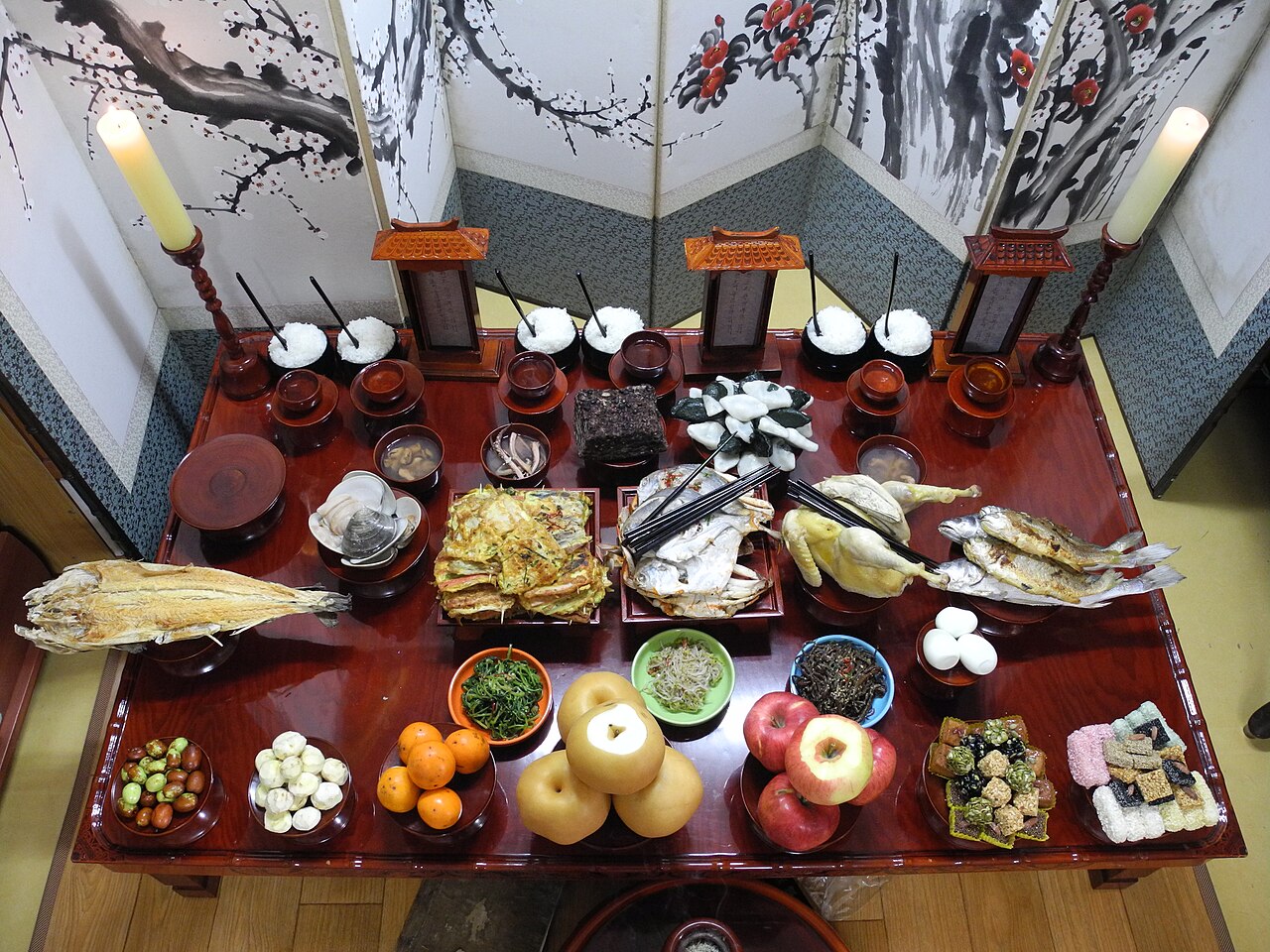
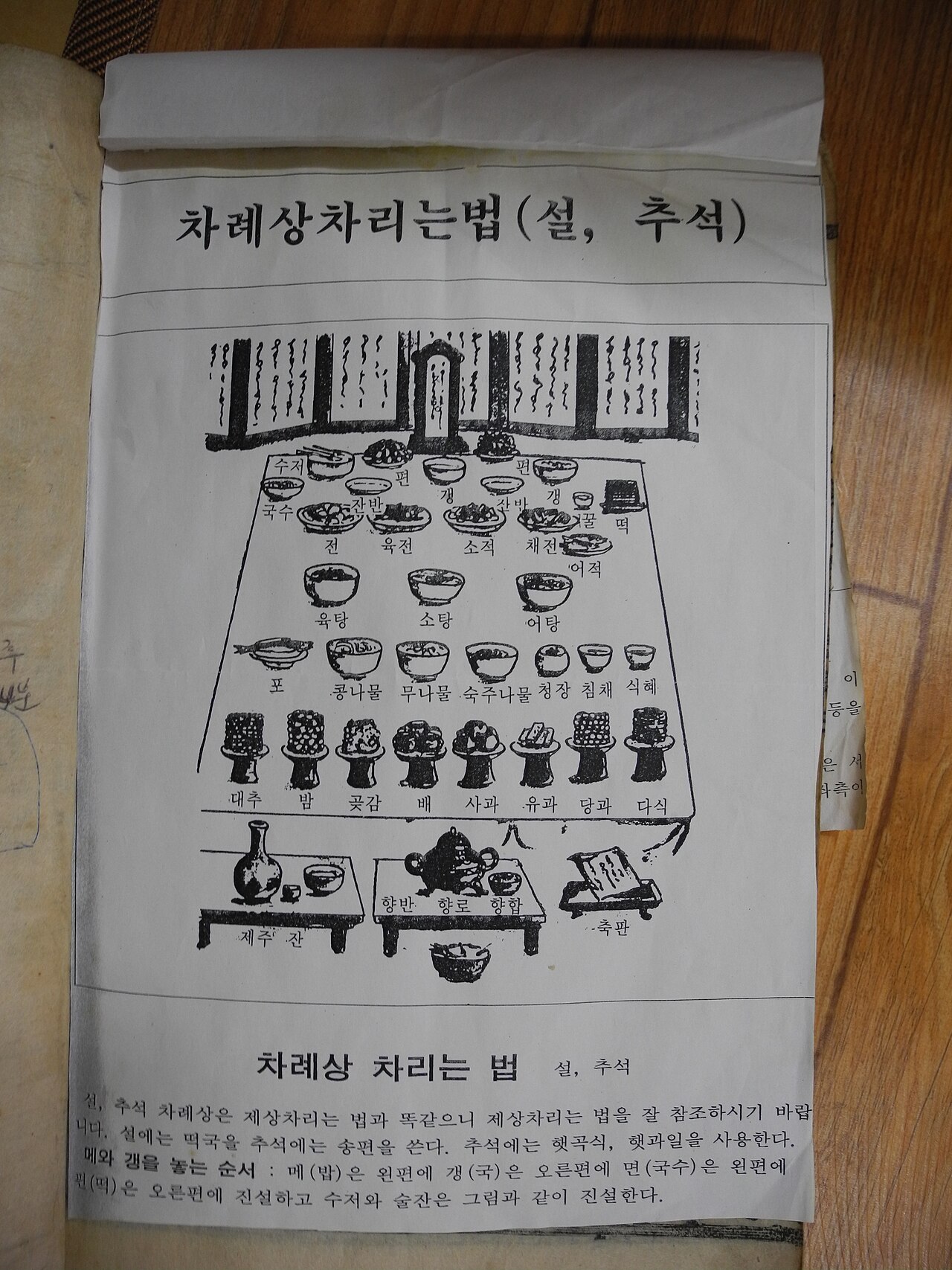
Several traditions define Chuseok. Families perform charye, a memorial rite honouring their ancestors, setting out a carefully arranged table of food as an offering and a sign of respect and gratitude. They also practise beolcho, visiting and tending the ancestral graves, clearing the grass and paying respects, a duty of care to those who came before.
And there is the food. The signature dish is songpyeon, small, half-moon-shaped rice cakes filled with sweet ingredients like sesame, beans, or chestnut, and steamed over pine needles that lend a fragrant scent. Families make them together, and tradition holds that those who shape beautiful songpyeon will have good fortune. Many also wear hanbok, the traditional dress, and play folk games, from the wrestling sport of ssireum to the circle dance of ganggangsullae, all under the great bright full moon that gives the festival its glow.
How to experience it as a visitor
- It falls in autumn, on the full moon of the eighth lunar month, usually September or October, and lasts about three days. The exact dates shift each year.
- Expect the country to slow and travel to surge. Many businesses close, and trains and roads are packed with people heading home. Plan around it.
- Seek out the staged celebrations. Palaces, folk villages, and cultural centres put on Chuseok events, folk games, hanbok experiences, and songpyeon making, for visitors.
- Try songpyeon, the half-moon rice cakes, the iconic taste of the festival.
- Approach it as a family holiday, more intimate and home-bound than a public street festival. Its spirit is reunion and remembrance.
A window into the Korean heart
Chuseok is not a festival of spectacle in the way a parade or a fire ceremony is; its grandeur is quieter and more human. It is a whole nation pausing to go home, to cook together, to honour the dead and thank the harvest, to sit under the full moon as a family. For a traveller, it offers something more intimate than a show: a glimpse into the values that hold Korean society together, the reverence for family and ancestors, the gratitude, the deep pull of home. Understanding Chuseok is understanding Korea.
Chuseok's spectacle is not fireworks or floats. It is a hundred thousand family tables, set with rice cakes and gratitude, under the same harvest moon.
On the OJ South Korea trip the deeper culture of the country is woven through the journey alongside the neon and the food, the palaces, the traditions, the values that shape modern Korean life. Because the cities dazzle and the food delights, but understanding a festival like Chuseok, the reverence for family and ancestors beneath the surface, is what turns a tour of Korea into a real meeting with it.
Frequently asked
When is Chuseok celebrated?
Chuseok is celebrated on the full moon of the eighth month of the lunar calendar, in autumn, usually falling in September or October. It is a holiday of about three days centred on the harvest full moon. The exact dates shift each year, and it is one of Korea's two biggest holidays, prompting a massive nationwide homecoming.
What do Koreans do during Chuseok?
Families travel home to gather for several days, perform charye ancestral memorial rites with an offering table of food, tend ancestral graves in a custom called beolcho, and give thanks for the harvest. They make and eat songpyeon, half-moon rice cakes steamed over pine needles, often wear hanbok, and play folk games under the full moon.
Can tourists experience Chuseok in Korea?
Yes, though it is primarily an intimate family holiday, so the country slows and many businesses close while travel surges. Palaces, folk villages, and cultural centres stage Chuseok events for visitors, with folk games, hanbok experiences, and songpyeon making. Try the songpyeon rice cakes, and approach the festival as a window into Korea's deep family values.