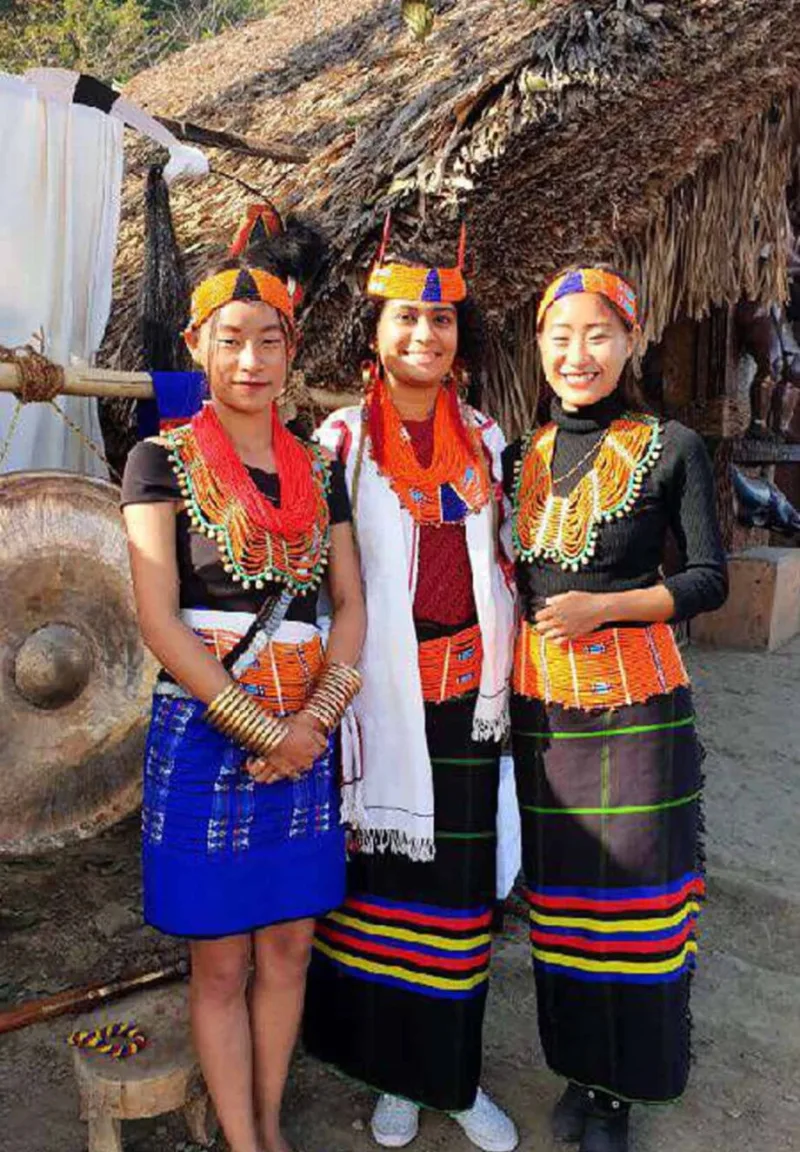
The Hornbill Festival 2026 runs December 1 to 10 at Kisama Heritage Village, 12 km from Kohima, and it is the single best window into Nagaland's 17 tribal cultures that you will ever get. If you have been vaguely curious about the northeast and keep putting it off, this is the trip that ends that habit.
What Exactly Is the Hornbill Festival
The festival is the Government of Nagaland's annual attempt to put every Naga tribe in one place for ten days. What that means in practice is 17 morungs, the traditional tribal huts, each representing a different tribe, arranged in a row at Kisama. Each morung has its own dances, food stalls, crafts, and headhunting paraphernalia that is now mercifully decorative.
The hornbill is a bird sacred across Naga tribes and appears on warrior headdresses. Using it as the festival symbol was deliberate. The event was started in 2000 and has grown steadily from a tourism experiment into something that tribes genuinely participate in with pride.
The word you will hear is "Festival of Festivals" and that framing is accurate. What would otherwise be 17 separate harvest and warrior celebrations happens in one place at one time.
Hornbill Festival 2026 Dates and Venue
- Dates: December 1 to December 10, 2026
- Main venue: Kisama Heritage Village (Naga Heritage Village), between Kigwema and Phesama villages, 12 km south of Kohima
- Entry: Roughly INR 50 to INR 100 per person per day; professional camera attracts an additional INR 50 charge. Confirm the exact fee at the gate as prices can revise year to year
Kisama is not a large space, so it gets genuinely crowded on weekends during the festival. If you can choose your days, go on a Tuesday or Wednesday for more breathing room and better photography angles.
Inner Line Permit: What You Need Before You Enter Nagaland
Every Indian citizen who is not a Nagaland resident needs an Inner Line Permit to enter the state. There are no exceptions for the festival period.
How to get it: Apply online at ilp.nagaland.gov.in or walk into Nagaland House offices in Delhi, Kolkata, Guwahati, or Shillong. You can also get it at Dimapur airport or the Dimapur railway station on arrival, though doing it before you travel saves time.
Documents needed: Aadhaar card or passport or voter ID, two passport-size photographs.
Fee: INR 200 for a permit valid up to 30 days.
Important: Print and carry the permit. You will be asked to show it at checkpoints and sometimes at the festival entry gate. Online copy on a phone is accepted most of the time but a printout avoids arguments.
How to Reach Kohima From Major Indian Cities
Nagaland has no airport near Kohima. The entry point by air is Dimapur (airport code: DMU), roughly 74 km from Kohima. The drive takes 2.5 to 3 hours on NH 29 through winding hill roads.
| Route | Transport | Approximate Cost | Notes |
|---|---|---|---|
| Delhi to Dimapur | Flight (with layover in Kolkata) | INR 8,000-14,000 one-way | Book 2-3 months ahead for December |
| Kolkata to Dimapur | Direct flight | INR 3,500-6,000 one-way | Fastest connection, IndiGo and Air India operate |
| Bangalore to Dimapur | Flight (via Kolkata) | INR 6,000-12,000 one-way | No direct flights |
| Guwahati to Kohima | Road via Dimapur | INR 700-1,200 by bus | 8-9 hours, passes through tea gardens |
| Dimapur to Kohima | Shared cab or private cab | INR 250-600 shared, INR 1,500-2,500 private | 2.5-3 hours |
December is peak season for Dimapur flights because of the festival. Fares in November and early December rise sharply. Book flights and accommodation by September at the latest.
Cost Breakdown for an Indian Traveller
A 5-night trip covering the festival makes sense for most people. Here is what to budget.
| Item | Budget Option | Mid-Range |
|---|---|---|
| Flights (round trip, from Delhi) | INR 15,000-20,000 | INR 22,000-30,000 |
| Accommodation (per night) | INR 800-2,000 | INR 2,500-6,000 |
| Dimapur to Kohima transfer | INR 250-600 | INR 1,500-2,500 |
| Festival entry (5 days) | INR 250-500 | INR 250-500 |
| Food per day | INR 300-600 | INR 700-1,500 |
| ILP permit | INR 200 | INR 200 |
| Local transport at festival | INR 200-400/day | INR 400-800/day |
Realistic total for 5 nights from Delhi: INR 30,000-50,000 per person all-in, depending on how you book flights and whether you share rooms.
Kolkata travellers will land at roughly INR 20,000-35,000 for the same trip because flights are cheaper and more direct.
Where to Stay During the Hornbill Festival
Kohima fills up completely by October for December. Book the moment you decide you are going.
Budget (INR 800-2,000/night): Nagaland homestays in Kohima town, festival tent camps at Kisama. Homestays are the better choice - you eat with Naga families and the food alone is worth it.
Mid-range (INR 2,500-6,000/night): Clean hotels near Kohima centre, Touphema Tourist Village (a heritage heritage village experience about 40 km from Kohima), and eco-cottages in Dzuleke.
Premium (INR 8,000+/night): Boutique properties with valley views, premium tent camps with meals.
The practical advice is to stay in Kohima town rather than near Kisama. Accommodation at the venue is minimal and logistics from Kohima are simple - shared cabs run between Kohima and Kisama during the festival for INR 50-100 each way.
What Actually Happens at Kisama
The ten days at Kisama are layered. Here is what you will find:
The morung row: Each tribe builds its traditional longhouse, decorated with skulls, horns, and carvings. The Konyak, who come from Mon district near Myanmar, bring the most dramatic warrior attire. The Lotha, Ao, Angami, Sumi - each has distinct beadwork, headdresses, and songs.
Tribal dances: The open-air amphitheatre runs performances through the morning. These are actual harvest dances and warrior dances, not staged tourist shows. Costumes are full traditional - you will see hornbill feather headdresses that cannot be exported and that tribes wear only at ceremonies.
Naga food court: The food section is one of the best parts of the festival. Smoked pork with bamboo shoot, axone (fermented soybean chutney), rice beer in bamboo cups, ghost pepper chutney that is genuinely dangerous. Vegetarians will find it harder - Naga cuisine is heavily meat-based, though rice dishes and boiled vegetables are usually available.
Indigenous games: Naga wrestling, greased bamboo pole climbing, archery, fire-making without matches. These are competitive events, not demonstrations.
Hornbill International Rock Contest: Nagaland has a serious rock music tradition, and this evening concert has launched bands nationally. If you are in Kohima on the rock contest night, go.
Night bazaar: Craft shopping, street food, local bands, traditional music. December nights in Kohima drop to 5-8 degrees Celsius. Layer up.
What to Pack for December in Kohima
Kohima sits at about 1,500 metres above sea level. December is cold and dry.
- Daytime temperatures: 10-15 degrees Celsius at the festival ground
- Evenings and nights: 5-8 degrees Celsius, sometimes colder
- Down jacket or thick fleece plus a windproof outer layer
- Comfortable walking shoes - Kisama involves a lot of ground
- Gloves and a warm cap for evenings
- A small daypack for festival days
- Sunscreen - the winter sun at altitude is deceptive
You do not need heavy mountaineering gear. Think northern India hill station in December, not Ladakh in February.
Day Trips Worth Adding Around Kohima
If you are staying 5-7 days, one or two days outside Kisama are worth it.
Dzukou Valley: One of northeast India's great treks. The valley sits on the Nagaland-Manipur border at about 2,438 metres, covered in seasonal flowers and grasslands. Day trek from Viswema village. December conditions are cold but the trail is open.
Kohima War Cemetery: One of the most affecting war memorials in India. The 1944 Battle of Kohima was the turning point that stopped Japan's advance into India. Well-maintained, beautifully kept, free entry.
Khonoma Village: Asia's first green village, claimed to be the original seat of the Angami Naga warrior tradition. A 20 km drive from Kohima. The walk through the village and its terraced fields is slow and worth it.
Dzuleke Eco-Village: A homestay community 30 km from Kohima surrounded by forest. Good for a night away from the festival crowds.
Is the Hornbill Festival Worth It for an Indian Traveller?
Short answer: yes, and the question itself comes from thinking of northeast India as a logistical challenge rather than a destination.
The longer answer is that the Hornbill Festival gives you something that no hill station, beach, or European trip can replicate - actual living contact with tribal cultures that are genuinely different from anything in mainland India. The Naga people are warm to visitors, the food is unlike anything else in the country, and the landscape is the kind of rolling green hills that makes you wonder why this region gets a fraction of the attention Rajasthan does.
The flight connection via Kolkata is slightly annoying but not difficult. The ILP is a minor administrative step. The cold is manageable. The payoff is real.
Travelling as a Group vs Solo
Going solo to Hornbill is possible but you will spend time navigating shared cabs, booking homestays individually, and figuring out festival logistics while also trying to enjoy it. Going with a group, especially one that has been before, means the logistics are sorted and you focus on the experience.
OJ has run group trips to the Hornbill Festival and the northeast. See the OJ Meghalaya trip for the kind of northeast India itinerary we put together, and check back for Hornbill Festival group departures as we announce them.
Frequently Asked Questions
Do Indians need a permit to attend the Hornbill Festival?
When should I book flights and accommodation for Hornbill 2026?
Which days of the Hornbill Festival are best to visit?
Is Nagaland food vegetarian-friendly?
What is the weather like in Kohima in December?
Can I attend the Hornbill Festival without a tour package?
Related Reading
Before you go, sort your Inner Line Permit for Nagaland. If the northeast has your attention, our Meghalaya group trip itinerary pairs naturally with Hornbill, and for another trip built around a festival, see La Tomatina from India.
One in the Orange Jacket runs offbeat group adventures for travellers who have outgrown the usual circuit.