
Oman is the gentlest introduction to the Arab world, and the thing that will strike you first is the hospitality, which is not a personality trait but an ancient cultural obligation, rooted in Bedouin desert life where turning away a traveller could mean their death. The result is a culture where a guest is sacred, where coffee and dates appear within moments of your arrival anywhere, and where the etiquette around all this generosity has rules worth knowing.
The coffee ritual is the heart of it
Omani coffee, kahwa, is light, often golden, flavoured with cardamom and sometimes rosewater or saffron, served in tiny handleless cups without handles, alongside dates. When you are offered it, and you will be, in homes, shops, and hotels, accepting is the courteous thing, and there is a small etiquette to the cup.
The cup is small and will be refilled repeatedly by an attentive host. When you have had enough, the signal is to gently shake the cup side to side as you hand it back, which means no more, thank you. Without this signal, a good host will keep refilling indefinitely, because stopping would be inhospitable. Take the cup with your right hand, eat a date or two, and accept at least one cup, refusing coffee entirely can seem cold. The whole exchange is brief, warm, and the doorway into Omani social life.
A good Omani host will refill your coffee forever, because stopping would be rude. The gentle shake of the cup is how you say enough, thank you.
On the coffee ritual

The right hand, always
As across the Muslim and South Asian world, the left hand is associated with bathroom functions and is considered unclean for eating and giving. You eat with your right hand, you give and receive with your right hand, you shake hands with your right hand. For Indian travellers this is entirely familiar and requires no adjustment. When eating from a shared platter, which happens often in Omani hospitality, you take from the section directly in front of you with your right hand, and a host will push the best pieces toward you.
Dress modestly, and it is appreciated
Oman is conservative but relaxed about it compared to its neighbours, and modest dress earns respect and ease. For men, long trousers and a shirt with sleeves. For women, covering shoulders and knees, with loose-fitting clothing, and carrying a scarf is wise. This matters most in towns, markets, and around mosques, and least at beach resorts and in the desert, where there is more flexibility. Nobody expects a foreign woman to wear an abaya, but the woman who dresses modestly moves through Oman with noticeably more comfort and warmth than one who does not.

The Grand Mosque has a dress code, strictly
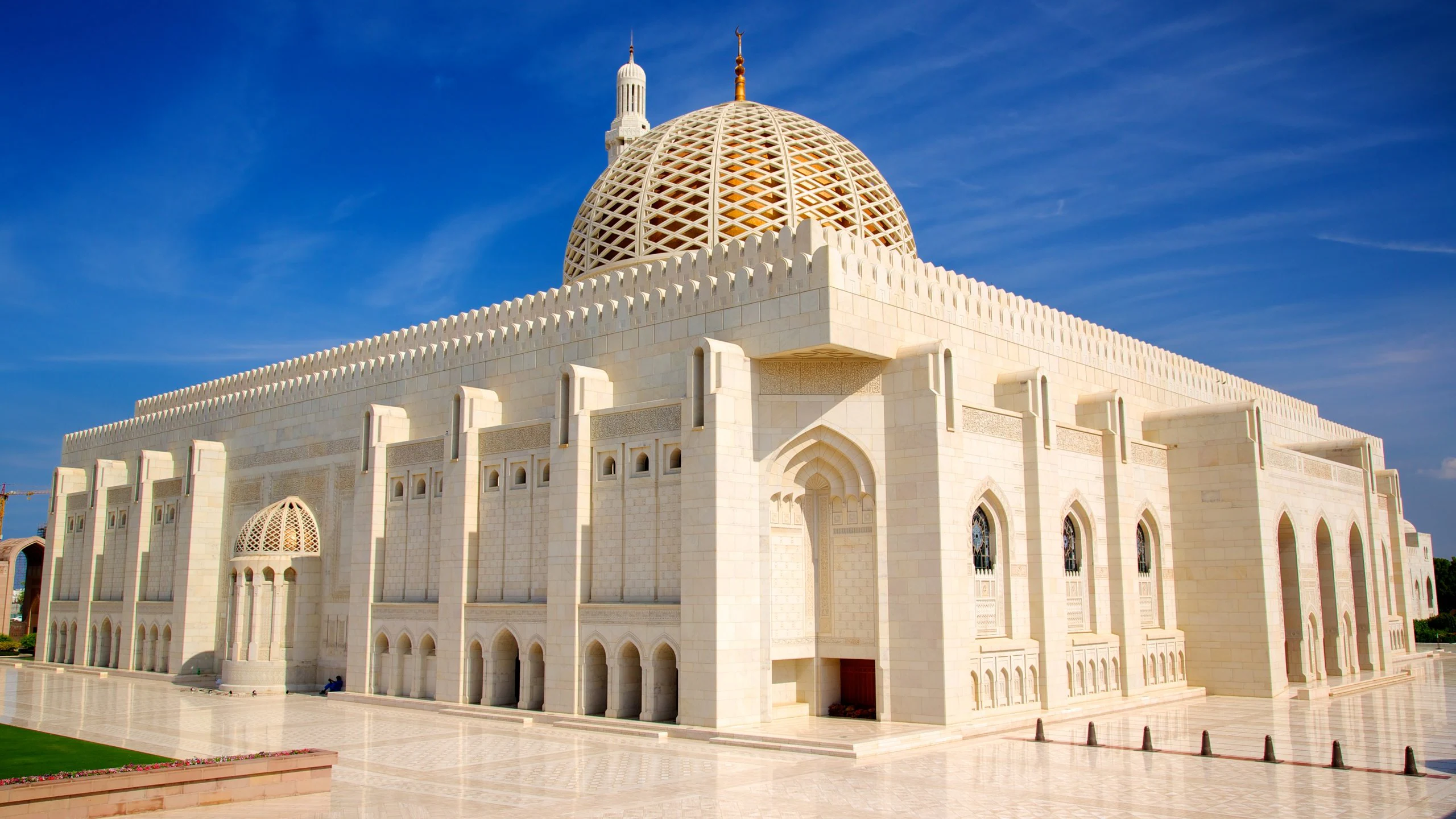
The Sultan Qaboos Grand Mosque in Muscat is one of the most beautiful religious buildings in the world and welcomes non-Muslim visitors during set morning hours, but the dress code is strict and enforced. Women must cover hair, arms, and legs completely, an abaya and headscarf, often available to rent or borrow at the entrance. Men wear long trousers and sleeves. Shoes come off before entering the prayer halls. You visit outside prayer times, you keep your voice low, and you photograph the architecture freely but not worshippers. It is worth dressing perfectly for, because the interior is breathtaking.
- Accept Omani coffee and dates when offered, and shake the cup gently to signal enough.
- Use your right hand for eating, giving, and receiving.
- Dress modestly, covered shoulders and knees, loose clothing, a scarf for women.
- For the Grand Mosque: women cover hair, arms, and legs fully, shoes off in prayer halls.
- Do not eat, drink, or smoke in public during daylight in Ramadan.
- Ask before photographing people, especially women, and never photograph worshippers.
Ramadan changes the rhythm
If you visit during Ramadan, the month of fasting, the whole country shifts. Eating, drinking, or smoking in public during daylight hours is not done, even by non-Muslims, out of respect for those fasting, so meals happen privately or in tourist hotels. The days are quiet, the nights come alive after the fast is broken at sunset with the iftar meal. Travelling during Ramadan is a fascinating window into the culture but requires discretion and patience, and many services run on reduced hours.
Why Oman is the easy start
Oman gets the balance right in a way that makes it the perfect first Arab country for Indian travellers. It is deeply traditional and devoutly Muslim, yet famously gentle, safe, and welcoming, without the hard edges or the showy excess of some of its neighbours. The hospitality is real, the etiquette is learnable, and the rewards, the coffee in a desert camp, the warmth of a shopkeeper, the breathtaking mosque, come easily to the respectful visitor. Oman does not test you. It welcomes you, and asks only that you meet its generosity with grace.
Oman is devout and traditional yet famously gentle. It does not test the traveller. It welcomes you, and asks only that you meet its generosity with grace.
On the OJ Oman trip, which runs in February when the desert and mountains are at their most beautiful, the etiquette briefing covers the coffee ritual, the Grand Mosque dress code, the rhythm of hospitality, so the group can lean into the generosity rather than fumble it. Oman is one of those places that quietly becomes a favourite, precisely because the warmth is so genuine. Meeting it with respect is how you unlock the version of Oman that the careless tourist, in shorts at the mosque gate, never gets to see.
Frequently asked
How do I signal I have had enough Omani coffee?
Gently shake the small cup side to side as you hand it back to the host. This means no more, thank you. Without the signal, a good host will keep refilling indefinitely, because stopping would seem inhospitable. Always accept at least one cup, take it with your right hand, and eat a date or two alongside.
What is the dress code for the Sultan Qaboos Grand Mosque?
Strict and enforced. Women must cover hair, arms, and legs completely, an abaya and headscarf, often rentable at the entrance. Men wear long trousers and sleeves. Shoes come off before the prayer halls. Visit outside prayer times, keep your voice low, and photograph architecture but not worshippers.
Is Oman a good first Arab country for Indian travellers?
Yes, it is the ideal one. Oman is deeply traditional and devoutly Muslim yet famously gentle, safe, and welcoming, without the hard edges or excess of some neighbours. The hospitality is genuine, the etiquette is learnable, and the right-hand and modest-dress customs are already familiar to Indian travellers.