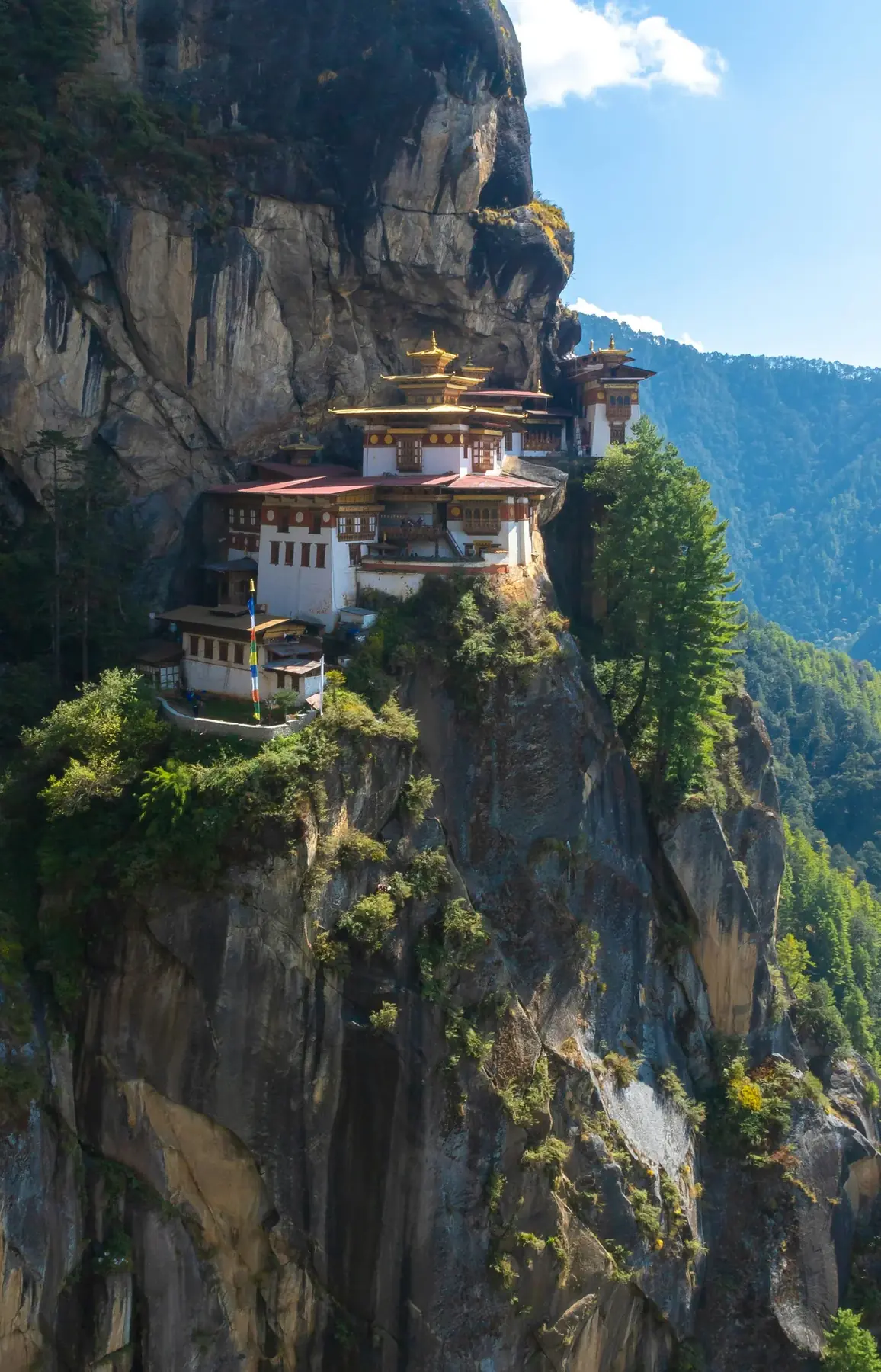
There is a moment on every Bhutan trip when an Indian traveller, confident in their spice tolerance, takes a serious spoonful of ema datshi and goes silent. Bhutan is the only country on earth where chili is treated as a vegetable rather than a seasoning, where a bowl of whole chilies in melted cheese is the national dish, and where the local definition of a mild meal would put most of us on the floor.
Ema datshi is the national dish, and it is exactly what it sounds like
Ema means chili. Datshi means cheese. Ema datshi is a stew of large green or red chilies simmered with a soft local cheese until the chilies soften and the cheese melts into a fiery, creamy sauce. That is it. That is the dish, and it is served at nearly every meal, eaten over the red rice that grows in the Bhutanese valleys.
The chilies are not a flavour accent. They are the main ingredient, the way potatoes or beans might be elsewhere. A Bhutanese cook buys chilies by the kilo and dries them in great red curtains on the rooftops, which you will see everywhere in autumn, the whole country preserving its staple vegetable for winter. To a Bhutanese, a meal without chili is not really a meal.
In Bhutan chili is not how you spice the food. Chili is the food. The cheese is just there to make it survivable.
On the national obsession
The datshi family is large
Once you understand datshi, the chili-cheese principle, the menu opens up. Kewa datshi is potatoes with cheese, gentler, the dish to order when ema datshi has defeated you. Shamu datshi is mushroom with cheese, earthy and good. Shakam datshi uses dried beef. The datshi sauce is the constant, the comfort, the thing that makes the chili bearable and the rice worth eating.
The cheese itself is worth knowing. Bhutanese cheese comes in two main forms: the soft fresh cheese that melts into datshi, and a rock-hard dried cheese called chugo, made from yak milk, which Bhutanese chew like a very slow, very tough sweet, sometimes for an hour, softening it gradually. It is the original long-lasting trail snack, and locals swear by it on mountain walks.
Red rice and the highland staples
Bhutan grows a nutty, nutritious red rice in its valleys, slightly sticky, slightly earthy, and it is the foundation of every meal, the thing that carries the datshi. In the higher regions where rice will not grow, the staples shift to buckwheat, which becomes pancakes called khuli and noodles called puta, and to wheat. The food of Bhutan is honest mountain food, built around what the altitude allows, preserved through long winters, warming and substantial.
Momos, the dumplings shared across the Himalayas, are here too, steamed and filled with cheese, vegetables, or meat, eaten with a chili sauce that, this being Bhutan, will be hotter than you expect. And suja, butter tea, the salty churned tea of the high Himalayas, accompanies it all, an acquired taste that makes complete sense once you have been cold at altitude.
- Ema datshi, the national dish, chili and cheese, approached with respect.
- Kewa datshi, potato and cheese, the gentler entry point.
- Shamu datshi, mushroom and cheese, earthy and excellent.
- Red rice, the nutty Bhutanese staple that carries every meal.
- Momos, especially the cheese ones, with the inevitable fierce chili sauce.
- Chugo, the rock-hard yak cheese you chew for an hour, the original trail snack.
Vegetarians thrive, if they can handle the heat
Here is the good news for vegetarians: Bhutanese cuisine is naturally very vegetable and cheese heavy, and ema datshi, kewa datshi, shamu datshi, and most of the datshi family are vegetarian by default. Red rice, buckwheat dishes, and vegetable momos round it out. The only real challenge is the chili, which is not negotiable in traditional cooking. A vegetarian who can handle heat eats wonderfully in Bhutan. A vegetarian who cannot should learn the word for less chili and use it often, though the kitchen may struggle to understand the request, since to them, less chili barely computes.
The Bhutanese dry their chilies on every rooftop in autumn, red curtains across the whole country, preserving the one vegetable they cannot imagine a meal without.
On the OJ Bhutan trip the ema datshi is unavoidable and it should be, because it is the most honest expression of the country: surprising, intense, unconcerned with what outsiders find comfortable, completely itself. We will warn you before the first spoonful. We will not save you from it. Some things you have to experience at full strength, and the national dish of the happiest country on earth is one of them.
Frequently asked
What is ema datshi?
Ema datshi is Bhutan's national dish, a stew of whole green or red chilies simmered with soft local cheese until the chilies soften and the cheese melts into a fiery, creamy sauce. Ema means chili, datshi means cheese. It is served at nearly every meal over Bhutanese red rice, and chili is treated as the main vegetable, not a seasoning.
Is Bhutanese food too spicy for Indians?
Often, yes, even for Indians confident in their spice tolerance. Bhutan is the only country where chili is a vegetable rather than a spice, and traditional dishes use whole chilies in quantity. Order kewa datshi, potato and cheese, for a gentler option, and learn to ask for less chili, though the kitchen may find the request puzzling.
Can vegetarians eat well in Bhutan?
Yes, very well. Bhutanese cuisine is naturally vegetable and cheese heavy. Ema datshi, kewa datshi, shamu datshi, and most datshi dishes are vegetarian, along with red rice, buckwheat dishes, and vegetable momos. The only challenge is the chili heat, which is built into traditional cooking.