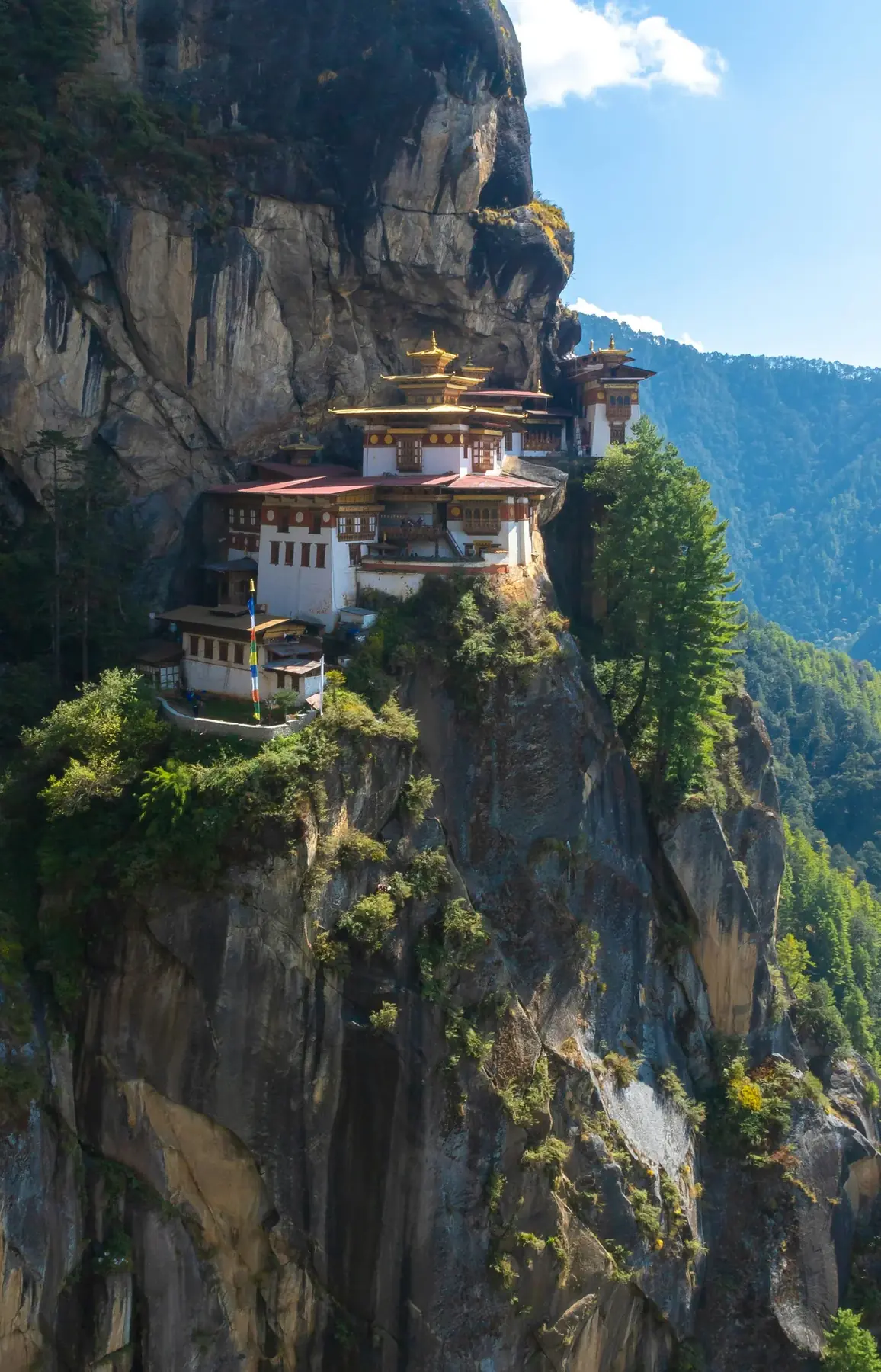
Most countries have etiquette that you absorb by osmosis. Bhutan wrote its down. Driglam Namzha is the official code of conduct of the kingdom, a formal set of rules governing dress, behaviour, and how citizens carry themselves, especially in public and sacred spaces. It is why everyone in Bhutan wears traditional dress, why the buildings all look the same, and why the country feels so coherent. Understanding it is understanding how Bhutan decided to stay itself.
The dress is a law, not a costume
Bhutanese citizens are required to wear national dress in public buildings, schools, offices, and during formal occasions. Men wear the gho, a knee-length robe tied at the waist with a belt, worn with knee-high socks. Women wear the kira, a long ankle-length dress. This is not folklore performed for tourists, it is daily law, and it is the single most visible expression of Driglam Namzha.
As a visitor you are not required to wear national dress, but you are expected to dress modestly and respectfully, especially when visiting dzongs, the fortress-monasteries, and temples. That means long trousers or skirts, covered shoulders, no hats indoors, and removing shoes where required. When entering a dzong, full-length clothing covering arms and legs is expected. Dressing well in Bhutan is itself a form of respect that the culture notices and appreciates.
Bhutan did not let its culture drift. It wrote the etiquette into law, dressed the whole country the same, and decided to remain unmistakably itself.
On Driglam Namzha
The dzong is government and god in one building
The dzong is the architectural heart of Bhutanese life, a massive fortress that houses both the monastic body and the district government, religion and administration under one roof. When you visit a dzong you are entering an active religious and governmental space, and the etiquette is strict. Photography is often restricted, especially inside the temples and of the central monk body. Certain areas are off-limits to visitors entirely. You move quietly, you follow your guide, you do not touch religious objects or murals.
Inside temples, you walk clockwise around shrines and stupas, the same as Indian and broader Buddhist practice, keeping the sacred object on your right. You remove shoes and hats. You do not point your feet toward altars or images of the Buddha. And you do not turn your back rudely on a religious figure or image when leaving, the graceful move is to step back before turning. These are the same instincts that serve you in Indian temples, applied with Bhutanese formality.
Photography has rules, and they are taken seriously
Bhutan is one of the most photogenic countries on earth and also one where photography is most restricted. Inside temples and dzongs, photography is frequently forbidden, and the prohibition is real, not casual, tied to the sacredness of the religious objects and the privacy of the monastic community. Always ask your guide before photographing anything inside a religious building, and never photograph monks in prayer or religious ceremonies without clear permission. Outside, the landscapes and architecture are yours to capture freely, but the moment you cross a temple threshold, the camera goes down until you are told otherwise.
The quiet rules of respect
Beyond the formal code, Bhutanese culture runs on a gentle restraint that rewards matching it. Public displays of anger or loud confrontation are deeply frowned upon, the culture values calm and composure. The royal family is genuinely beloved, not feared, and speaking disrespectfully of the king is both rude and hurtful to the people around you, this is not a place for casual political provocation. Tobacco is restricted, the sale of tobacco was long banned and public smoking is illegal, so do not light up casually.
- Dress modestly: long trousers or skirts, covered shoulders, especially in dzongs and temples.
- Remove shoes and hats when entering temples and homes.
- Walk clockwise around shrines and stupas, keeping them on your right.
- Never photograph inside temples or of monks praying without explicit permission.
- Do not point feet at altars, Buddha images, or people.
- Speak respectfully of the royal family, keep your composure, and do not smoke in public.
Why all of this exists
It would be easy to read Driglam Namzha as restrictive, but it makes more sense as a deliberate choice. Bhutan watched its Himalayan neighbours lose their distinctiveness to outside pressure and modernity, and it chose, consciously, through policy, to protect its culture, its environment, and its identity. The dress code, the architecture rules, the high cost of visiting, all of it is the same decision: to remain Bhutan. The traveller who respects the code is not submitting to bureaucracy, they are participating, briefly, in one of the world's most intentional cultures.
The traveller who respects the code is not obeying bureaucracy. They are stepping, for a few days, inside one of the most deliberate cultures on earth.
On the OJ Bhutan trip the guide is not optional, the country requires it, and that guide is also your interpreter for Driglam Namzha, telling you when the camera goes down, how to move through a dzong, when to step back before you turn. We brief the dress and behaviour expectations before the trip so the group arrives ready to participate rather than stumble. Bhutan gives an enormous amount to the respectful visitor. The respect is the price of admission, and it is entirely worth paying.
Frequently asked
What is Driglam Namzha?
Driglam Namzha is Bhutan's official code of conduct, a formal set of rules governing dress, behaviour, and respect, especially in public and sacred spaces. It is why Bhutanese citizens wear traditional dress daily, why architecture is uniform, and why the country feels so culturally coherent. It is a deliberate policy to preserve Bhutanese identity.
Can I take photos inside Bhutanese temples and dzongs?
Often not. Photography is frequently forbidden inside temples and dzongs, tied to the sacredness of religious objects and monastic privacy. Always ask your guide first, and never photograph monks praying or ceremonies without explicit permission. Outdoor landscapes and architecture can be photographed freely.
Do tourists have to wear traditional dress in Bhutan?
No, only Bhutanese citizens are required to wear the gho and kira in public buildings. Tourists are expected to dress modestly and respectfully: long trousers or skirts, covered shoulders, no hats indoors, especially when visiting dzongs and temples. Dressing well is itself a form of respect the culture appreciates.