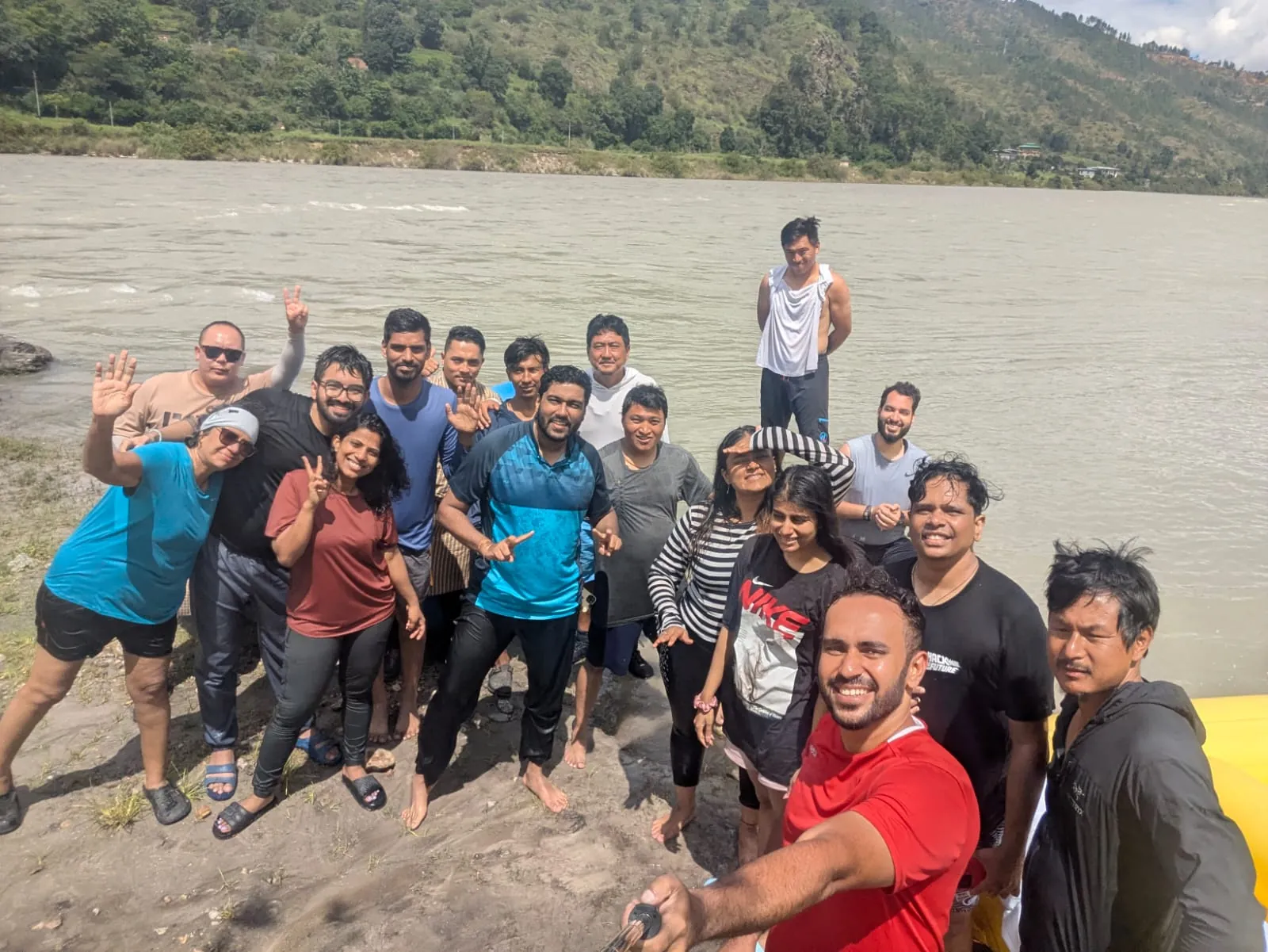
Bhutan is the softest possible landing into international travel for an Indian. No visa in the usual sense, a short flight or an overland crossing, a shared cultural register and a country that has deliberately chosen not to be overrun. It is the trip we most often suggest for someone nervous about their first international group trip.
Who runs group trips to Bhutan from India
Well served. Bhutan is one of the most commonly sold international destinations from India and nearly every operator runs it, at a wide range of price points and group sizes.
One in the Orange Jacket runs a 7-day Bhutan backpacking trip, graded Easy, in groups of 12 to 20.
Independent travel is possible and Bhutan requires a licensed local operator for most visitors regardless, so the question is less whether to use a company and more which one, and whether you want a group.
Compare on group size and on what the quote includes relative to the sustainable development fee, since that is where the real price differences sit.
What the trip actually involves
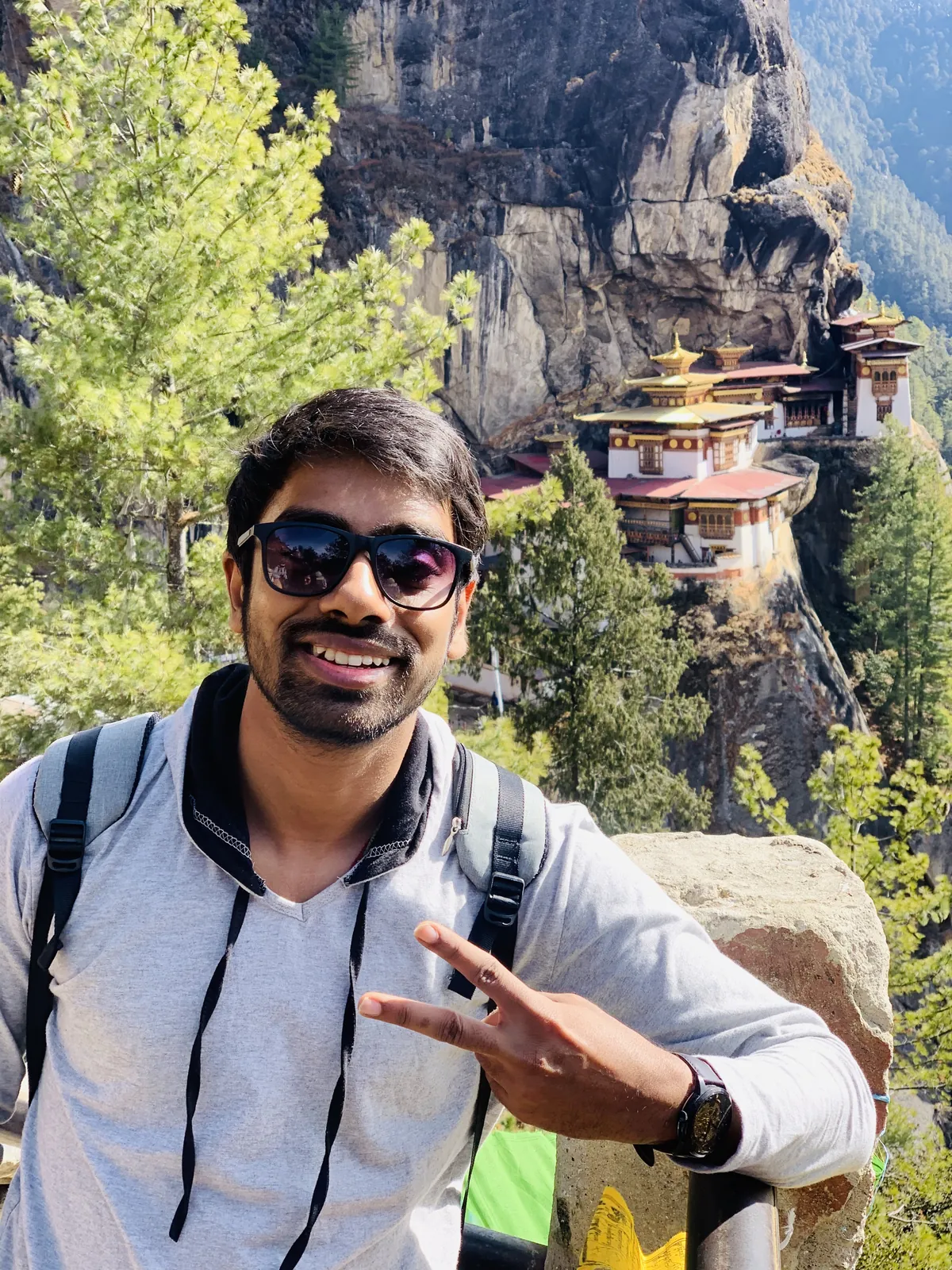
Seven days, usually Paro, Thimphu and Punakha. The Tiger's Nest monastery is the trip's centrepiece, clinging to a cliff at around 3,100 metres, and the walk up takes a few hours and is the one genuinely demanding thing on the itinerary.
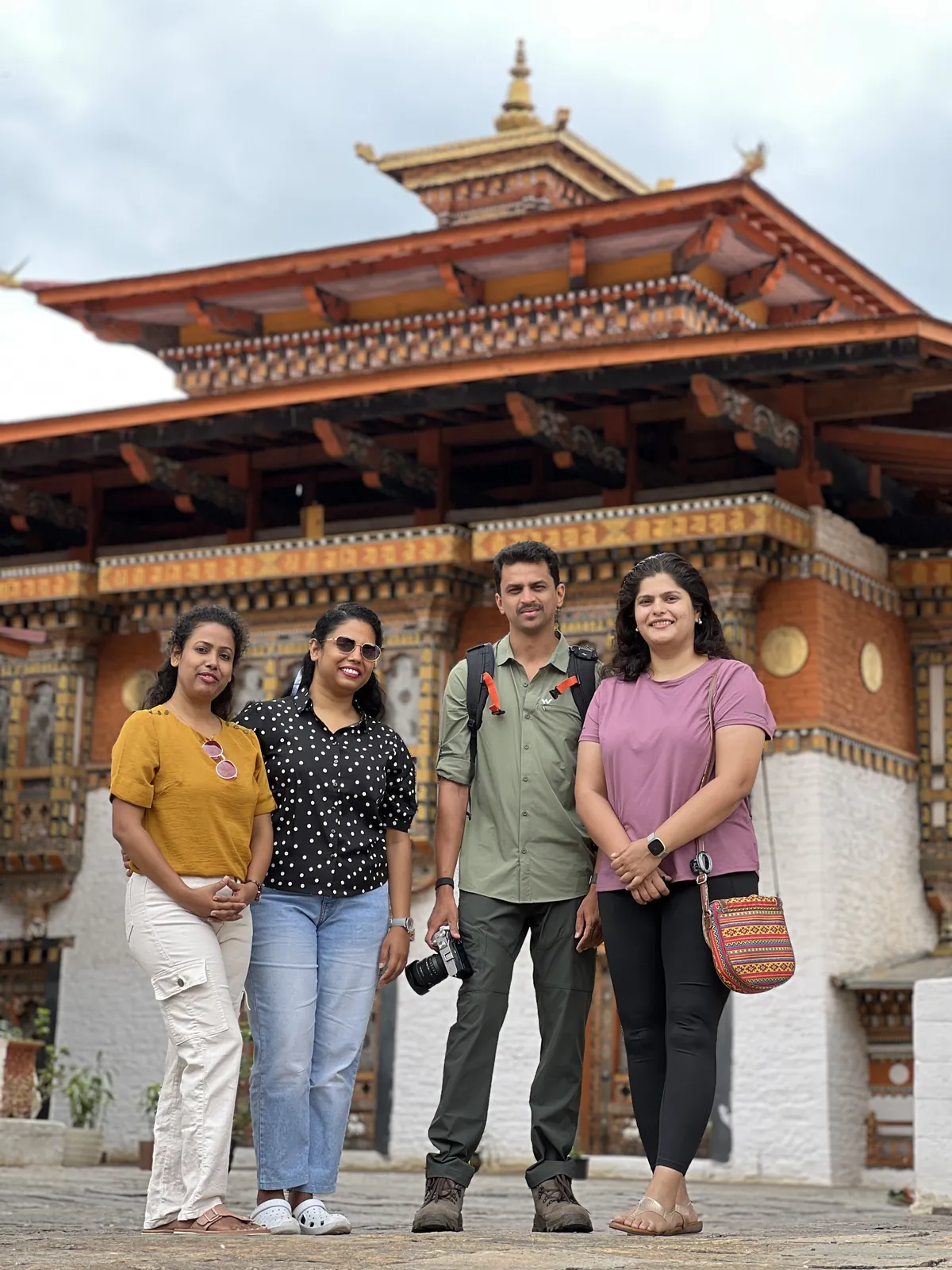
Dochula Pass on a clear day gives a line of Himalayan peaks and 108 memorial chortens. The dzongs are working administrative and religious buildings rather than monuments, which changes how they feel.
Archery is the national sport and watching a village match is more entertaining than it sounds, mostly because of the heckling.
Graded Easy apart from the Tiger's Nest walk.
- Length. 7 days
- Difficulty. Easy
- Highlights. Tiger's Nest trek, Dochula Pass, River rafting, Dzong exploration and Archery
How the days actually run
Paro is the arrival, and the landing is famous among pilots for being one of the more demanding approaches anywhere, threading between mountains. The valley is quiet, low-rise and green.
Thimphu is the capital and does not feel like one. No traffic lights, a policeman directing cars at the main junction, and a pace that takes a day to adjust to. The dzongs are working buildings housing both the monastic body and the district administration, which is why they feel occupied rather than preserved.
Dochula Pass on the road east has 108 chortens and, on a clear morning, a line of Himalayan peaks along the horizon. Whether you get that view is entirely weather.
The Tiger's Nest is usually the last full day, and it is the one real climb. Two to three hours up to a monastery on a cliff face at around 3,100 metres. There is a cafeteria at the halfway point where a lot of people stop, and the last section of steps down and back up across the gorge is the part that surprises people.
Visas, permits and getting there
Indian passport holders do not need a visa for Bhutan in the conventional sense but do need a permit, and there is a Sustainable Development Fee payable per day, with a concessional rate for Indian nationals. This is the single biggest factor in what a Bhutan trip costs.
Check what any quote includes regarding the fee, because it is the most common source of confusion when comparing operators.
You can fly into Paro or cross overland at Phuentsholing, which is slower and cheaper.
When to go
March to May and September to November. Clear skies, comfortable temperatures and the best Himalayan views from Dochula.
Monsoon between June and August brings cloud that hides the mountains and makes the Tiger's Nest walk slippery. Winter is cold and clear with some passes affected.
Bhutan or Nepal?
The two Himalayan neighbours. Nepal is cheaper, busier, better set up for trekking and has the big mountains. Bhutan is more expensive because of the daily fee, much quieter, and more culturally intact because it has deliberately limited tourism. For trekking, Nepal. For a gentle week in a Himalayan Buddhist kingdom without crowds, Bhutan.
| Bhutan | Nepal | |
|---|---|---|
| Cost per day | Higher, daily fee applies | Low |
| Entry for Indians | Permit, no visa | No visa |
| Crowds | Low by policy | High in season |
| Best for | Culture, gentle pace | Trekking, mountains |
Who this trip is not for
Anyone looking for nightlife or a party trip. Bhutan is quiet by design and the evenings are early.
Anyone expecting it to be cheap because it is next door. The daily fee makes Bhutan more expensive per day than several Southeast Asian countries.
Frequently asked
Do Indians need a visa for Bhutan?
Not a visa in the conventional sense, but Indian passport holders do need a permit, and a Sustainable Development Fee is payable per day of stay, with a concessional rate for Indian nationals. That daily fee is the largest single factor in what a Bhutan trip costs, so check exactly what any operator quote includes.
Is Bhutan a good first international trip?
It is one of the best options for Indian travellers. Entry is simpler than almost anywhere else, the flight is short or you can cross overland, there is no meaningful language barrier, and the pace is gentle. The only physically demanding element on most itineraries is the walk up to the Tiger's Nest monastery.
How hard is the Tiger's Nest trek?
Moderate rather than difficult. It sits at around 3,100 metres and the climb takes a few hours each way on a well-used path. Most reasonably fit travellers manage it comfortably, and horses are available for part of the ascent. It is the one genuinely demanding element of an otherwise easy itinerary.