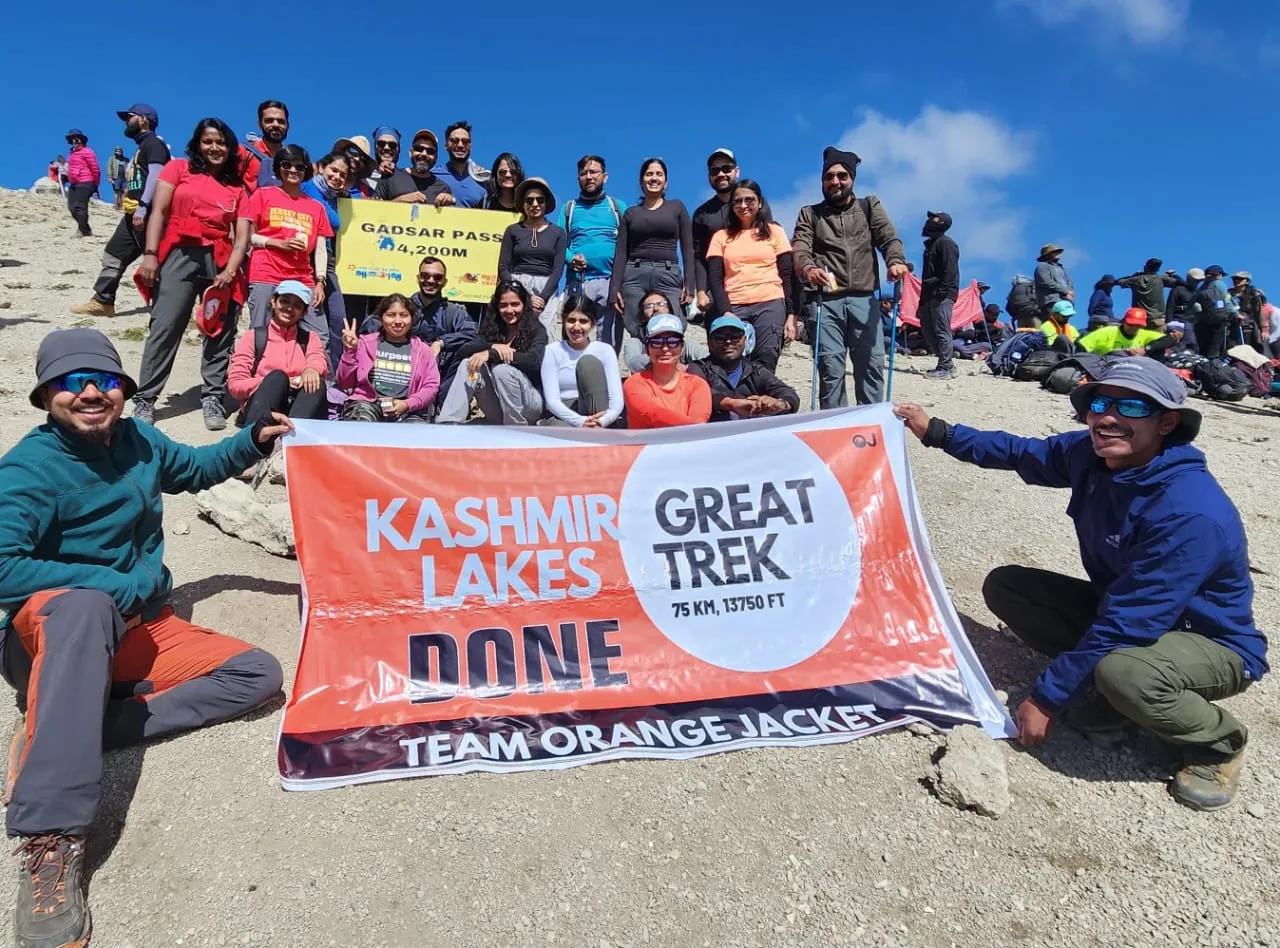
The Kashmir Great Lakes trek is regularly called the most beautiful trek in India and the description holds up. Seven alpine lakes over eight days, crossing passes above 4,000 metres, in meadows that do not look like they should be real. It is also considerably harder than the photographs suggest, and that gap catches people out every season.
Who runs group trips to Kashmir from India
Well served, and quality varies more here than almost anywhere. Kashmir Great Lakes is popular enough that many operators sell it, including some with limited high-altitude experience.
One in the Orange Jacket runs the Kashmir Great Lakes trek over 8 days, graded Moderate, in groups of 12 to 20.
Indiahikes is the benchmark for this trek as for most Indian Himalayan routes, and if it is your first trek at this altitude they are a very sensible choice.
This is a trek rather than a tour, so judge operators on trekking criteria: acclimatisation, turnaround protocol, oxygen and a pulse oximeter carried on the trail, guide to trekker ratio, and honest difficulty grading. Compare day counts between operators on the same route.
What the trip actually involves
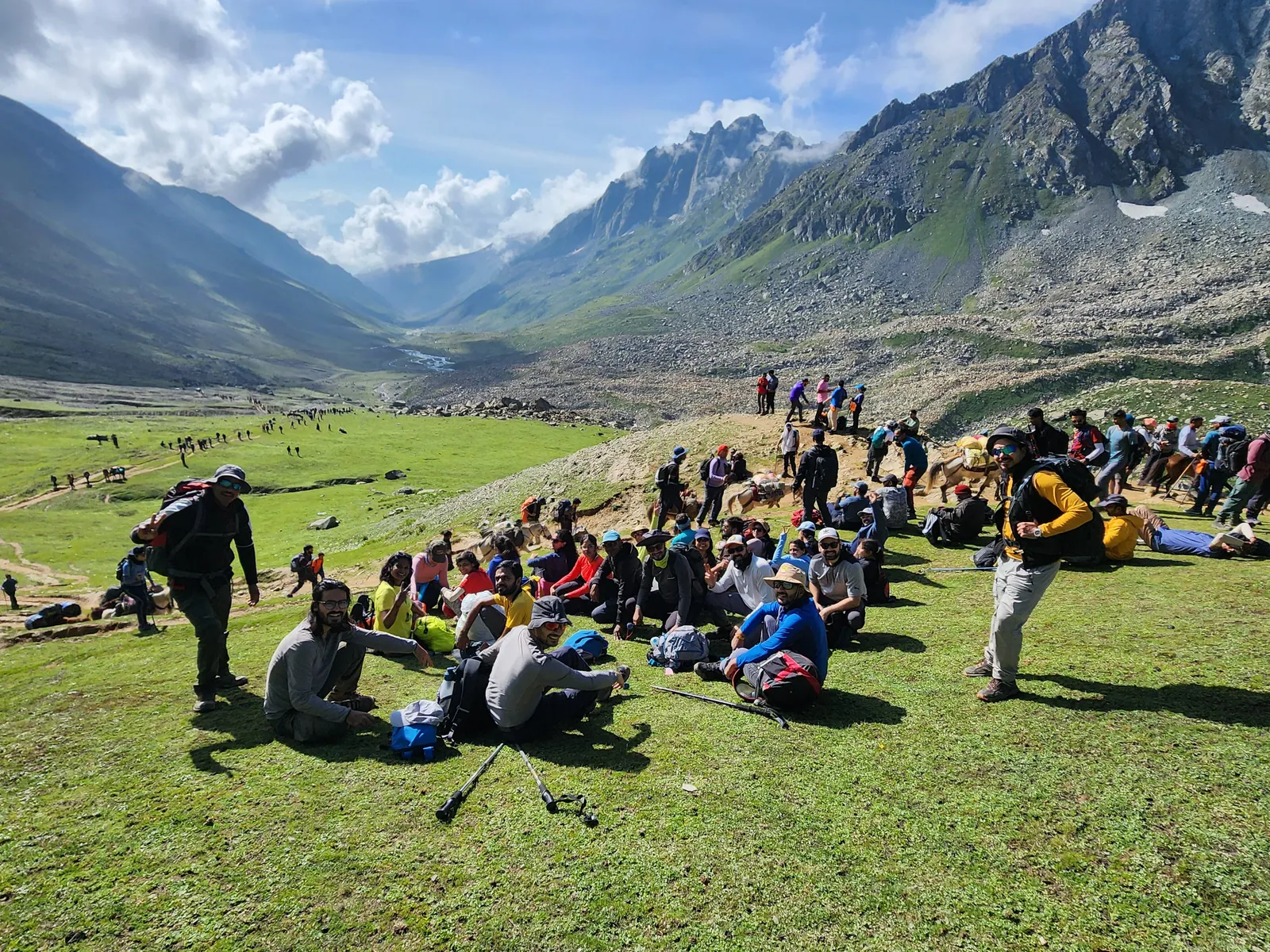
Eight days from Sonamarg, over Gadsar Pass at around 4,100 metres and past Vishansar, Krishnasar, Gadsar, Satsar and the Gangbal lakes.
The camping is high and the nights are cold. On a clear day from certain points you can see Nanga Parbat, which is a long way off and unmistakable.
Graded Moderate, and be honest with yourself about what that means. There are consecutive days of five to seven hours walking with real ascent, at altitude, camping throughout. It is not a beginner's trek, though it is often sold as one.
- Length. 8 days
- Difficulty. Moderate
- Highlights. Seven alpine lakes, Gadsar Pass (4,100m), Vishansar and Krishnasar lakes, Sonamarg meadows and Nanga Parbat views
How the days actually run
Srinagar is the start and most itineraries give it a day, which is worth taking. Dal Lake, the shikaras and a houseboat night are the version of Kashmir everyone knows, and it is a soft landing before the trek.
The drive to Sonamarg and the walk in to Nichnai is the first real day. From there the pattern repeats: cross a pass, drop to a lake, camp, repeat. Vishansar and Krishnasar sit close together and are the first pair that make people stop talking.
Gadsar Pass at around 4,100 metres is the high point and usually the hardest morning. From the top, on a clear day, the view runs a long way and Nanga Parbat is visible in the distance.
Satsar and the Gangbal twin lakes close it out before the descent to Naranag. Seven lakes over eight days, and the meadows between them are the part nobody photographs enough.
Visas, permits and getting there
No permit needed for Indian nationals. Fly into Srinagar, which is the trailhead city.
Conditions in the region can change, so check current advisories and keep your operator's guidance in view when planning.
When to go
July to early September. The snow clears the passes by July and the meadows are at their best. Outside that window the route is not viable.
Late July and August bring wildflowers across the meadows, which is the version everyone photographs.
Kashmir or Roopkund?
Two of the best-known Indian Himalayan treks. Roopkund is shorter, gets higher, is more famous for the skeletal lake, and has been subject to access restrictions in recent years. Kashmir Great Lakes is longer, greener, involves more sustained daily walking and is generally considered the more beautiful of the two. For a first big Indian trek, Great Lakes is the better structured challenge.
| Kashmir Great Lakes | Roopkund | |
|---|---|---|
| Length | 8 days | 8 days |
| High point | Gadsar Pass, around 4,100m | Higher |
| Terrain | Meadows and lakes | Forest then snow |
| Season | July to early September | May to June, September to October |
Who this trip is not for
Anyone who has not trekked before. Start with something lower and shorter, like Chandrashila, and come back to this one.
Anyone who dislikes camping. There are no teahouses on this route, so it is tents for the whole trek.
Frequently asked
How hard is the Kashmir Great Lakes trek?
Harder than it is usually sold. It involves consecutive days of five to seven hours walking with real ascent, crossing passes above 4,000 metres, and camping at altitude throughout with no teahouses. It is commonly graded Moderate but is not a suitable first trek. Something lower and shorter, such as Chandrashila, is a better starting point.
When can you do the Kashmir Great Lakes trek?
July to early September. Snow blocks the high passes outside that window, so the route is not viable at other times of year. Late July and August bring wildflowers across the meadows, which is when most of the well-known photographs are taken.
How do I choose an operator for the Kashmir Great Lakes trek?
Judge it as a trek rather than a tour. Check that acclimatisation days are built in, that there is a stated turnaround protocol for altitude sickness, that oxygen and a pulse oximeter are carried on the trail rather than left at base, and what the guide to trekker ratio is. Compare day counts between operators, since a shorter itinerary usually means acclimatisation has been cut.