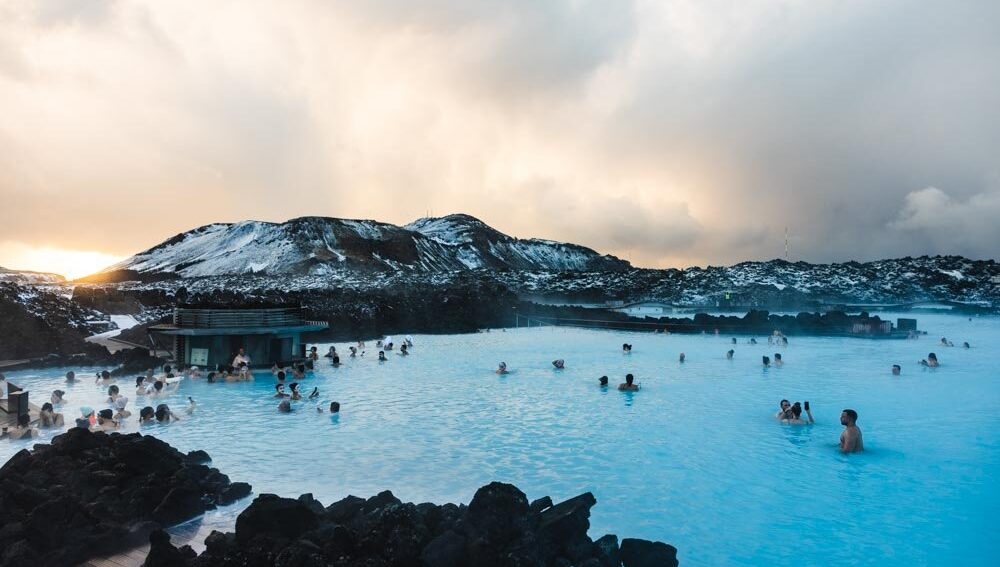
Iceland should not be able to feed itself. It sits just below the Arctic Circle, almost nothing grows outdoors, and for most of its history the island survived on what it could preserve through winters that did not end. And yet Icelandic lamb is some of the best on earth, the yogurt is a national obsession, and the tomatoes are grown in greenhouses heated by volcanoes. Iceland is a masterclass in eating well from almost nothing.
The lamb runs wild, and you can taste it
Icelandic sheep spend their summers roaming free across the highlands, eating wild grasses, herbs, berries, and even seaweed near the coast. They are not penned or grain-fed. That free-range, herb-rich diet gives the lamb a clean, almost gamey sweetness that farmed lamb cannot match. It is the one ingredient Icelanders will tell you, without arrogance, is simply better than yours.
You will find it as a slow-roasted leg, in the hearty kjotsupa, a lamb-and-vegetable soup that is the country's comfort food, and historically smoked into hangikjot, hung meat, the centrepiece of Christmas. When a country has one great ingredient and a thousand years of cold to cook through, it learns to use every part of it.
The sheep eat wild herbs and berries all summer. By autumn the seasoning is already inside the lamb. The cook just has to not ruin it.
On Icelandic lamb
Skyr is the thing Icelanders actually live on
If lamb is the celebration, skyr is the daily fuel. It looks like thick yogurt but it is technically a fresh cheese, strained until it is dense and high in protein and almost fat-free. Icelanders have eaten it for over a thousand years, since the settlement era, and they eat it constantly, with berries, with milk, as breakfast, as a snack, as the thing that got Viking-descended farmers through the dark. It travels well in your bag and it is the single most useful food on an Iceland road trip.
The hot dog is the great equaliser
The most beloved everyday food in Iceland is not fancy. It is the pylsa, the Icelandic hot dog, made mostly of that same good lamb. You order it with everything, which means raw and crispy fried onions, ketchup, sweet brown mustard, and a remoulade. It costs a fraction of a restaurant meal in a country where restaurant meals are punishing, and prime ministers and tourists queue at the same stand. In an expensive country, the hot dog is the honest deal.
Bread baked by a volcano, and a shark you should skip
Iceland's geothermal heat is not just for hot springs. In some places they bake rugbraud, a dense, dark, slightly sweet rye bread, by burying the dough near a hot spring and letting the earth cook it slowly for a day. Eaten warm with butter and smoked fish, it is one of the most quietly Icelandic things you can taste.
And then there is hakarl, the fermented Greenland shark, cured for months because the fresh flesh is toxic. It is genuinely foul, ammonia-sharp, a survival food from a time of no waste, and Icelanders mostly eat it now to watch tourists react. You can try it for the story, chased with the caraway spirit Brennivin, but nobody will think less of you for skipping it. It is heritage, not dinner.
Where the food actually comes from
- The sea does the heavy lifting. Cod, haddock, and Arctic char are fresh, clean, and everywhere. The lobster soup on the south coast is worth the detour.
- The greenhouses do the rest. Geothermal-heated greenhouses grow tomatoes, cucumbers, and peppers year round. Some you can eat inside the greenhouse itself.
- Brennivin and beer. Beer was banned in Iceland until 1989, which is recent enough to be strange. The craft scene that followed is young and good.
- Tipping is not a thing. Service is included. Do not stack a tip on top of already-high prices.
The honest note on cost and on eating green
Iceland is expensive, and pretending otherwise helps nobody. Almost everything is imported, the population is tiny, and the prices reflect both. The way to eat well without bleeding money is to lean on the hot dogs, the skyr, the soups, and the bakeries, and to save the proper sit-down lamb dinner for one real night rather than every night. For vegetarians it is more work than Greece, but Reykjavik has caught up fast and the geothermal vegetables are genuinely excellent. You will not starve, but you will plan.
Iceland feeds itself on lamb that seasons itself, yogurt a thousand years old, and tomatoes grown by a volcano. Scarcity made it clever.
On the OJ Iceland road trip the food is part of the landscape, not separate from it. The lobster soup on the south coast after a day of waterfalls, the skyr that lives in your bag between stops, the one proper lamb dinner you remember for years. You are eating an island that turned scarcity into something worth flying for.
Frequently asked
Is there vegetarian food in Iceland?
Yes, more than its reputation suggests. Reykjavik has strong vegetarian and vegan restaurants, and the geothermal greenhouses produce excellent tomatoes, cucumbers, and peppers. Soups, breads, and skyr cover a lot of ground. Outside the capital it takes more planning, so stock up in towns before long drives.
Why is food so expensive in Iceland?
Almost everything is imported, the growing season is short, and the population is small, so there are few economies of scale. To eat well without overspending, lean on hot dogs, skyr, bakery food, and soups, and save one night for a proper lamb or seafood dinner rather than eating out lavishly every meal.
What is the most Icelandic thing to eat?
Lamb and skyr are the honest answers, both central to Icelandic life for over a thousand years. The hot dog is the everyday favourite. Geothermal rye bread with smoked fish is the quietly special one. Fermented shark is heritage you can try for the story but do not have to enjoy.