On the last Tuesday of January, on the remote Shetland Islands at the far northern edge of Britain, in the cold and the near-total darkness of a sub-Arctic winter, up to a thousand people carrying flaming torches march through the streets behind a replica Viking longship. Then they hurl their torches into it and burn it to the waterline. This is Up Helly Aa, the largest fire festival in Europe, and it is a community's defiant, magnificent celebration of its Norse blood and the turning of the dark.
A Viking heritage, kept alive in fire
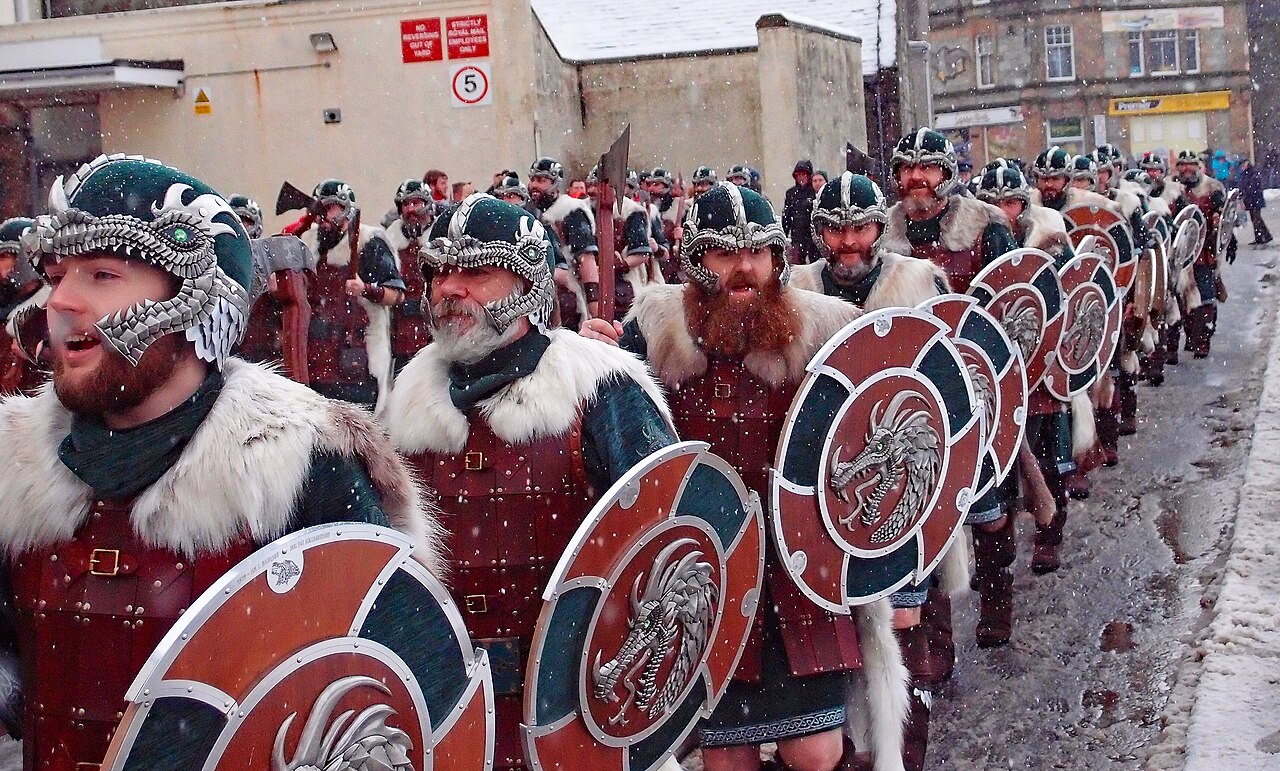
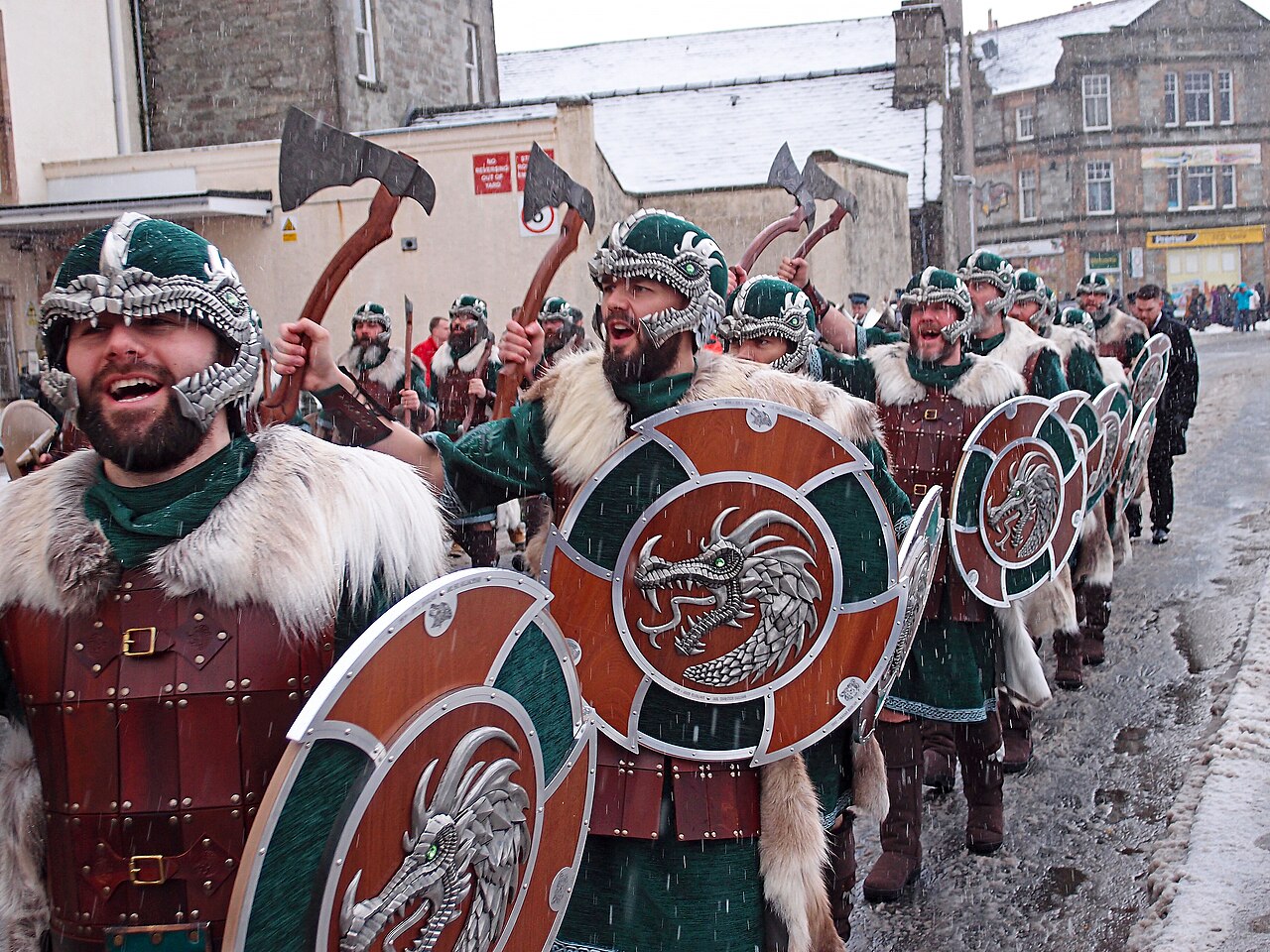
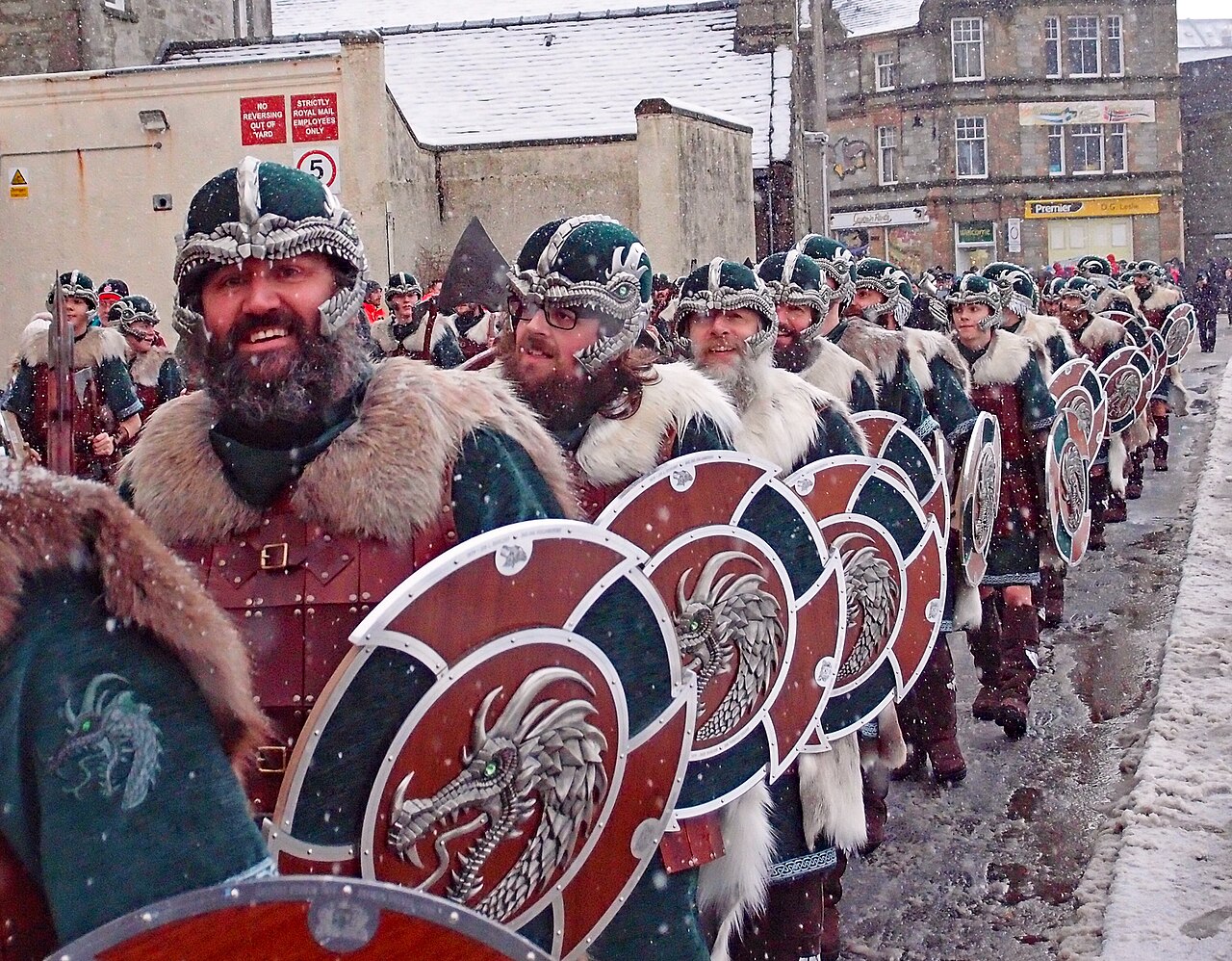
Shetland sits closer to Norway than to mainland Scotland, and for centuries it was Norse, ruled from Scandinavia, its language, names, and identity shaped by the Vikings. Up Helly Aa is the islands' proud, theatrical celebration of that heritage. The festival is led by the Jarl Squad, a group dressed as Vikings in magnificent, handmade winged helmets, axes, shields, and armour, led by the Guizer Jarl, the chief, around whom the whole year of preparation revolves.
The squad builds a full replica Viking galley, a longship, over many months, and it is the centrepiece of the night. Far from a tourist invention, Up Helly Aa grew from older midwinter fire traditions in the nineteenth century into the spectacular community festival it is now, fiercely owned by the people of Lerwick and unmissable for anyone who happens to be on the islands in the deep of winter.
Up Helly Aa is not a re-enactment for visitors. It is Shetland, in the dark heart of winter, reminding itself in fire that it was, and still feels, Norse.
On the fire festival
The night of fire
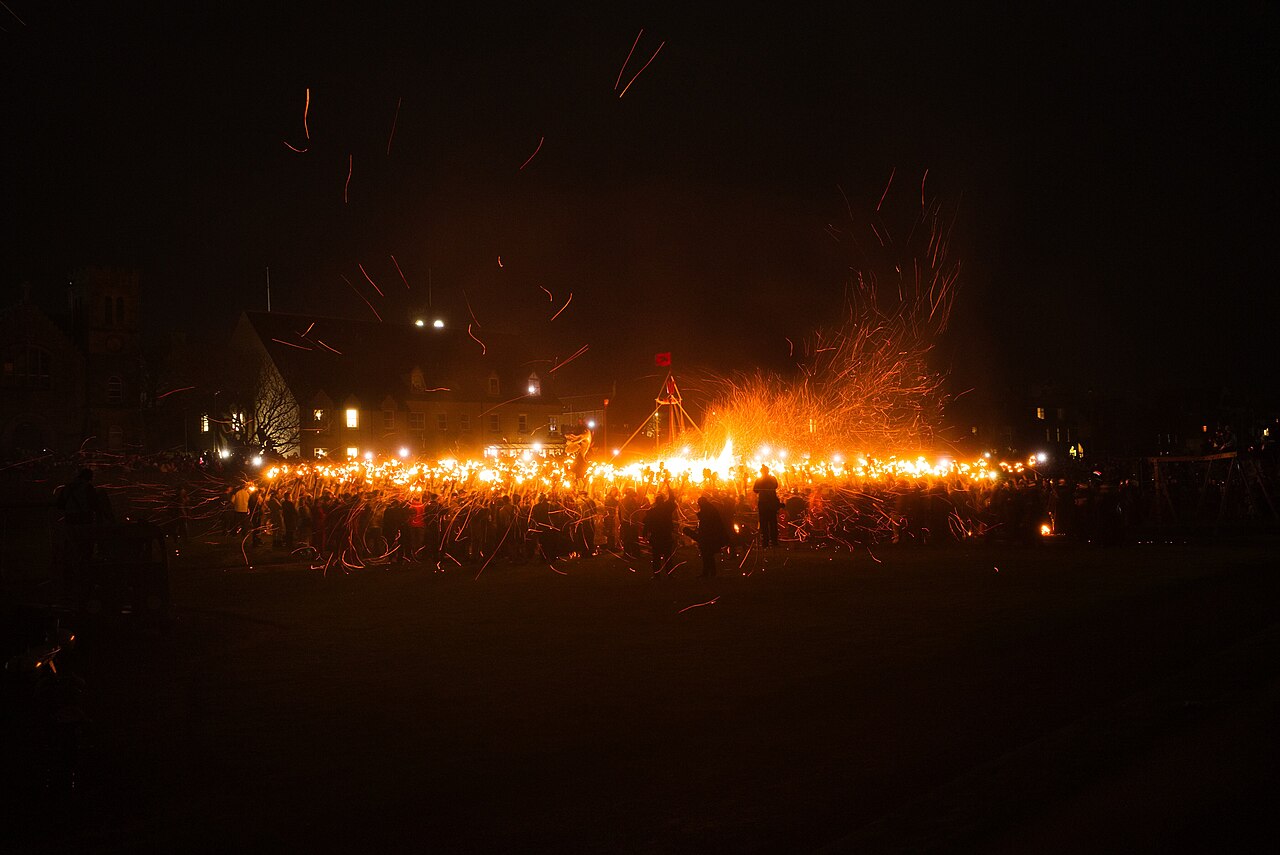
As night falls, hundreds of guizers, costumed participants, assemble with unlit torches. On a signal, the torches are lit, and a river of fire, up to a thousand flames strong, snakes through the streets of Lerwick behind the Jarl Squad and the galley, the whole town glowing orange against the winter black. The procession winds to a park where the marchers form a great circle around the longship.
Then, to the singing of the Up Helly Aa song, the guizers hurl their flaming torches into the galley, and the Viking ship is consumed in a roaring inferno, sparks streaming into the night sky. It is a primal, spectacular sight, fire and song and a burning longship in the deep midwinter, and when the ship has burned, the islands erupt into a legendary all-night round of parties in halls across the town.
How to experience it
- It falls on the last Tuesday of January, in the heart of the Shetland winter. Expect cold, wind, and very short daylight, the perfect dark canvas for fire.
- Getting there takes planning. Shetland is remote, reached by ferry or flight, and accommodation for the festival is extremely limited. Book far ahead.
- The procession is public, but the famous all-night hall parties usually require connections or tickets that are hard to come by.
- Dress for sub-Arctic January. Serious warm, waterproof, windproof layers. This is not a festival for the underprepared.
- Respect that it is a community event, owned by the people of Shetland, not a spectacle staged for outsiders. Watch with appreciation.
A defiance of the dark
There is something deeply human about Up Helly Aa. In the coldest, darkest, most remote corner of the country, at the lowest point of the year, a community gathers to light a thousand torches and burn a Viking ship, not in despair but in celebration, a roaring act of warmth and identity and defiance against the long northern night. To witness it is to understand how people at the edge of the world have always answered the dark: with fire, with song, and with each other.
At the darkest point of the northern year, Shetland answers the night the way its Viking ancestors did: with a thousand torches and a burning ship.
We do not run a Shetland trip, and we will be honest about that. But the same pull, the wild edge of the North Atlantic, the Norse heritage, the drama of fire and dark and the elements, runs through the OJ Iceland road trip, which crosses the same kind of stark, volcanic, sub-Arctic country. Because whether it is a burning longship in Shetland or the northern lights over Iceland, the magic of the far north is the same: nature and humanity at their most elemental, in a landscape that does not pretend to be tame.
Frequently asked
When and where is Up Helly Aa held?
The main Up Helly Aa fire festival is held in Lerwick, the capital of the Shetland Islands at the far north of Scotland, on the last Tuesday of January each year. Several smaller Up Helly Aa festivals take place across Shetland through the winter. Shetland is remote, reached by ferry or flight, so visiting requires significant planning.
What happens at Up Helly Aa?
Up to a thousand costumed guizers, led by a Jarl Squad dressed as Vikings, march through Lerwick at night carrying flaming torches behind a full-size replica Viking longship they have built. They circle the galley and hurl their torches into it, burning it in a spectacular blaze, followed by legendary all-night parties in halls across the town.
Why does Shetland celebrate a Viking festival?
Shetland was Norse for centuries, ruled from Scandinavia and closer to Norway than to mainland Scotland, and its identity remains deeply shaped by that Viking heritage. Up Helly Aa, which grew from older midwinter fire traditions in the nineteenth century, is the community's proud celebration of that Norse blood and a defiant marking of the deep midwinter.