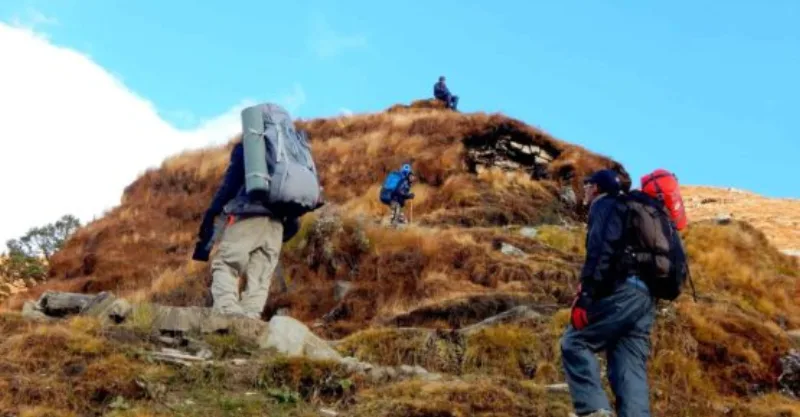
Most people who struggle on an Indian trek are not unfit. They packed wrong. Wrong shoes wreck knees on descent. A cotton base layer soaked in sweat at 3,800 metres at 9 PM is a serious problem. An overstuffed 80-litre bag on a 6-hour daily climb will destroy your shoulders by Day 3. Knowing what to pack for a trek in India is as important as knowing which trek to pick, and this guide covers both, sorted by season, altitude, and how much you actually need to spend.
The Core Principle: Layers, Not Bulk
Before listing gear, understand the one rule that drives all packing decisions for Indian mountain treks: the three-layer system. Every single item of clothing you carry should serve one of three jobs.
The base layer sits against your skin and pulls moisture away from your body. Cotton fails this job spectacularly - it stays wet and makes you cold. Use synthetic or merino wool. A good thermal set from Decathlon (the Freshwarm range) costs around INR 1,200 to INR 1,800 and works for most treks up to 4,500 metres.
The mid layer traps body heat. A fleece jacket or a light down jacket does this. Fleece is better for humid or monsoon conditions because it still insulates when damp. Down is warmer and lighter but useless when wet.
The outer layer blocks wind and rain. A waterproof shell jacket with taped seams is what you want. Decathlon's Forclaz line starts at around INR 2,500. Premium shells from The North Face or Patagonia run INR 15,000 to INR 40,000. For most Indian treks below 5,000 metres, a mid-range shell is completely adequate.
This three-layer logic applies to your legs too: thermal leggings, a warm mid layer, waterproof trekking pants on top.
Clothing: The Actual List by Season
The season determines how many layers you need, not how cold or warm you think you will feel.
Summer treks (March to June): Kedarkantha post-snow, Hampta Pass, Valley of Flowers, Kashmir Great Lakes. Days are warm, mornings and evenings drop sharply at altitude.
- 2 moisture-wicking T-shirts
- 1 lightweight long-sleeve shirt
- 1 fleece jacket
- 1 light down or synthetic jacket (packable)
- 1 waterproof shell jacket
- 2 pairs of trekking trousers (quick-dry)
- 1 pair of thermal leggings (for camp nights above 3,500 m)
- 3 pairs of merino wool or synthetic trekking socks
- 1 pair warm camp socks
- Sunhat or cap
- Lightweight buff or neck gaiter
- Light gloves
Monsoon treks (July to September): Roopkund, Har Ki Dun, Western Ghats trails. Rain is guaranteed, leeches are possible, visibility shifts fast.
- All the above, minus the down jacket (down + monsoon = bad)
- Replace down with a heavier fleece
- Add full waterproof gaiters (keeps water out of your shoes on flooded paths)
- Carry a lightweight poncho over your shell - it covers your pack too
- Pack everything in dry bags or waterproof liners inside your rucksack
- Extra pair of socks minimum - you will need them
Autumn treks (September to November): The golden season. Brahmatal, Kedarkantha early batches, Sandakphu, Goecha La. Clear skies, cold nights.
- Full three-layer system for both top and bottom
- Heavier gloves (not just liners)
- Balaclava or warm beanie that covers ears
- Gaiters for frosty morning trails
- Same base set as summer, but add the heavier mid-layer
Winter treks (December to February): Kedarkantha, Chandrashila, Brahmatal snow routes. This is a different game.
- Five layers are not unusual on summit days
- Add a heavyweight down jacket on top of your shell
- Waterproof insulated gloves, not just liners
- Balaclava plus neck buff plus beanie
- Microspikes or crampons if the operator does not provide them
- Thermal leggings every day, not just at camp
Footwear: The One Item to Not Compromise On
Your shoes carry you for 5 to 7 hours every day on rocky, wet, sometimes icy terrain. This is the one category where spending more is always worth it.
You need waterproof, high-ankle trekking shoes with a Vibram or similarly grippy sole. Canvas sneakers, running shoes, and low-cut hiking shoes all fail on Himalayan terrain. They offer no ankle support when a foot rolls on a wet rock, no grip on loose scree, and no warmth when the trail is icy.
The Decathlon MH500 costs around INR 5,000 and is the most recommended budget option for Indian treks up to 4,500 metres. For anything higher or snowier, the MH900 (around INR 8,500) is worth the jump. Wildcraft and Quechua also offer decent options in the INR 4,000 to INR 7,000 range.
One non-negotiable rule: wear your trekking shoes for at least two to three weeks before the trek. Untested shoes cause blisters by Day 1 and pain by Day 2. There is no such thing as "my feet will adapt on the trail."
Pack a pair of lightweight camp sandals (Crocs or similar). After 6 hours in trekking boots, your feet will want out.
Backpack Size: Match It to Your Trek
The pack size question trips up first-timers every time. Bigger is not better.
| Trek Duration | Pack Size | What It Covers |
|---|---|---|
| 1-2 day day hike | 20-25L daypack | Layers, water, snacks, first aid |
| 3-5 day trek | 40-50L | All clothing, sleeping bag, personal gear |
| 6-9 day trek | 50-60L | Full kit plus extras |
| 10+ day expedition | 65-80L | For unsupported or semi-supported treks |
If you are trekking with an operator like OJ where a mule or porter carries the common gear, you likely carry only a 20-30L daypack on trail. Your main bag rides separately. Confirm this with your operator before you pack.
Your loaded pack should not weigh more than 25 to 30 percent of your body weight. If you weigh 65 kg, do not carry more than 16 to 20 kg. Most organized Himalayan treks work comfortably with a 10 to 12 kg main bag.
The Essential Gear List
Beyond clothing and footwear, these items are non-negotiable:
Headlamp: Essential for early morning summit starts and camp navigation at night. Carry spare batteries. Budget option: Decathlon around INR 800. Better option: Petzl Tikkina, around INR 1,500.
Trekking poles: These reduce knee strain on descents by up to 30 percent, improve balance on icy or loose terrain, and give tired legs extra support. Collapsible aluminium poles from Decathlon cost around INR 1,200. If you have bad knees, poles are not optional.
Water bottles: Carry two one-litre bottles minimum. Hydration is critical at altitude. A hydration bladder works but can freeze at high camp in winter. Add water purification tablets (Chlorine tabs, around INR 100 for a strip) if your operator does not guarantee filtered water.
Sleeping bag: For organized treks with provided tents, check if sleeping bags are in the kit list. If not, a -5 to -10 degree Celsius rated bag handles most Indian treks from April to November. Decathlon's Forclaz MT500 runs about INR 5,000 to INR 6,000. In winter, upgrade to -15 degree rating.
Sunscreen and lip balm: The Himalayan sun at altitude is brutal, especially on snow. SPF 50 minimum, reapply every two hours. Chapped lips at 4,000 metres are genuinely painful.
Sunglasses with UV protection: Not just for comfort - UV radiation at high altitude is intense enough to cause snow blindness. Wrap-around style preferred.
First aid basics: Diamox (acetazolamide) for altitude sickness prevention (consult a doctor before your trek), ORS sachets, pain relief, blister plasters, antiseptic, bandage roll.
What to Carry in Your Documents Pouch
Most Indian trekkers underestimate how frequently identity documents are checked on mountain trails. Forest checkposts, permit stations, and camp registrations all ask for ID.
Carry the originals plus at least two photocopies of: - Aadhaar card or Passport - Any trekking permit your operator has arranged - Emergency contact details written on paper (phone batteries die) - Medical information card if you have any condition or allergy
For treks in sensitive border areas like parts of Uttarakhand near Mana village, Arunachal Pradesh routes, or Sikkim's restricted zones, additional Inner Line Permits are mandatory. Your operator will advise on these. If doing Everest Base Camp trek from India across the Nepal border, your passport is required and a TIMS card plus Sagarmatha National Park permit must be arranged in advance.
Buy vs Rent: A Realistic Cost Breakdown
If you are doing one trek a year or trying it for the first time, buying the full kit is expensive upfront. Renting from your operator or a local gear shop near the trailhead is a smart option for big-ticket items.
| Item | Buy (INR) | Rent per Trip (INR) | Verdict |
|---|---|---|---|
| Sleeping bag (-10 C) | 5,000 - 8,000 | 500 - 800 | Rent if once a year |
| Down jacket | 3,500 - 8,000 | 400 - 700 | Rent for first trek |
| Trekking poles | 1,200 - 3,000 | 200 - 400 | Buy if you trek often |
| Crampons/microspikes | 1,500 - 4,000 | 300 - 600 | Rent, unless winter specialist |
| Trekking shoes | 5,000 - 12,000 | Rarely rented | Always buy |
| Backpack 50L | 3,500 - 10,000 | 400 - 700 | Buy if you plan more treks |
The items worth buying outright from the start: shoes, base layers, and a headlamp. Shoes especially - rental shoes will not fit properly and improper fit causes blisters. Everything else can be rented reasonably from gear shops at major trailheads like Rishikesh, Manali, Leh, and Darjeeling.
If you are building a kit over time, adventure travel for beginners in India breaks down how to approach gear investment progressively without blowing your budget on a first trek.
What to Leave at Home
This is the list most packing guides skip. Overpacking is as much a problem as underpacking.
Leave behind:
- Cotton anything - base layers, T-shirts, socks. Cotton stays wet, cotton makes you cold.
- Jeans. They are heavy, offer zero warmth when wet, and restrict movement on climbs.
- More than two pairs of trekking trousers. You do not need four.
- A full-size umbrella. A compact lightweight one is fine for monsoon; a rain poncho is better.
- Separate day creams, serums, and multi-step skincare. A moisturiser and SPF lip balm is your kit.
- A hair dryer or any electrical appliance that needs a socket. Most camps have no power.
- Books. Download them. Every gram matters on Day 5.
Pack your bag. Then remove 20 percent of it. That is the right amount to carry.
Packing for Specific Indian Treks
Different treks have different demands. Some examples:
Roopkund Trek: One of India's most challenging moderate treks. Altitude hits 5,029 metres. Pack full winter layers even in summer - temperatures at the lake drop to -5 C or below at night. Microspikes are often needed near the top. Note: overnight camping on sub-alpine meadows in Uttarakhand has court-mandated restrictions - always check with your operator for current permit status.
Kashmir Great Lakes: A multi-lake route crossing five passes above 4,000 metres. Summer route but nights get cold. Rain at altitude is common. Full three-layer system plus waterproofs. This is one of the most rewarding treks in India for the effort.
Kedarkantha: A winter classic. Snow from December through March. Crampons often essential near the summit. Pack your warmest layers - temperatures on summit night can drop to -15 C.
Sandakphu: Border of West Bengal and Nepal, Singaliya National Ridge. A relatively gentle but cold trek. Park entry permit required at the gate. Carry ID and copies. Best months are October-November and March-April.
If you are looking for treks run with a real group setup, the Meghalaya group trip itinerary is a different kind of adventure - less altitude, more living root bridges and river crossings - but the packing principles for layering and waterproofing carry over directly.
The Beginner Trekker's First-Time Checklist
Going on your first trek and not sure where to start? Prioritise in this order:
1. Book the trek with a reputable operator so gear, permits, and logistics are handled 2. Buy trekking shoes - break them in for 3 weeks minimum 3. Buy a base layer set and at least one fleece 4. Rent the rest - sleeping bag, down jacket, poles - from your operator or a local shop 5. Sort your documents: ID originals plus photocopies 6. Carry first aid and medications as above 7. Do not wait until the week before to sort any of this
Going with a group through an operator means you are not managing tent setups, route decisions, or cook logistics on top of your gear load. That context matters especially for first-timers - reading about group trips for solo travellers in India will give you a clearer picture of why the group setup changes the experience completely.
Frequently Asked Questions
What backpack size do I need for a 5-7 day Himalayan trek?
Should I buy or rent trekking gear for my first trek in India?
Can I do a Himalayan trek without a sleeping bag if the operator provides tents?
What documents do I need to carry on a trek in India?
Is cotton okay to wear on a Himalayan trek?
Do I need trekking poles for Indian treks?
Ready to put your new packing list to use?
One in the Orange Jacket runs offbeat group adventures for travellers who have outgrown the usual circuit.