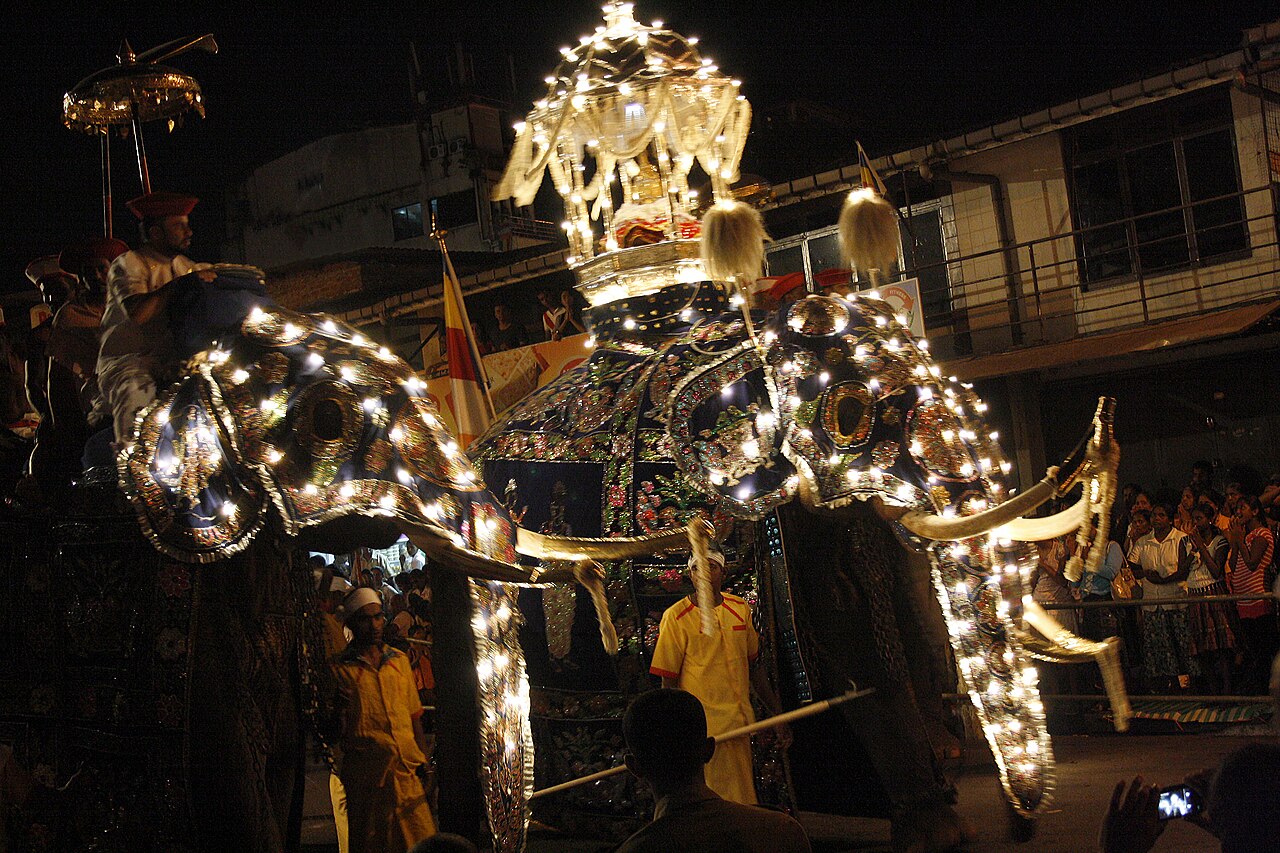
In the hill city of Kandy, Sri Lanka guards one of Buddhism's most sacred objects: a tooth said to be the Buddha's own. And once a year, for ten escalating nights, the city honours it with one of the grandest processions in all of Asia, a river of fire, drums, dancers, and dozens of elephants draped in jewelled cloth, parading through the streets in the dark. The Esala Perahera is not a show staged for tourists. It is a deep act of devotion that happens to be breathtaking.
The relic at the heart of it
Everything in Kandy centres on the Sacred Tooth Relic, housed in the Sri Dalada Maligawa, the Temple of the Tooth. The relic is so revered that historically whoever held it was seen as holding the right to rule the island, and it remains an object of profound spiritual importance. The Esala Perahera exists to honour it, and the climax of the procession features the Maligawa Tusker, a magnificent elephant who carries a golden casket, a replica of the relic's shrine, through the streets in a blaze of light.
The festival's roots run deep and braided, blending the veneration of the tooth relic with far older rituals to local gods, all woven together over centuries into the spectacle of today. It builds across ten nights, each grander than the last, culminating in the final Randoli Perahera nights when the full splendour is unleashed.
Kandy does not parade elephants for the cameras. It parades them because, in a casket on the grandest of them, rides the most sacred object on the island.
On the Esala Perahera
What the night procession looks like
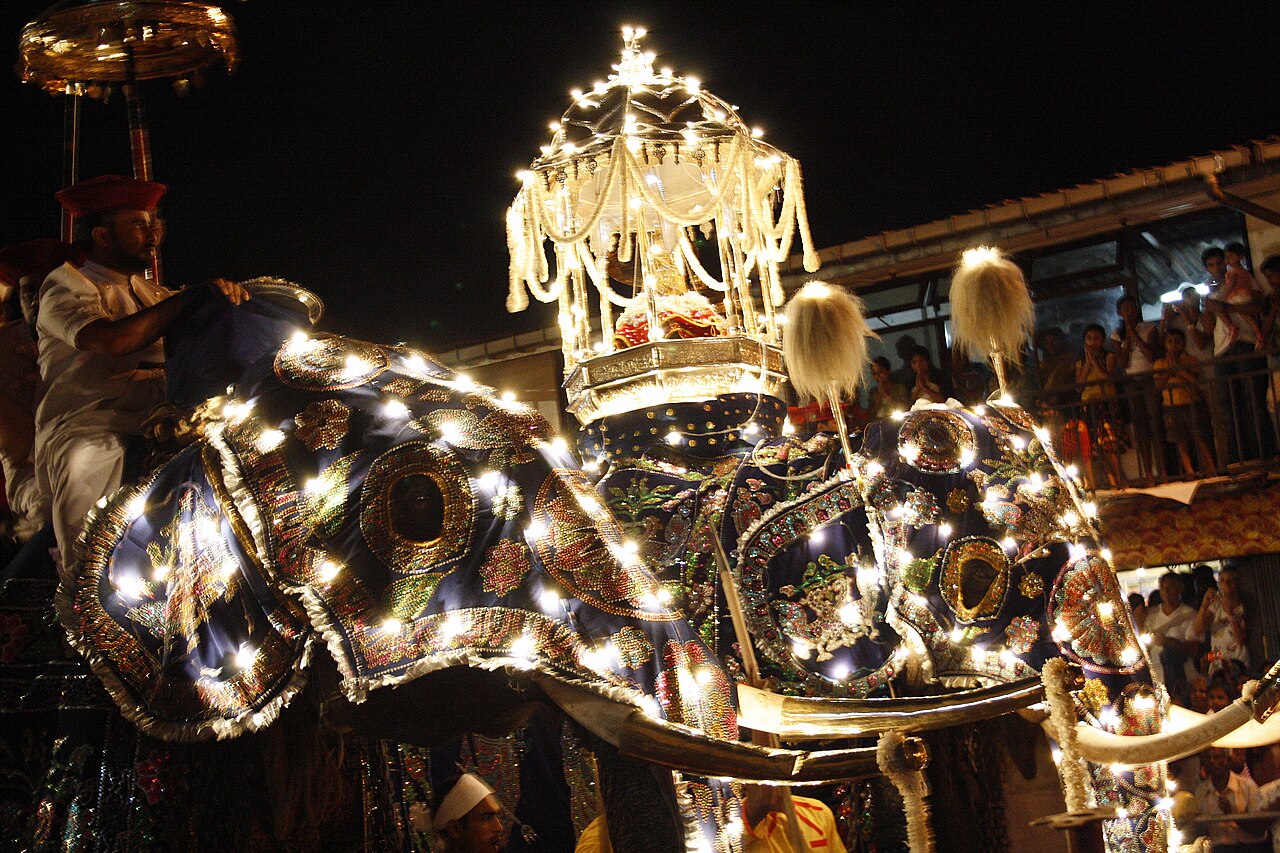
As darkness falls, the procession comes alive. Fire-dancers twirl flaming torches, whip-crackers snap the air to clear the way, drummers in white sarongs beat out hypnotic rhythms, and troupes of Kandyan dancers in elaborate silver costumes spin and leap. And then the elephants, dozens of them, lavishly caparisoned in richly embroidered cloth strung with hundreds of tiny lights, lumbering majestically through the streets in a slow, glittering tide.
The effect is overwhelming and otherworldly, a centuries-old spectacle unfolding by torchlight, the air thick with the smell of fire and the sound of drums. It is one of those rare festivals that genuinely lives up to its billing, a procession of such scale, beauty, and devotion that it stays with you for life.
How to experience it well
- Come for the later nights. The procession grows over ten nights; the final Randoli Perahera nights are the grandest and most spectacular.
- Book a grandstand seat. Reserved seating along the route, booked in advance, gives you a proper view of a very crowded event.
- Arrive early and be patient. The procession starts after dark and the crowds are immense. Settle in and let it come to you.
- Dress and behave respectfully. This is a sacred religious festival, not a carnival. Modest dress, especially near the temple, and quiet reverence.
- Visit the Temple of the Tooth by day to understand the relic the whole spectacle exists to honour.
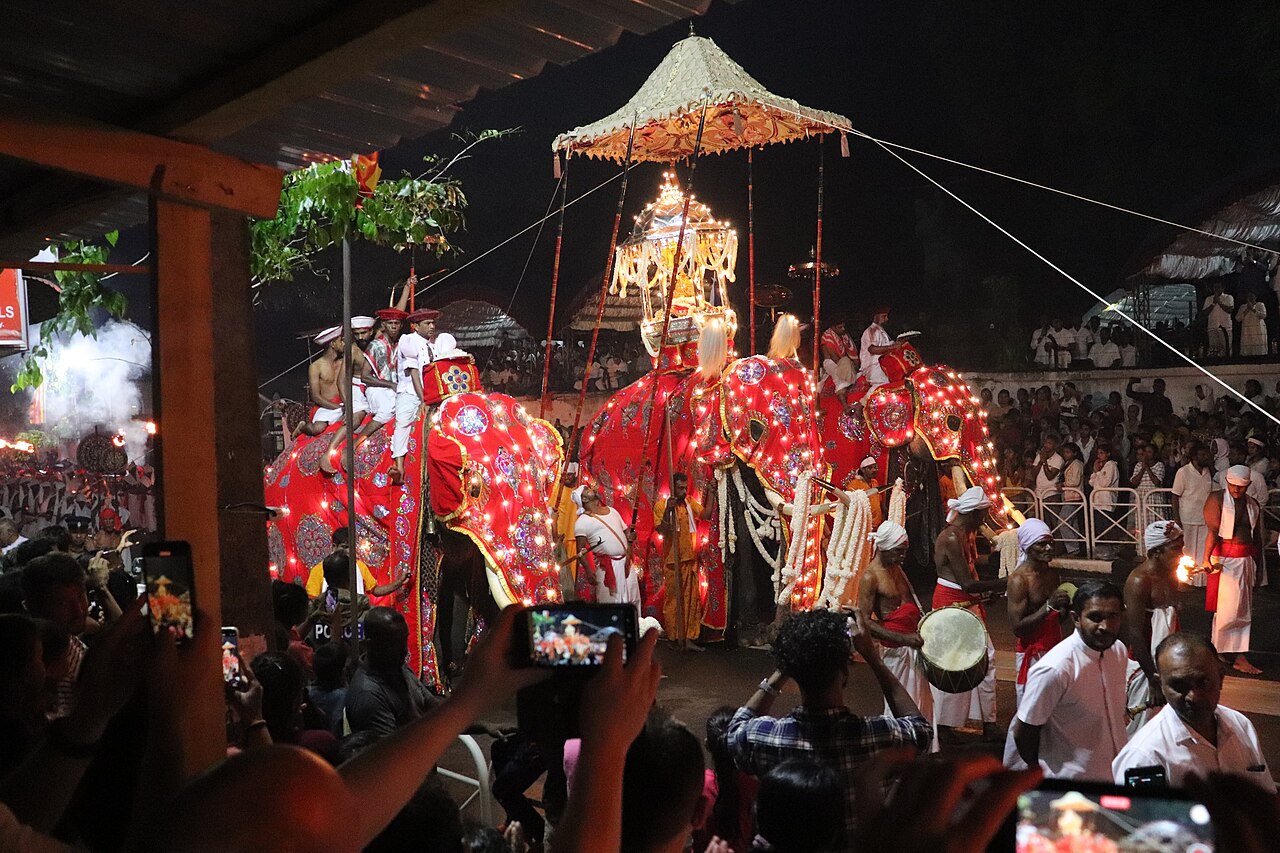
A devotion you are allowed to witness
What makes the Esala Perahera so moving is that it is utterly genuine. The thousands who line the streets are not spectators at an attraction; they are devotees witnessing a sacred annual rite that has continued for centuries. To be allowed to stand among them as the fire and the drums and the jewelled elephants pass is a privilege, a window into the depth of Sri Lankan Buddhist devotion. You came to the island for its beaches and its tea hills, but a night at the Perahera shows you its soul.
The beaches are the postcard, but a night of fire, drums, and jewelled elephants in old Kandy is the moment Sri Lanka stops being scenery and becomes sacred.
On the OJ Sri Lanka trip Kandy and its hill-country heart are part of the journey, and where the timing aligns with the Esala Perahera, one of the great processions on earth. Because the island gives you the south coast and the tea trains freely, but to stand in old Kandy as the torchlit elephants pass, honouring a relic guarded for a thousand years, is to understand the faith that beats beneath the whole country.
Frequently asked
When is the Esala Perahera held?
The Esala Perahera takes place in Kandy, Sri Lanka, over ten nights in the months of Esala, usually July or August, ending around the full moon. The procession grows in grandeur each night, culminating in the final Randoli Perahera nights. The dates shift each year with the lunar calendar, so check before planning.
What is the Esala Perahera celebrating?
It honours the Sacred Tooth Relic of the Buddha, housed in Kandy's Temple of the Tooth, one of Buddhism's most revered objects. The grand procession of dancers, drummers, fire-twirlers, and jewelled elephants, led by the Maligawa Tusker carrying a replica relic casket, is an act of deep devotion blending the tooth-relic veneration with older ritual traditions.
How do you see the Esala Perahera as a tourist?
Book a reserved grandstand seat along the route well in advance, as the event is enormously crowded and runs after dark. Aim for the later, grander nights. Dress modestly and behave respectfully, since it is a sacred religious procession, not a carnival. Visiting the Temple of the Tooth by day adds essential context.