
Nepal will feel familiar to Indian travellers, the namaste, the temples, the reverence for cows, and it should, the cultures share deep roots. But it has its own sacred geography, a set of rules about feet, heads, and the directions you move around holy things, that quietly governs respectful behaviour. Get these right, and a country already warm to its neighbours opens completely.
Feet are low, heads are high
The most important spatial rule in Nepal, shared with much of South Asia but worth stating clearly, is the hierarchy of the body. Feet are considered the lowest, least clean part of the body, so you never point the soles of your feet at a person, a deity, a shrine, or a sacred object. Sit with your feet tucked away, not stretched out toward an altar or another person. Never step over someone, and do not touch anything sacred, or another person, with your feet. If you accidentally touch someone with your foot, a quick apologetic touch and gesture is the customary fix.
Conversely, the head is the most sacred part of the body, so you do not touch anyone's head, including affectionately patting a child. This pairing, low feet, high head, is the invisible grammar behind a lot of Nepalese and South Asian etiquette, and respecting it instinctively marks you as a considerate guest.
In Nepal the body has a sacred map. The feet are the lowest point and the head the highest, and most temple etiquette is just respecting that geography.
On feet and heads
How to move around the sacred
At Buddhist sites, the great stupas of Kathmandu, Boudhanath and Swayambhunath, the mani walls and prayer wheels of the mountains, you circumambulate clockwise, keeping the shrine on your right. Spin prayer wheels clockwise. Pass mani stones and chortens on the left so the sacred stays on your right. This is a real and meaningful protocol, not a suggestion, and locals will quietly appreciate a visitor who knows to walk the right way around.
At temples generally, remove your shoes before entering, and dress modestly with shoulders and knees covered. At many Hindu temples, non-Hindus may not be allowed into the inner sanctum, and leather items, belts, bags, may be prohibited because the cow is sacred. Do not touch offerings, idols, or the items used in worship. Ask before photographing inside temples or during ceremonies, as many forbid it. When in doubt, watch what worshippers do and follow.
Familiar customs, handled with care
Much of Nepalese etiquette will feel natural to Indian visitors. You greet with a namaste, palms together, especially with elders. You eat and give with your right hand, the left being unclean. Food that has been touched to your lips or plate is jutho, ritually polluted, so you do not share directly from your plate or offer someone a bite of your food or a sip from your bottle, a sensitivity worth remembering on the trail. The cow is sacred, and beef is off the menu and out of conversation.
Public displays of affection are frowned upon, dress is more conservative away from tourist areas, and the overall temperature of social life is gentle and respectful. Nepal also has extraordinary religious and ethnic diversity, Hindu and Buddhist traditions intertwined, dozens of ethnic groups, so a light, curious, non-judgemental attitude serves far better than assumptions carried in from anywhere else.

The rules worth carrying
- Never point your feet at people, deities, or shrines, and never touch anyone's head.
- Circle stupas and mani walls clockwise, keeping the sacred on your right, and spin prayer wheels clockwise.
- Remove shoes at temples, dress modestly, and remove leather items at many Hindu shrines.
- Eat and give with your right hand, and never share food directly from your plate or bottle, that is jutho.
- Respect the cow, ask before photographing worship, and follow what local devotees do.
Respect carries you to the high country
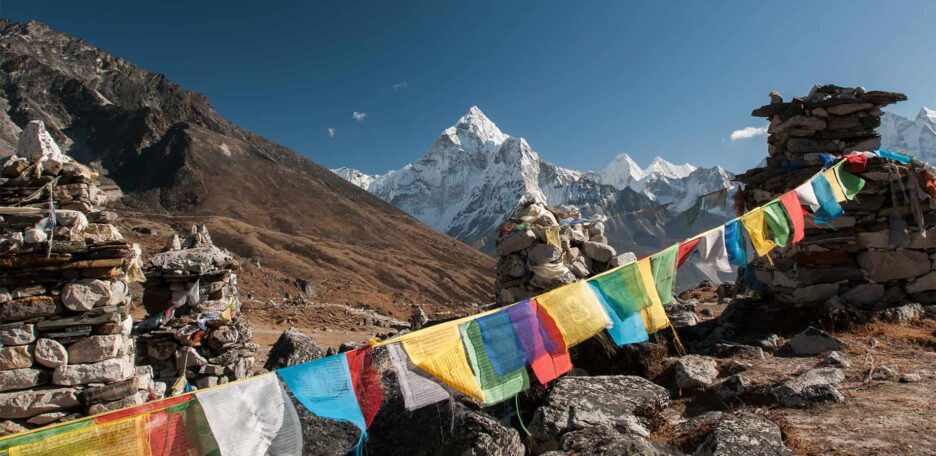
On the trekking trails, this respect matters as much as in the temples of the valley, the prayer flags strung across the passes, the chortens you pass on the left, the homes you are welcomed into where shoes come off and the fire is treated with care. Nepalese mountain people are among the warmest hosts on earth, and they notice the trekker who walks the right way around a mani wall, who keeps their feet tucked in by the hearth, who treats their faith with quiet respect. That trekker stops being a tourist passing through and becomes a guest the mountains are glad to see.
The mountains test your legs. The villages test your manners. Walk clockwise around the shrine and keep your feet to yourself, and both let you through.
On the OJ Everest Base Camp trek the culture is part of the climb, the stupas of Kathmandu circled the right way, the mani walls passed correctly on the trail, the tea-house hosts treated with the respect they return tenfold. Because the highest mountains on earth are the reason you came, but the prayer flags, the clockwise turns, and the warmth of the people who live among the peaks are the part that makes the Himalaya feel sacred rather than merely tall.
Frequently asked
Why are feet such a big deal in Nepal?
Feet are considered the lowest, least clean part of the body, so pointing your soles at a person, deity, or shrine is disrespectful. Sit with feet tucked away, never step over people, and never touch anything sacred with your feet. The head, by contrast, is the most sacred part, so you never touch anyone's head, including children's.
Which way do you walk around Buddhist shrines in Nepal?
Clockwise, keeping the shrine on your right. Circumambulate stupas like Boudhanath clockwise, spin prayer wheels clockwise, and pass mani stones and chortens on the left so the sacred object stays on your right. This is a meaningful protocol, and locals appreciate visitors who walk the correct way around holy sites.
Is Nepalese etiquette the same as India's?
Very similar but with its own emphases. You greet with namaste, eat with the right hand, and revere the cow, all familiar to Indian travellers. Distinctly important are the foot and head rules, clockwise circumambulation, the jutho concept that food touched to your lips is impure so you do not share plates, and removing leather at many Hindu temples.