Sri Lanka is one of the warmest, most welcoming countries you can visit, and it has one rule it does not bend on: respect for the Buddha. Tourists have genuinely been detained and deported for nothing more than a careless photo or an ill-judged tattoo. The island's gentleness is real, but so is its seriousness about its faith, and knowing where that line sits is the most important thing a visitor can carry.
The Buddha is not a photo prop, full stop
This is the rule that catches people out. Never pose for a photo with your back to a Buddha statue, never climb on or touch Buddha images for a picture, and never treat a Buddha as a fun backdrop. Turning your back to the Buddha for a selfie is read as a real insult, and it has led to tourists being arrested and sent home. Visitors with visible Buddha tattoos have been refused entry or deported. The Buddha is sacred, not decorative, and the law backs that up.
When photographing a Buddha statue respectfully, face it. Do not point your finger at it; gesture with an open hand. Do not use the image on souvenirs or clothing in a flippant way. None of this is hard, and Sri Lankans will warmly help you do it right, but the one thing they will not forgive is treating the Buddha as a backdrop.
Sri Lanka will forgive almost any honest mistake a traveller makes. The single exception is disrespecting the Buddha, and that line is enforced by law.
The one rule that matters
How to enter a temple
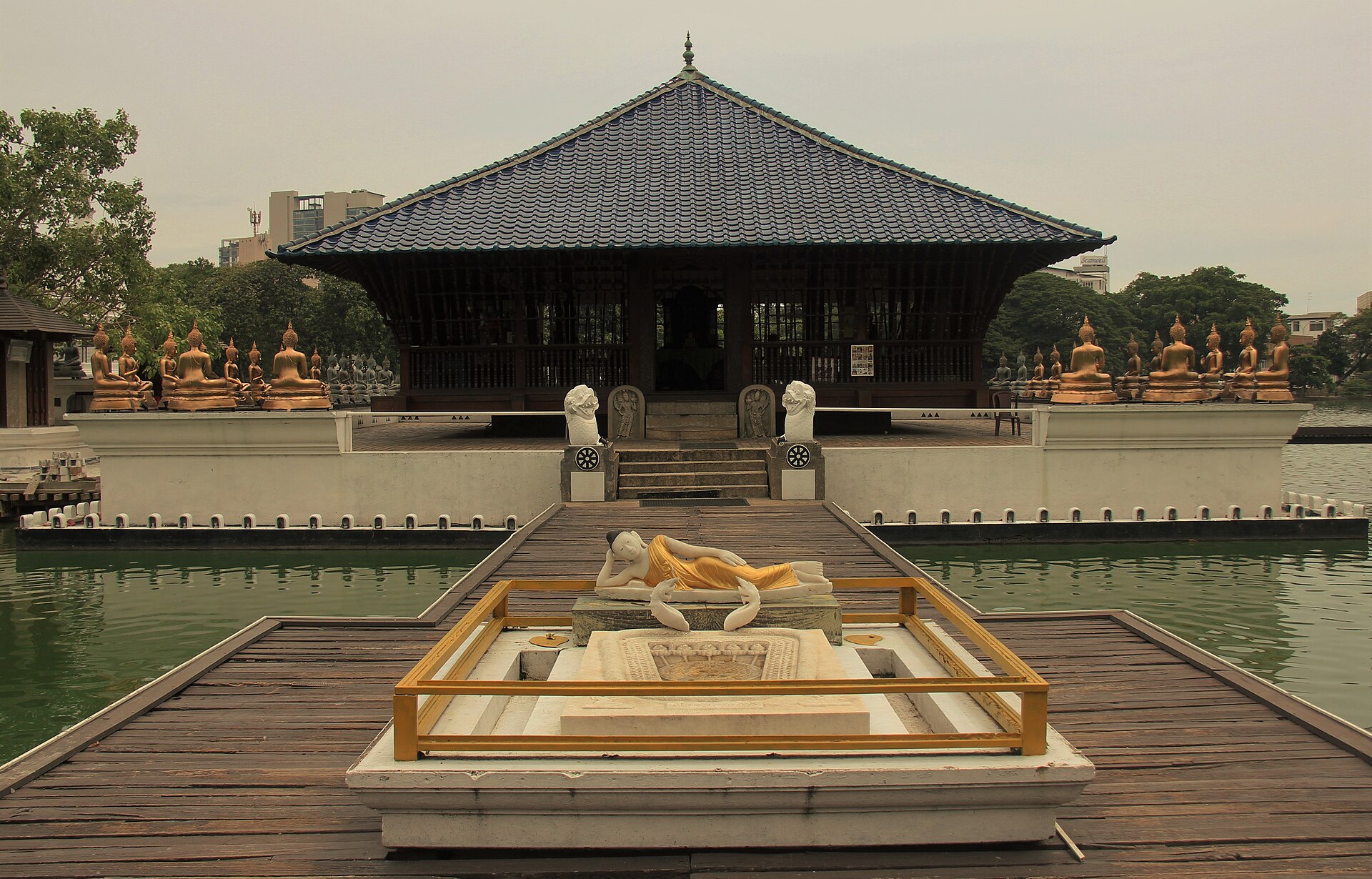
At any Buddhist or Hindu temple, you remove your shoes and your hat before entering, and dress modestly with shoulders and knees covered, white clothing is traditional and appreciated at Buddhist sites. Shoes are left at the entrance, often with an attendant. Hats and sometimes sunglasses come off as a sign of respect, the opposite of covering up; here you uncover.
Inside, keep your voice low, do not turn your back rudely on shrines, and never point the soles of your feet toward a Buddha image or a monk when sitting, tuck your feet behind you. If you wish to make merit, follow what locals do quietly. Women should not touch or hand things directly to Buddhist monks; place items down for the monk to pick up instead. These are small acts that show you understand you are a guest in a sacred space.
Reading the island's warmth and its lines
Sri Lankans share the South Asian head wobble, the side-to-side tilt that can mean yes, okay, I understand, or simply acknowledgement, and which Indian travellers will recognise instantly while others find baffling. They are generous with directions, conversation, and smiles. As in India, you eat with your right hand, remove your shoes when entering homes, and dress more modestly away from the beaches.
The island is also a mosaic, Sinhalese Buddhist majority, with significant Tamil Hindu, Muslim, and Christian communities, and a hard civil-war history not far behind it. The warmth is genuine and everywhere, but it is wise to be gentle and listen rather than opine on ethnic and political matters. Read the room, follow your hosts, and let the famous Sri Lankan friendliness lead the way.
The rules worth carrying
- Never turn your back on a Buddha for a photo, climb on Buddha statues, or display Buddha tattoos. This is the line that gets people deported.
- Remove shoes and hats at temples, dress modestly, white is appreciated at Buddhist sites.
- Keep your feet pointed away from Buddha images and monks when sitting.
- On poya full-moon days, alcohol is not sold and meat may be limited. Plan around it.
- Eat and give with your right hand, and take shoes off in homes, as in India.
Respect opens the whole island
None of this should make Sri Lanka feel intimidating, because it is the opposite. It is an island that gives its warmth freely, where strangers go out of their way to help and the smiles are real. The handful of firm rules, almost all around the Buddha and the temples, are simply the price of admission to a culture that holds its faith dearly. Honour them, and Sri Lanka holds nothing back.
Get the Buddha right and everything else is forgiven. Sri Lanka asks for respect at its temples and gives you the whole warm island in return.
On the OJ Sri Lanka trip we move through the temples, the tea country, and the coast knowing exactly where the lines are, so the welcomes stay warm and nobody causes offence by accident. Because the beaches and the train through the hills are the highlight reel, but a temple entered respectfully, shoes off, head bare, feet tucked away, is where the island shows you its soul.
Frequently asked
Can you really get deported for a photo in Sri Lanka?
Yes. Tourists have been detained and deported for posing with their back to a Buddha statue, climbing on Buddha images, or displaying Buddha tattoos. Sri Lanka treats disrespect toward the Buddha very seriously, and it is backed by law. Always face Buddha statues respectfully, never use them as a casual photo backdrop.
How should I dress for Sri Lankan temples?
Cover your shoulders and knees, and remove both your shoes and your hat before entering. White clothing is traditional and appreciated at Buddhist sites. Keep your feet pointed away from Buddha images when sitting, keep your voice low, and women should place items down for monks rather than handing them over directly.
What is a poya day in Sri Lanka?
Poya is the monthly Buddhist full-moon holiday, a public holiday in Sri Lanka. On poya days, the sale of alcohol is banned and many places limit meat, while temples are busy with observance. Plan your alcohol and dining around it, and consider visiting a temple to see the island at its most devout.